
Fishing is a simple joy for many, but it can also be a puzzle. One question that often comes up is, “Should I use a float for fishing? ” For new and experienced anglers alike, the answer is not always clear.
Sometimes people see a float as just a bright ball on the water. Others see it as the key to catching more fish. If you have ever wondered whether a float will help or hurt your fishing, you are not alone.
This article will walk you through everything you need to know. We will look at how floats work, the types you can use, their benefits and drawbacks, and when they are most effective. By the end, you will have the knowledge to decide if a float is right for your next fishing trip.
What Is A Fishing Float?
A fishing float, sometimes called a bobber, is a small device attached to your fishing line. It helps keep your bait at a chosen depth and alerts you when a fish bites. Floats are usually made from lightweight materials like plastic, cork, or foam, and come in different shapes, sizes, and colors.
When you cast your line, the float sits on the water’s surface. If a fish pulls on your bait, the float moves, dips, or disappears. This movement tells you it’s time to try and hook the fish. For many, a float is the easiest way to see action under the water.
Types Of Fishing Floats
Choosing the right float can make a big difference. Here are the main types you might see:
| Float Type | Best For | Main Feature |
|---|---|---|
| Ball/Bubble Float | Beginners, shallow water | Easy to see, stable |
| Pencil Float | Light bites, clear water | Sensitive, slim shape |
| Waggler | Lakes, slow rivers | Cast far, stable in calm water |
| Stick Float | Flowing rivers | Controls depth, drifts with current |
| Sliding Float | Deep water, variable depth | Line passes through float, adjustable depth |
Ball floats are the most common for beginners. Pencil floats are very sensitive and show small bites. Wagglers are good for casting long distances. Stick floats help you fish in moving rivers. Sliding floats work when you want to fish deep water without using a long rod.
Why Do Anglers Use Floats?
Floats are not just for show. They offer several practical advantages:
- Bite Detection: The float shows clear movement when a fish takes the bait.
- Depth Control: You can keep your bait at a precise depth, targeting the fish you want.
- Easy Casting: Floats add weight, helping you cast further and more accurately.
- Presentation: They let your bait drift naturally, which can attract more fish.
- Learning Tool: For beginners, floats make it easier to see what’s happening underwater.
Many anglers remember catching their first fish with a float. It’s an easy way to learn and a reliable method in many fishing situations.
When Should You Use A Float For Fishing?
Floats are not always the best choice. Here are times when they are most effective:
1. Shallow Or Medium Depths
If you are fishing in water less than 4 meters deep, a float is perfect. You can set your bait just above weeds or at the level where fish feed.
2. For Suspended Fish
Some fish, like trout or crappie, often swim in the middle layers of a pond or lake. A float keeps your bait in their zone, not lost at the bottom.
3. In Calm Or Slow-moving Water
Floats work well in ponds, lakes, and slow rivers. They hold your bait in place and make bites easy to see.
4. With Live Bait
If you use worms, small minnows, or insects, a float keeps them lively and visible. Many fish cannot resist a wiggling worm held at the right depth.
5. For Beginners And Children
Floats are simple and forgiving. Young or new anglers can see action and learn without much frustration.
When You Might Not Want To Use A Float
Floats are not always the answer. Here are cases where they may not help:
1. Fast-moving Rivers
If the current is strong, a float may drift too quickly or be pulled under. Bottom fishing or using a heavier sinker might be better.
2. Deep Water Fishing
If you want to fish more than 4–5 meters deep, a float can become hard to control. Special sliding floats can help, but bottom fishing is often easier.
3. Fishing Near The Bottom
Some fish feed only at the bottom. A float can keep your bait too high, out of their reach.
4. Heavy Vegetation
If weeds or lily pads cover the water, a float may catch on plants. A weedless rig or bottom approach is usually better.
5. Windy Conditions
Strong winds can blow your float away or make it hard to see small bites.
Pros Of Using A Float
Let’s take a closer look at the benefits:
1. Visual Bite Indication
The float acts as your eyes above water. You see every nibble, pull, or bite. This is especially helpful for fish that bite softly. Many children and adults find this makes fishing much more fun.
2. Better Bait Control
A float lets you place your bait at the exact depth you want. For example, if you notice fish feeding just under the surface, you can set your float to keep your bait there.
3. Avoid Snags
Fishing with a float keeps your bait off the bottom. This reduces the chance of getting stuck on rocks, branches, or weeds.
4. Easy To Adjust
You can quickly change your bait depth by sliding the float up or down the line. No need to retie your rig.
5. Covers More Water
Floats let your bait drift with the wind or current. This helps you find where fish are feeding, rather than just waiting in one spot.
6. Great For Light Baits
Small worms or insects might be too light to cast on their own. Adding a float gives enough weight for longer, more accurate casts.
7. Versatile
You can use floats for many species: bluegill, perch, trout, carp, bass, and more. They work in both fresh and saltwater, from docks, banks, and boats.
8. Teaches Patience And Timing
Watching a float trains you to wait for the right moment to set the hook. This develops good habits for all types of fishing.
9. Low Cost
Floats are cheap and last a long time if used carefully. They are a good investment for any tackle box.
10. Great For Night Fishing
Some floats glow or use lights, making night fishing easier and more exciting.

Credit: www.catfishedge.com
Cons Of Using A Float
While floats are helpful, they do have drawbacks:
1. Can Limit Depth
Regular floats struggle in deep water. You may have to use sliding floats, which are more complex to set up.
2. Wind And Waves
Bad weather can move your float away from where you want it. It can also make it hard to see bites.
3. Not For All Species
Some fish feed only at the bottom. Floats may keep your bait too high to attract them.
4. Can Spook Fish
In clear or shallow water, a bright float can scare cautious fish, especially if it lands with a splash.
5. Tangles
Sometimes, the line can wrap around the float, especially if you cast too hard or in windy conditions.
6. Less Sensitive In Some Cases
Heavy or large floats may not show small bites. Choosing the right size and shape is important.
7. Slower For Covering Large Areas
If you want to search large sections of water quickly, lure fishing or bottom rigs can be faster.
8. More Visible To Birds
Bright floats can attract birds, which might try to eat your bait or disturb your spot.
How To Choose The Right Float
Picking the right float is important. Here are some tips:
- Match Float Size to Bait: Use small floats for light baits like worms. Bigger floats are for larger baits or windy conditions.
- Water Type Matters: Stick floats for rivers, wagglers for lakes, bubbles for beginners.
- Color Counts: Bright colors are easy to see, but may spook fish in clear water.
- Test Sensitivity: If you miss bites, try a more sensitive float.
- Adjustable Options: Sliding floats are good for deep water, fixed floats for shallow.
Here’s a quick comparison:
| Situation | Best Float | Reason |
|---|---|---|
| Shallow pond, clear water | Pencil float | Sensitive, less splashy |
| River with current | Stick float | Drifts well, stable |
| Windy lake | Large waggler | Visible, casts far |
| Night fishing | Lighted float | Easy to see bites |
| Deep reservoir | Sliding float | Reaches deep fish |
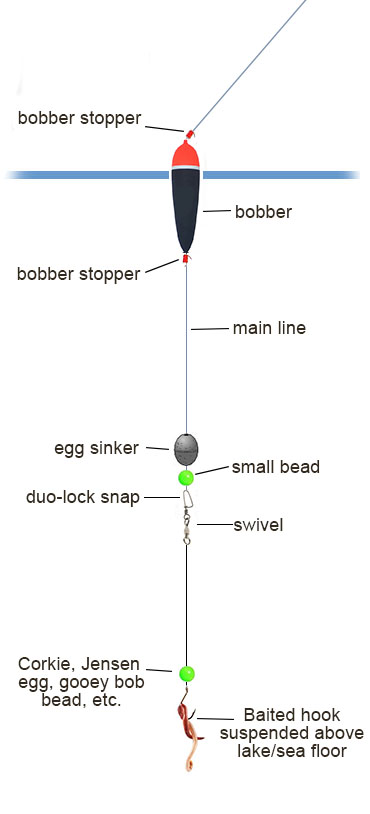
How To Set Up A Float Rig
Here is a simple way to set up your float for most freshwater fishing:
- Thread the Float: Slide the line through the float’s hole or attach it with a clip.
- Add a Stopper: Use a small rubber or thread stopper above the float to set depth.
- Add Weights: Pinch on a few split-shot weights below the float. This helps it stand upright.
- Tie Your Hook: At the end of the line, tie your hook or lure.
- Adjust Depth: Slide the stopper to control how deep your bait goes.
Extra tips:
- Keep the float upright in the water—too much weight will sink it.
- Leave about 30–60 cm of line below the float for live bait.
- Test your setup in shallow water before casting far.
Float Fishing Techniques
There are different ways to use a float. Here are a few:
1. Still Fishing
Cast your bait and wait. Perfect for ponds and lakes with little current. Watch the float for any sign of movement.
2. Drifting
Let your float drift with the current in a river. This covers more water and finds active fish.
3. Trotting
Control your float’s speed in flowing water by holding your rod at an angle. This keeps your bait moving naturally.
4. Tapping
Gently lift and lower your rod tip to make the bait move. This can attract curious fish.
5. Night Float Fishing
Use a glowing or lighted float for night fishing. Good for species like catfish or carp.

Credit: www.lurenet.com
Common Mistakes To Avoid
Float fishing is simple, but some mistakes can cost you fish:
- Too Large a Float: A heavy float may not show light bites and can scare fish.
- Wrong Depth: If your bait is too high or low, fish may never see it.
- No Stopper: Forgetting a stopper can let your float slide up the line.
- Too Much Weight: This can sink your float and ruin bite detection.
- Ignoring Wind: Casting with the wind can move your float away from fish.
- Not Watching the Float: Many beginners look away and miss bites.
- Bad Knots: Weak knots can break when you set the hook.
- Poor Float Maintenance: Cracked or waterlogged floats may not work well.
Real-world Examples
Float fishing has helped many people catch their first fish. For example, bluegill and crappie are often caught with small floats and worms in local ponds. In Europe, float fishing is a top method for catching roach and carp. Even professional anglers use floats in competitions for their accuracy and control.
In Japan, “tenkara” style fishing uses a simple float and line to catch trout in small streams. In the United States, bobber fishing is a favorite for children learning to fish.
Non-obvious Insights
Even experienced anglers sometimes overlook a few float fishing secrets:
- Micro-Adjustments Matter: Tiny changes to your bait depth (even 5–10 cm) can suddenly start or stop bites. Always experiment.
- Float Shape Affects Sensitivity: Long, thin floats (like pencils) are much more sensitive than round ones, especially in calm water. If you are missing bites, try switching shapes.
- Stealth Pays Off: If fish are shy, use a clear or dull-colored float. It blends in and spooks fewer fish.
Environmental Impact
Floats are mostly safe, but lost plastic or foam floats can pollute water. Choose biodegradable or reusable floats when possible. Always collect broken floats and lines to protect wildlife.
Do Professionals Use Floats?
Yes, many expert anglers use floats, especially in competitive fishing. Floats allow for precise bait placement and quick reaction to bites. In some matches, the difference between winning and losing is how well you read the float.
Alternatives To Float Fishing
If you decide not to use a float, there are other methods:
- Bottom Fishing: Uses a weight to keep bait on the bottom. Good for catfish or carp.
- Lure Fishing: Casts and retrieves artificial baits. Covers more water quickly.
- Fly Fishing: Uses a fly on the surface or just below.
- Ledgering: Similar to bottom fishing, but with a more sensitive bite indicator.
Each method has its own pros and cons. Try different styles to see what works best for you.
Final Thoughts: Should You Use A Float For Fishing?
The answer depends on your situation. If you are just starting, fishing with children, or targeting fish that swim off the bottom, a float is a smart choice. It is easy to use, affordable, and effective in many waters. For deep water, strong currents, or bottom-feeding fish, other methods may serve you better.
Remember, the best anglers adapt. Bring a few floats, try them out, and see how the fish respond. With time, you will know exactly when a float gives you the edge.
For more about fishing methods, you can check this Wikipedia guide to fishing techniques.
Frequently Asked Questions
How Do I Know What Size Float To Use?
Choose a float size based on your bait and water conditions. Use a small float for worms or small baits in calm water. For larger bait or windy days, pick a bigger float. The right float should barely stay above water when your rig is set up.
Can I Use A Float For Saltwater Fishing?
Yes, many people use floats for saltwater fishing, especially near shore. Make sure to choose a float that won’t corrode and is large enough to handle bigger fish and waves.
Why Does My Float Keep Sinking?
Too much weight or a damaged float can cause it to sink. Check that you are using the right size float and split-shot weights. Also, inspect the float for cracks or leaks.
Do All Fish Bite With A Float?
Not all. Floats work best for fish that feed in mid-water or near the surface, like bluegill, perch, and trout. Bottom feeders like catfish are often better caught with weights on the bottom.
What Is The Best Bait To Use With A Float?
Live bait such as worms, crickets, or small minnows works well with floats. Soft plastic lures and corn can also be used. Match the bait to the fish species you are targeting for the best results.
Float fishing is a skill you can use for life. Whether you want fun, learning, or a new way to catch fish, a float could be your next great tool on the water.
Credit: norrik.com