
Fishing is not just about patience and the right bait. One of the most important factors is water temperature. Many anglers overlook how temperature affects fish behavior, feeding patterns, and even where fish move in the water. Knowing the best temperature for fishing can help you catch more fish and understand why sometimes, even with the best gear, you go home empty-handed.
Water temperature changes with the seasons, time of day, and even with weather changes. This means the “perfect” temperature is not the same everywhere or for every species of fish. In this guide, you’ll learn how temperature affects fishing, the best temperatures for different fish, and how to use this information to improve your fishing trips.
You’ll also discover some common mistakes and little-known tips that experienced anglers use to find the fish, even when conditions seem tough.
Why Water Temperature Matters For Fishing
Fish are cold-blooded animals. This means their body temperature matches the water around them. When water gets warmer or colder, fish change their behavior to survive. This affects how much they eat, how fast they swim, and where they spend their time.
Fish Metabolism And Feeding
As water warms up, a fish’s metabolism increases. They become more active and need more food. But if it gets too warm, their metabolism can get too high, making them stressed and less likely to feed. Cold water slows their metabolism, making them sluggish and less interested in chasing bait.
Oxygen Levels In Water
Warm water holds less oxygen than cold water. Fish need oxygen to breathe, just like humans. When water gets too warm, oxygen drops, and fish may move to deeper, cooler areas or even stop feeding. This is why you might see fish jumping at the surface on hot days—they’re searching for more oxygen.
Spawning And Seasonal Movements
Temperature triggers spawning in many fish species. For example, bass and trout spawn at specific temperatures. Knowing these ranges helps you avoid disturbing them or, if you’re targeting spawning fish, helps you know when and where to look.
Best Water Temperatures For Popular Fish Species
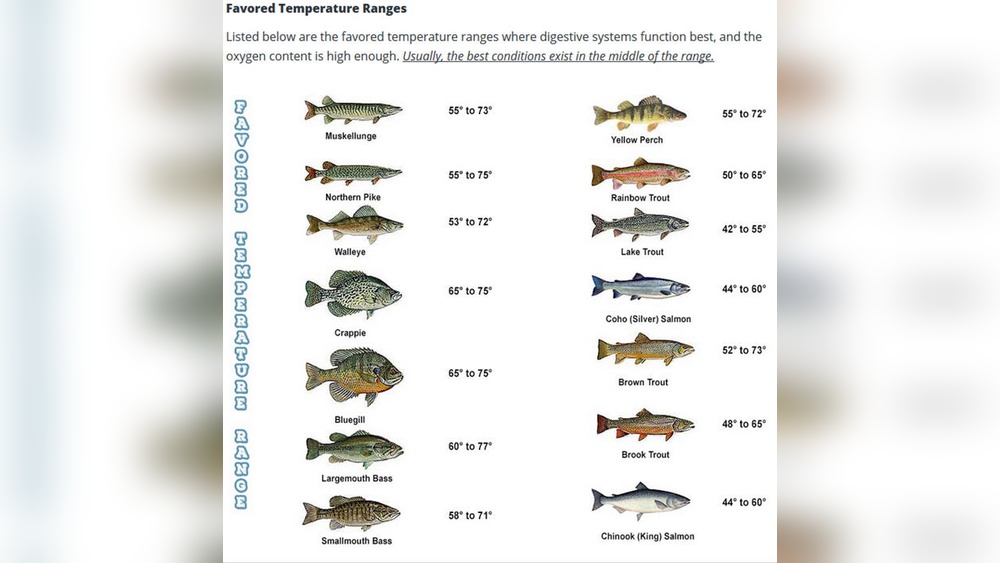
Not all fish like the same temperature. Some prefer cold water, while others love the heat. Here are the ideal temperature ranges for some of the most popular sport fish:
| Fish Species | Ideal Temperature Range (°F) | Best Time to Fish |
|---|---|---|
| Largemouth Bass | 65–75 | Spring to Early Summer |
| Smallmouth Bass | 60–70 | Late Spring |
| Trout (Rainbow, Brown) | 50–65 | Spring, Fall |
| Walleye | 55–68 | Late Spring, Early Summer |
| Crappie | 60–75 | Spring |
| Bluegill | 65–80 | Late Spring, Summer |
| Catfish | 70–85 | Summer |
| Northern Pike | 55–65 | Spring, Fall |
| Salmon | 45–60 | Spring, Fall |
Largemouth Bass
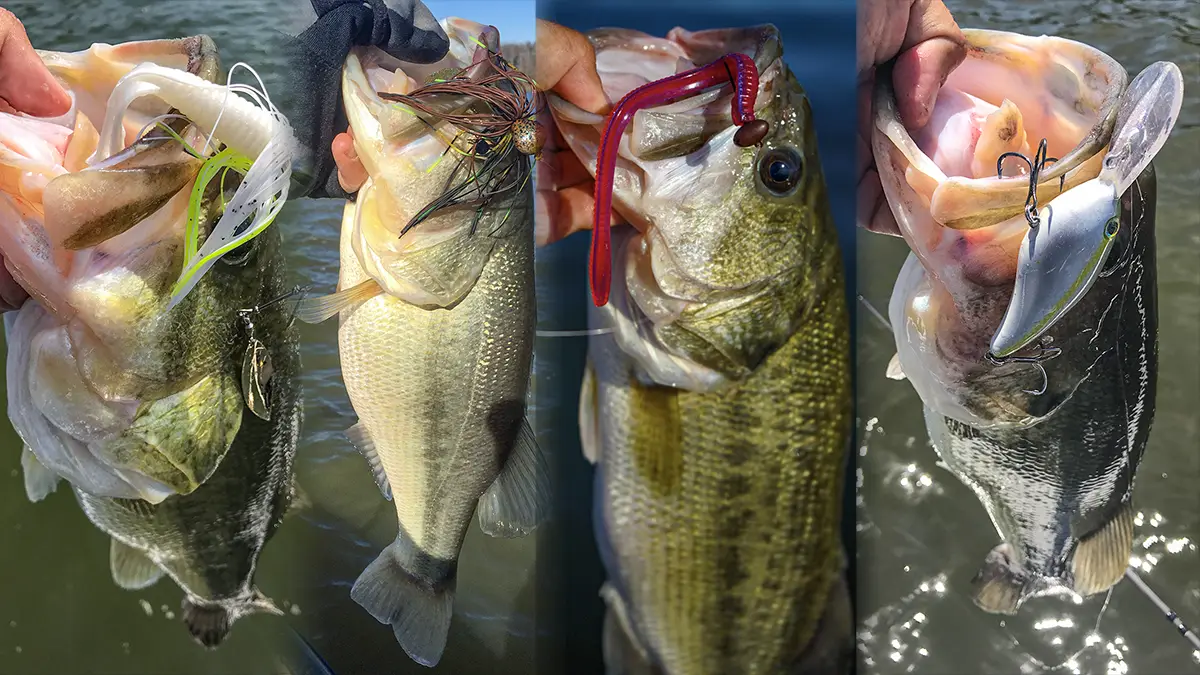
Largemouth bass are most active when water is between 65–75°F (18–24°C). In this range, they feed aggressively and move into shallow water. If the water gets above 80°F (27°C), bass often move deeper and become less active.
Smallmouth Bass
Smallmouth bass prefer slightly cooler water (60–70°F or 16–21°C). They are most active in late spring and early summer. When water is too warm, they go deeper to find cooler temperatures.
Trout
Trout (like rainbow and brown trout) thrive in cold water. Their best range is 50–65°F (10–18°C). Above 70°F (21°C), trout can become stressed and may even die if the warm water lasts too long.
Walleye
Walleye like water between 55–68°F (13–20°C). Spring and early summer are usually the best times to catch them. When water warms up, they move deeper.
Crappie
Crappie are most active between 60–75°F (16–24°C). In early spring, they move into shallow water to spawn when temperatures reach the low 60s.
Bluegill
Bluegill can handle a wide range but feed best when water is 65–80°F (18–27°C). They often stay shallow in summer but move deeper if it gets too hot.
Catfish
Catfish love warm water. The ideal range is 70–85°F (21–29°C). They feed heavily on hot summer nights. However, if water is much above 85°F, even catfish may slow down.
Northern Pike
Northern pike prefer cooler water (55–65°F or 13–18°C). They become sluggish in warm water and look for deep, cooler spots.
Salmon
Salmon species do best in 45–60°F (7–16°C) water. During spring and fall runs, they move upstream as water temperatures drop.
How Temperature Changes During The Day
Water temperature is not the same all day. The sun warms shallow water quickly, while deeper water stays cooler. Early morning and late afternoon are often the best times to fish because:
- Morning: Water is cool, fish are active after resting.
- Afternoon: Water warms up, fish often move deeper.
- Evening: Water cools again, fish may return to shallows.
In summer, the best fishing is often early or late in the day. In spring or fall, midday can be better as the sun warms the water just enough for fish to feed.
Seasonal Changes And What They Mean For Fishing
Every season brings a new challenge for anglers. Water temperature is always changing, and so is fish behavior. Here’s how each season affects your chances:
Spring
Water is warming up after winter. Fish move from deep to shallow water to spawn. This is a good time for bass, crappie, and walleye. Fish are hungry and feeding actively, but cold fronts can quickly drop water temperature and slow things down.
Summer
Surface water gets warm, sometimes too warm for many fish. Fish move deeper during midday to find cooler water. Early morning and evening are best. Catfish and bluegill love the warmth, but trout will be in the coldest, deepest spots.
Fall
Water cools down. Fish feed heavily to prepare for winter. This is a great time for bass, pike, and trout. Fish are more predictable as they chase baitfish near the shore.
Winter
In cold climates, water temperature drops below 40°F (4°C). Most fish slow down and feed less. Ice fishing becomes popular in some areas. Walleye, perch, and pike can still be caught, but you need special tactics.
How To Measure Water Temperature
Knowing the exact water temperature can make a big difference. Here’s how to measure it accurately:
- Use a Waterproof Thermometer: Digital or analog, these are simple and cheap.
- Check Multiple Depths: Surface water can be very different from water just a few feet down.
- Measure Often: Water temperature changes with sun, rain, and wind.
- Use Fish Finders: Many modern fish finders show water temperature.
It’s easy to forget, but measuring water temperature can reveal why fish are not biting or why they suddenly become active.
How Water Temperature Affects Bait And Lure Choice
Fish behavior changes with temperature, and so should your bait. Here’s how to choose wisely:
- Cold Water (<55°F / 13°C):Fish are sluggish. Use slow-moving baits like jigs, live worms, or soft plastics.
- Moderate Water (55–70°F / 13–21°C): Fish are active. Use crankbaits, spinnerbaits, and live bait. Vary your speed.
- Warm Water (>70°F / 21°C): Fish may be deep. Use heavy jigs, deep-diving crankbaits, or bottom rigs. Natural bait can be effective, especially for catfish.
Matching your lure speed and style to the water temperature often makes the difference between a slow day and a great day.
Water Temperature And Depth: The Thermocline
As summer heats up, lakes and ponds often develop layers of different temperatures. The thermocline is a layer where the temperature drops quickly with depth. Many fish will sit just above or below this layer because it offers the best combination of temperature and oxygen.
| Lake Layer | Typical Temperature (°F) | Fish Activity |
|---|---|---|
| Surface (Epilimnion) | 70–85 | Warm, less oxygen in midsummer |
| Thermocline (Metalimnion) | 55–70 | Most fish found here in summer |
| Bottom (Hypolimnion) | 40–55 | Too cold/low oxygen for most fish |
Finding the thermocline can be tricky, but many fish finders can help. If you’re fishing a deep lake in summer and not getting bites near the surface, try fishing deeper, just above the thermocline.
Common Mistakes Anglers Make With Water Temperature
Even experienced anglers sometimes make these errors:
- Ignoring the Thermometer: Guessing water temperature rarely works. Use a thermometer for accurate readings.
- Fishing the Wrong Depth: Surface water may look inviting, but fish could be deeper where the temperature is just right.
- Not Adjusting Bait Speed: In cold water, fast-moving lures rarely work. In warm water, slow baits can be ignored.
- Overlooking Oxygen: Warm water with low oxygen means fewer fish. Look for areas with fresh water inflow or shade.
- Not Considering Weather Changes: A cold front can drop water temperature overnight and stop the bite.
By avoiding these mistakes, you’ll have more successful fishing trips and fewer days wondering what went wrong.

Credit: news.orvis.com
Advanced Tips: How Pros Use Water Temperature
Professional anglers use water temperature to find fish quickly and make smart choices. Here are some advanced tactics:
- Follow the Temperature Breaks: In rivers and lakes, look for spots where warm and cold water meet. These areas often attract baitfish and predators.
- Use Weather Apps: Many weather apps and fishing apps report current water temperatures for major lakes and rivers.
- Watch for Springs and Inflows: Natural springs or streams entering a lake often have cooler water, which attracts fish during hot weather.
- Move with the Seasons: Don’t fish the same spots year-round. As temperatures change, fish move. Follow them to stay successful.
- Fish Shaded Areas in Summer: Overhanging trees, docks, or bridges provide shade and cooler water.
Using these tips helps you stay ahead of changing conditions and find fish, even when most anglers struggle.
Comparing Freshwater And Saltwater Fishing Temperatures
Fishing in lakes and rivers is different from fishing in the ocean. Saltwater fish have their own temperature preferences. Here’s a quick comparison:
| Environment | Common Species | Ideal Temperature Range (°F) |
|---|---|---|
| Freshwater | Bass, Trout, Walleye | 50–75 |
| Saltwater (Nearshore) | Redfish, Snook, Tarpon | 70–85 |
| Saltwater (Offshore) | Tuna, Marlin, Mahi-Mahi | 74–82 |
Saltwater temperatures are more stable, but sudden changes can move fish quickly. Offshore species often follow warm water currents, so studying temperature maps can help you find big game fish.
Credit: www.wired2fish.com
Special Considerations For Night Fishing
Water temperature changes at night. In summer, surface water cools, and fish often move shallow to feed. This is why night fishing for catfish, bass, and walleye can be so productive.
If you fish at night, try these tips:
- Fish shallow flats or near shorelines.
- Use slow-moving lures or natural bait.
- Be extra quiet, as fish move into shallower, quieter water.
Two Insights Beginners Often Miss
- Temperature Matters More Than Time: Many new anglers focus on fishing at sunrise or sunset. While these are good times, the actual water temperature is more important. Sometimes, a cloudy afternoon with the right temperature is better than an early morning with water that’s too cold.
- Fish Don’t Always Follow the Air Temperature: Just because it’s hot or cold outside doesn’t mean the water matches. Water warms and cools slowly. Always check the water, not just the air, before deciding where and how to fish.
External Resource
For more details on how temperature affects fish behavior, check out this scientific overview from the NOAA Fisheries.
Frequently Asked Questions
What Is The Best Water Temperature For Bass Fishing?
The best temperature for largemouth bass is 65–75°F (18–24°C). For smallmouth bass, it’s 60–70°F (16–21°C). In these ranges, bass feed most actively and are more likely to bite.
How Do I Find The Water Temperature If I Don’t Have A Thermometer?
Many modern fish finders have a built-in thermometer. You can also use fishing and weather apps, check local tackle shops, or look for online reports for popular lakes and rivers.
Can Fish Survive In Very Hot Or Very Cold Water?
Most fish have a “comfort zone. ” Outside this range, they become stressed and can die if exposed for long. For example, trout struggle above 70°F (21°C), while catfish slow down below 60°F (16°C).
Does Water Temperature Affect All Fish The Same Way?
No. Different species have different temperature preferences. For example, trout love cold water, but bluegill and catfish prefer warmth. Always check the best range for your target species.
Why Does Fishing Slow Down After A Cold Front?
A cold front can quickly drop water temperature, making fish sluggish and less likely to feed. It often takes a day or two for fish to adjust and start biting again.
Understanding what temperature is good for fishing can make every trip more successful and enjoyable. Next time you head out, pay close attention to the water temperature, and you’ll start to see patterns that lead to more catches, fewer empty days, and more time enjoying nature with a rod in hand.

Credit: www.walmart.com