
Fishing is a hobby that brings together people of all ages, backgrounds, and skill levels. Many anglers start with a simple spinning reel, enjoying the ease and versatility it offers. But as they watch more experienced fishers cast delicate flies across the water, a question often arises: Can you use flies on a spinning reel? Some say it’s not possible, while others insist it’s an effective way to combine the best of both worlds. The truth lies somewhere in between, and understanding this combination can help you catch more fish and enjoy new fishing experiences.
Fishing with flies is usually linked to fly rods and fly reels, but that doesn’t mean spinning gear is out of the question. In fact, there are creative ways to use flies with spinning reels if you know the right methods, tools, and techniques.
This article explores everything you need to know about using flies on a spinning reel—from basic concepts to advanced tips. Whether you’re a beginner, an experienced angler looking for something new, or just curious, you’ll find practical advice, common mistakes to avoid, and answers to the most frequently asked questions.
What Does It Mean To Use Flies On A Spinning Reel?
Most people think of fly fishing as a style where you use a special rod, reel, and a heavy line to cast very light, artificial flies. On the other hand, spinning reels are designed to throw heavier lures or bait, using the weight of the lure to cast. So, why do some anglers want to use flies on a spinning reel?
The answer is simple: flies are effective. They imitate insects and other prey that fish love. Sometimes, fish will ignore your regular lures but attack a well-presented fly. Using flies with a spinning reel lets you fish in new ways without buying expensive fly gear. This method is sometimes called “spin-fly” fishing or “fly and bubble” fishing.
Why Use Flies On A Spinning Reel?
Let’s look at the main reasons anglers want to try this approach:
- Versatility: You can switch between lures, live bait, and flies on the same outing.
- Affordability: No need to buy a full fly fishing setup.
- Accessibility: Spinning reels are easier to learn and handle, especially for beginners and kids.
- Fish Response: Sometimes, fish are only interested in insects, especially during hatches.
- Casting Distance: With the right setup, you can cast flies farther than with fly tackle, reaching more fish.
Non-obvious Insight #1: Many native or wild fish in pressured waters will ignore spinners or live bait but strike at a well-presented fly, especially during insect hatches.
The Challenges: Why It’s Not So Simple
If it’s such a great idea, why doesn’t everyone use flies on a spinning reel? There are a few important challenges:
- Flies are very light. Without weight, you can’t cast them far.
- Spinning reels depend on lure weight for distance and accuracy.
- Fly lines are thick and heavy, while spinning lines are thin and light.
Because of these challenges, you need a way to add weight to your setup without ruining the delicate action of the fly. This is where special rigs and accessories come in.
Non-obvious Insight #2: The way you attach and present the fly is as important as the fly itself. A poorly rigged fly will tumble, twist, and look unnatural to fish.
Popular Ways To Cast Flies With A Spinning Reel
There are a few proven methods that allow you to cast flies effectively on spinning gear. Here are the most common:
1. Fly And Bubble (casting Bubble)
This is the most popular method worldwide. A casting bubble is a clear, water-filled float that adds enough weight to cast a fly with a spinning rod.
How it works:
- You fill the bubble with water to the desired weight.
- Attach the bubble to your main line.
- Tie a 3-6 foot leader (light line) to the other side of the bubble.
- Tie your fly to the end of the leader.
This setup lets you cast flies much farther, and the bubble is almost invisible to fish.
Practical Tip: Use a long, thin leader for spooky fish in clear water. Start with 4-6 lb test line.
2. Split Shot Or Small Weights
Some anglers use small split shot (tiny lead weights) crimped onto the line above the fly to add casting weight. This works, but it can make the fly sink faster than you want.
When to use: Good for fishing nymphs or wet flies below the surface, but not ideal for dry flies that need to float.
3. Weighted Floats And Bobbers
Standard fishing floats or bobbers can add weight, but they are more visible and may spook fish. Some bobbers are designed for “fly and bubble” style fishing, with a small profile and adjustable weight.
Pro Tip: Choose a small, clear float for the best results.
4. Weighted Flies
You can buy or tie flies with a little bit of weight inside, such as bead-head nymphs or flies with wire wraps. These flies cast farther and sink faster, but they won’t float like classic dry flies.
5. Dropper Rigs
A dropper rig lets you combine a heavier lure or bait with a fly tied on a short leader below. The main lure provides casting weight, and the fly “rides along” behind. This can cover more water and increase your chances.
Example: Tie a small fly 18-24 inches behind a small spinner using a dropper loop.
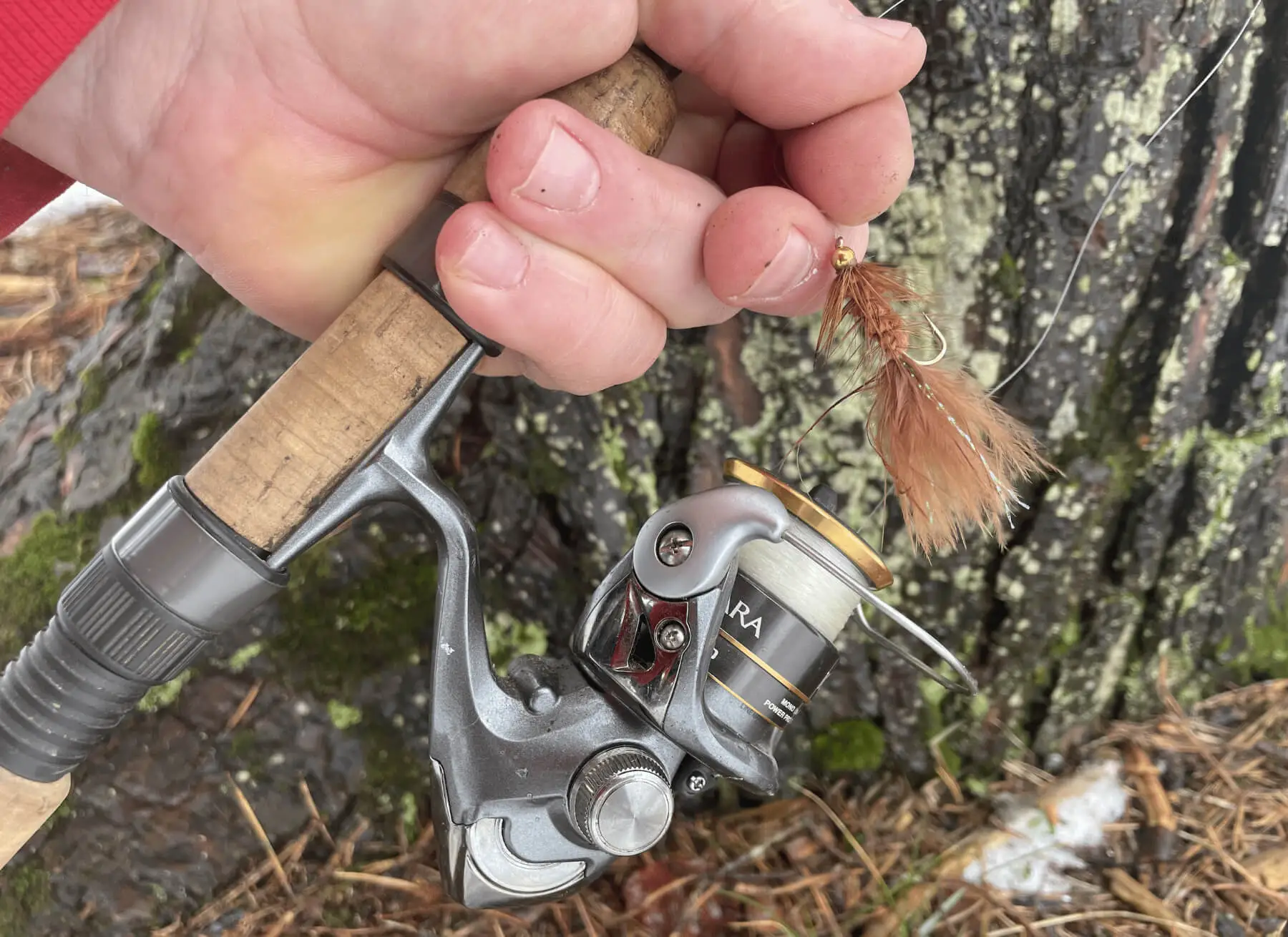
Credit: darkskiesflyfishing.com
Step-by-step: Setting Up Flies On A Spinning Reel
Let’s look at how to set up a simple fly and bubble rig for your spinning reel. This is the most common and beginner-friendly method.
What You Need
- Spinning rod and reel (light or ultralight works best)
- Monofilament or fluorocarbon line (4-8 lb test is best for trout and panfish)
- Casting bubble (clear, fillable float)
- Leader material (3-6 lb test, 3-6 feet long)
- Assorted flies (dry, wet, nymph, or streamer types)
The Setup Process
- Thread the bubble onto your main line. Some bubbles have a peg or stopper—remove it, thread the line through, then replace the peg.
- Fill the bubble with enough water to give casting weight, but not too much to sink it.
- Tie a swivel below the bubble (optional but helps prevent line twist).
- Attach the leader to the other end of the swivel or directly to your main line.
- Tie on your fly at the end of the leader.
- Check your knots to make sure everything is secure.
Casting And Retrieving
- Cast normally, but use a smooth motion to avoid tangling.
- Let the bubble land softly on the water.
- Retrieve slowly with small twitches or pauses.
- Watch for strikes—sometimes fish will hit the fly right after it lands.
Pro Tip: In windy conditions, use a slightly heavier bubble and leader to prevent tangles.
Types Of Flies That Work Best With Spinning Reels
Not all flies are equal when used with spinning gear. Some types work better than others:
Dry Flies
- Float on the water’s surface.
- Great for trout, panfish, and bass during insect hatches.
- Use with a bubble for the best presentation.
Wet Flies And Nymphs
- Sink below the surface.
- Ideal for fish feeding underwater.
- Can be used with split shot, weighted bubble, or weighted flies.
Streamers
- Imitate small fish or large aquatic insects.
- Best for larger species like bass or trout.
- Work well with dropper rigs or weighted setups.
Terrestrials
- Mimic grasshoppers, ants, or beetles.
- Effective in late summer or when these insects fall into the water.
Pro Tip: Carry a small selection of each fly type for different conditions.

Credit: anglersemporium.com
How To Choose The Right Leader And Line
The leader connects your main fishing line to the fly. Its size and material matter a lot for presentation and invisibility.
Leader Length
- Use a 3-6 foot leader for most situations.
- Longer leaders (up to 9 feet) are better for clear water or shy fish.
Leader Strength
- 3-6 lb test for trout, panfish, and small bass.
- 8 lb or more for bigger species.
Line Type
- Monofilament is easiest to handle and knots well.
- Fluorocarbon is nearly invisible in water but can be stiffer.
Common Mistake: Using a heavy leader that scares fish or prevents the fly from moving naturally.
Comparing Fly Fishing Vs. Using Flies On Spinning Gear
Many anglers want to know how fly and bubble setups compare with traditional fly fishing. Here’s a quick look:
| Feature | Fly Fishing Rod/Reel | Spinning Reel with Flies |
|---|---|---|
| Cost | High (specialized gear) | Lower (use existing gear) |
| Ease of Use | Steep learning curve | Easy for beginners |
| Casting Distance | Short to moderate | Longer with bubble/weight |
| Presentation | Very delicate/realistic | Less delicate, but good with practice |
| Best For | Trout, salmon, technical water | Panfish, trout, bass, general use |
Non-obvious Insight #3: In windy or tight spaces (like small streams with overhanging trees), a spinning reel with a bubble can outperform fly gear because you can cast under obstacles more easily.
When And Where To Use Flies On A Spinning Reel
Some fishing situations are perfect for this hybrid technique:
- Small streams where fish are feeding on insects.
- Ponds and lakes with active surface feeding.
- Heavily fished waters where fish have seen every spinner and worm.
- Urban fishing spots where fly casting is not practical due to space.
Example: During a summer evening hatch, trout may ignore everything except tiny dry flies. With a spinning reel and bubble, you can reach those rising fish without spooking them.
Advanced Tips For Better Results
Ready to go beyond the basics? These advanced tips can help you catch more fish:
- Match the Hatch: Observe what insects are on the water and choose flies that look similar.
- Use Fluorocarbon Leaders: For shy fish in clear water, fluorocarbon is less visible.
- Try a Double Fly Rig: Attach two flies, one above the other, to target fish feeding at different depths.
- Practice Casting Accuracy: The more precise your cast, the better your chances.
- Adjust Bubble Size: Use a small bubble for stealth, larger for longer casts or windy days.
Advanced Insight: In fast current, let the fly swing naturally downstream (“swinging the fly”) rather than retrieving it.
Common Mistakes And How To Avoid Them
Many beginners make the same errors when trying flies with spinning reels:
- Too Short a Leader: This scares fish and makes the fly look unnatural.
- Using Heavy Line: Thick line is visible and stiff, preventing the fly from moving right.
- Overfilling the Bubble: Too much water makes it sink or splash loudly.
- Fast Retrieval: Most insects move slowly. Retrieve with pauses and gentle twitches.
- Ignoring Line Twist: Use a swivel to prevent the bubble and fly from twisting your line.
Pro Tip: Always check your fly after a few casts—it may pick up weeds or twist, making it less attractive to fish.
Comparing Spinning Flies To Other Light Lure Techniques
Some anglers compare using flies on spinning reels to other ultra-light fishing styles. Here’s a quick comparison:
| Technique | Best For | Typical Lure Size | Gear Needed |
|---|---|---|---|
| Spinning with Flies | Surface feeding fish | Very light (0.1-1g) | Bubble/float, leader, fly |
| Ultra-light Jigs | Panfish, trout | 1-3g | Jig head, soft plastic |
| Micro Spoons/Spinners | Trout, small bass | 1-3g | Small spoon or spinner |
| Bait Rigs | All species | Varies | Hook, sinker, live bait |
Non-obvious Insight #4: Flies have a much lighter “fall” in the water, so they are less likely to spook fish in shallow or clear water than even the smallest jig or spinner.

Credit: www.youtube.com
Essential Gear For Using Flies On A Spinning Reel
While you don’t need expensive equipment, some items make this technique easier and more effective:
- Light or ultralight spinning rod (5-7 ft, fast action)
- Quality spinning reel with smooth drag (size 500-2000)
- Thin main line (4-8 lb monofilament or fluorocarbon)
- Assorted casting bubbles or clear floats
- Small swivels to prevent line twist
- Selection of flies (dry, wet, nymph, streamer)
- Small split shot for adding weight if needed
- Long-nose pliers for removing hooks safely
Pro Tip: Organize your gear in a small box for quick changes on the water.
Conservation And Ethical Considerations
Using flies can reduce fish injury compared to large treble hooks. Many flies use a single, small hook, making it easier to release fish unharmed. Always check local regulations—some waters only allow flies or artificial lures.
Catch and release is easier with flies, especially if you pinch down the barbs. Handle fish gently, keep them in the water, and use wet hands to avoid harming their slime coating.
Advanced Note: Insect hatches are sensitive times for fish. Avoid over-harvesting and respect other anglers, especially on busy streams.
Real-world Examples And Success Stories
Many anglers have caught their first trout, crappie, or bluegill using flies on a spinning reel. Here are a few real-world stories:
- Lake Edges: In spring, bluegill and crappie will swarm the shallows. A small dry fly behind a bubble can outfish live bait.
- Urban Streams: Trout in city creeks often ignore spinners but take small nymphs fished with a bubble.
- Family Fishing: Parents teaching kids find that flies with a bubble are easy, safe, and fun—no need to master fly casting.
Useful Resources For Further Learning
If you want to explore more about this method, check out this guide from the California Department of Fish and Wildlife. It offers diagrams and tips for setting up a fly and bubble rig.
Frequently Asked Questions
Can I Use Any Fly With A Spinning Reel?
You can use most flies, but some work better than others. Dry flies, nymphs, and small streamers are easiest. Very large or heavy flies may not cast well, and tiny flies may require a longer leader for a natural presentation.
What Size Bubble Or Float Should I Use?
Choose the smallest bubble that allows you to cast the distance you need. For trout and panfish, a 1-inch or smaller clear bubble is best. Adjust the water inside to change the weight for windy days or longer casts.
Will Using Flies On A Spinning Reel Catch As Many Fish As Fly Fishing?
In many situations, yes. Especially during insect hatches or when fish are feeding on the surface, a well-presented fly with a bubble can match or beat traditional fly tackle. However, in very technical waters, fly rods offer more delicate presentation.
Do I Need Special Knots For Tying Flies To Spinning Line?
No, but use strong, reliable knots. The improved clinch knot or loop knot works well for tying flies to leaders. Always test your knot strength before fishing.
Are There Any Legal Restrictions On Using Flies With Spinning Gear?
Some waters have specific rules. If the area is “fly fishing only,” you may need to use a fly rod and fly reel. Always check local regulations before fishing.
Fishing with flies on a spinning reel opens up a world of opportunity for both beginners and experienced anglers. It’s a simple, affordable way to try new techniques, catch more fish, and enjoy the best parts of both spinning and fly fishing.
With a little practice and the right setup, you’ll be amazed at how effective this method can be. Try it on your next trip, and you may find yourself reaching for the fly box more often than you thought.