
Planning a fishing trip is exciting. It’s a chance to relax, connect with nature, and maybe even bring home a fresh catch. But to make the most of your day on the water, you need to prepare well. Forgetting key items can turn a fun trip into a frustrating one.
Whether you’re a beginner or have some experience, knowing what to bring on a fishing trip saves time and avoids stress. This guide will walk you through everything you need—from fishing gear to clothing, safety equipment, and a few things most people overlook.
With good planning, you can focus on enjoying the experience and maybe even land the big one.
Essential Fishing Gear
The right fishing gear is at the heart of every successful trip. Your choices will depend on where you plan to fish and what you hope to catch.
Fishing Rod And Reel
A fishing rod and reel are your main tools. For beginners, a spinning rod and reel combo is the easiest to use. Look for a rod about 6–7 feet long. Choose medium action, which works for most freshwater fish. If you plan to fish in saltwater or catch bigger species, you’ll need a sturdier rod and a reel with higher line capacity.
Fishing Line
Bring extra fishing line. Lines can break or get tangled. For most freshwater fishing, 6–12 lb test line is enough. In saltwater or when targeting larger fish, use a stronger line. Braided lines are tough, while monofilament is easier for beginners.
Hooks, Sinkers, And Bobbers
Pack a variety of hooks in different sizes. Smaller hooks catch more fish, but large hooks are needed for bigger species. Sinkers help your bait sink, and bobbers keep it at the right depth. Different water conditions call for different setups.
Bait And Lures
Live bait like worms or minnows attracts many fish. Artificial lures—such as spinners, jigs, and soft plastics—also work well. Research which lures or baits are effective in your fishing spot. Bring a mix to try different options.
Tackle Box
A tackle box keeps your gear organized. Choose one with dividers for hooks, lures, weights, and tools. A well-organized box saves time and reduces the chance of losing small items.
Clothing And Personal Gear
Fishing can be messy, and weather changes quickly. Proper clothing and personal gear help keep you comfortable and safe all day.
Weather-appropriate Clothing
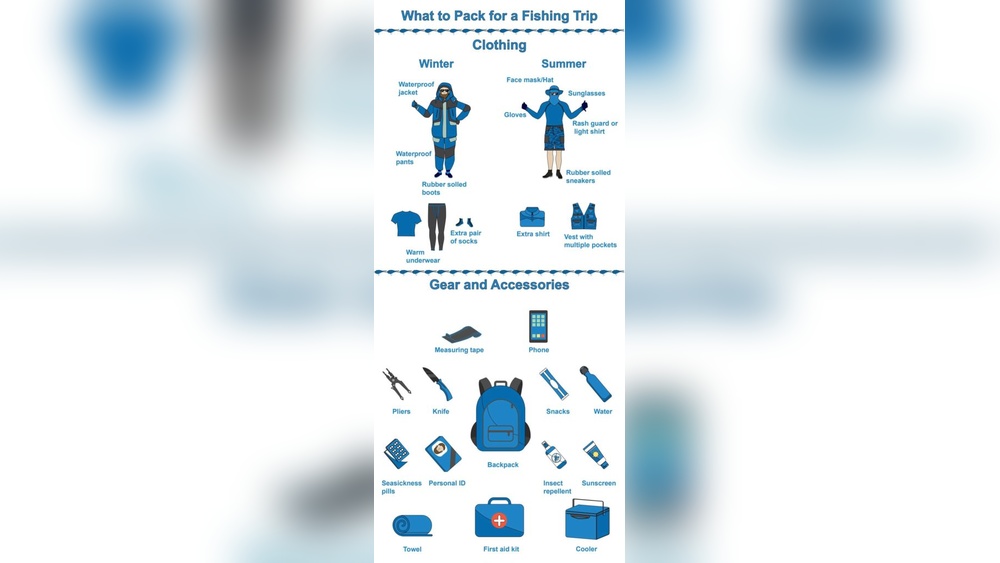
Dress in layers. Early mornings can be cold, but it often gets hot by noon. Bring a hat for sun protection and a lightweight, long-sleeved shirt to block UV rays. In colder weather, add a waterproof jacket and insulated layers.
Footwear
Wear sturdy, waterproof boots or shoes with good grip. Slippery rocks and muddy banks are common near water. Wet feet are uncomfortable, and poor footwear can lead to accidents.
Sunglasses And Sunscreen
Polarized sunglasses reduce glare and help you see fish in the water. Always wear sunscreen with SPF 30 or higher, even on cloudy days. Sunburn can happen fast on the water.
Bug Spray
Mosquitoes and other insects are common, especially at dawn and dusk. Bring bug spray with DEET or a natural alternative. Apply it before you start fishing.
Rain Gear
Weather can change quickly, especially near lakes and rivers. Pack a lightweight rain jacket or poncho. Staying dry keeps you comfortable and prevents hypothermia if it gets cold.
Safety And First Aid
Safety is often overlooked, but it’s essential for a worry-free trip.
Life Jacket
If you’ll be on a boat, kayak, or even a dock, wear a life jacket. Choose a comfortable one that fits well. Even strong swimmers can face trouble in cold or rough water.
First Aid Kit
A first aid kit is a must. Include bandages, antiseptic wipes, tweezers, pain relievers, and allergy medicine. Cuts from hooks and slips on rocks are common.
Knife Or Multi-tool
A sharp fishing knife or multi-tool is useful for cutting line, cleaning fish, or fixing gear. Make sure it’s rust-resistant and stored safely.
Emergency Whistle
A whistle can signal for help if you get lost or hurt. It’s small, light, and works even when your phone does not.
Flashlight Or Headlamp
If you fish early in the morning or stay after dark, bring a flashlight or headlamp with extra batteries. It’s helpful for tying knots, finding gear, and staying safe.
Food, Water, And Comfort
A day outside means you need to take care of your basic needs. Packing for comfort keeps your energy up and helps you enjoy the trip.
Snacks And Meals
Bring high-energy snacks like nuts, granola bars, and dried fruit. If you’ll be out all day, pack a simple meal—sandwiches, wraps, or a thermos of soup. Avoid foods that spoil easily.
Water
Dehydration happens quickly outdoors, especially in the sun. Pack at least two liters of water per person for a full day. If you’re fishing in remote areas, bring a water filter or purification tablets.
Cooler
A cooler keeps drinks cold and stores your catch. Use ice packs instead of loose ice to avoid messes. Choose a size that fits your group’s needs but is easy to carry.
Camp Chair Or Stool
Standing all day can be tiring. Bring a folding camp chair or stool. It’s especially useful if you fish from shore.
Towel And Wet Wipes
Fishing is messy. Towels and wet wipes help clean hands, dry off, or wipe gear. A small pack fits easily in your bag.
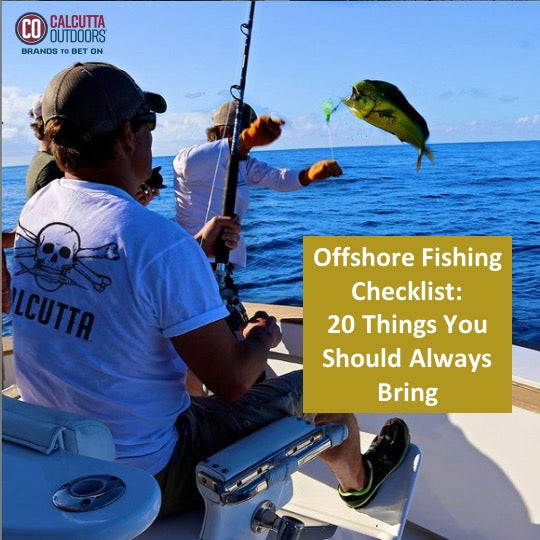
Credit: www.calcuttaoutdoors.com
Permits And Documentation
Many fishing locations require paperwork. Not having the right documents can ruin your trip.
Fishing License
Most states and countries require a fishing license. Check local rules and buy your license ahead of time. Keep it with you while fishing.
Local Regulations
Different waters have unique rules—such as catch limits, restricted species, or special gear requirements. Review these online or at bait shops before heading out.
Identification
Carry a valid photo ID. Some places require both your license and ID for verification.
Tech And Tools For Success
Technology and simple tools can make your trip smoother and more productive.
Fishing Apps
Smartphone fishing apps can show maps, weather, tides, and the best times to fish. Apps like Fishbrain or Navionics are helpful, but make sure your phone battery is charged.
Camera Or Phone
Bring a camera or phone to capture your catch. Use a waterproof case or dry bag to protect electronics.
Landing Net
A landing net helps bring fish in without losing them. Choose a net size based on your target species.
Pliers And Hook Removers
Pliers remove hooks safely and fix tackle. Hook removers are especially helpful for deep-hooked fish or catch-and-release fishing.
Stringer Or Fish Basket
Keep your catch fresh with a stringer or basket. Some anglers use a live well, but stringers are portable and easy for beginners.
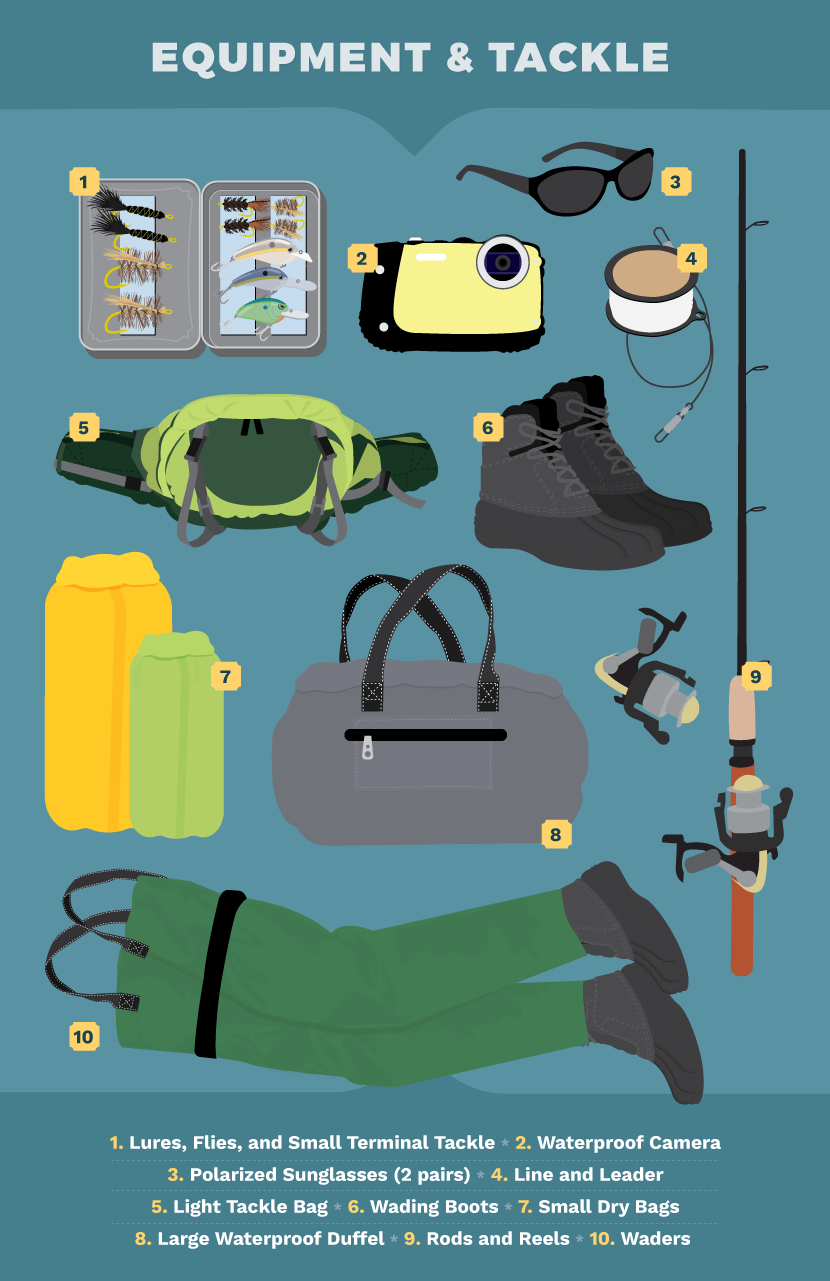
Credit: www.fix.com
Items Most Beginners Forget
Even experienced anglers sometimes forget small but important things. Here are a few items that are easy to miss:
- Extra line and hooks – Breaks and snags are common.
- Small trash bags – For packing out bait containers and other waste.
- Hand sanitizer – Cleaning up after handling bait or fish.
- Notebook and pen – For tracking catches, notes, or sketching the landscape.
- Ziplock bags – For organizing licenses, snacks, or saving small items.
- Duct tape – Temporary fixes for torn gear or broken rods.
- Paracord or rope – Useful for tying down gear or making an emergency shelter.
Packing these small extras adds little weight but solves big problems if things go wrong.
Weather And Environmental Awareness
Being ready for changing conditions is a sign of a smart angler. Weather and environment play a big role in fishing success.
Check The Forecast
Always check the weather forecast before your trip. Thunderstorms, high winds, or sudden cold snaps can make fishing dangerous.
Tides And Water Levels
If you’re fishing in saltwater or tidal rivers, know the tide schedule. Fish are often more active at certain tides.
Wildlife Awareness
Be aware of animals in the area—snakes, bears, or even alligators in some places. Make noise to avoid surprises, especially in remote areas.
Leave No Trace
Respect the environment. Pick up all trash, avoid disturbing plants, and follow local conservation rules. Healthy waters mean better fishing for everyone.
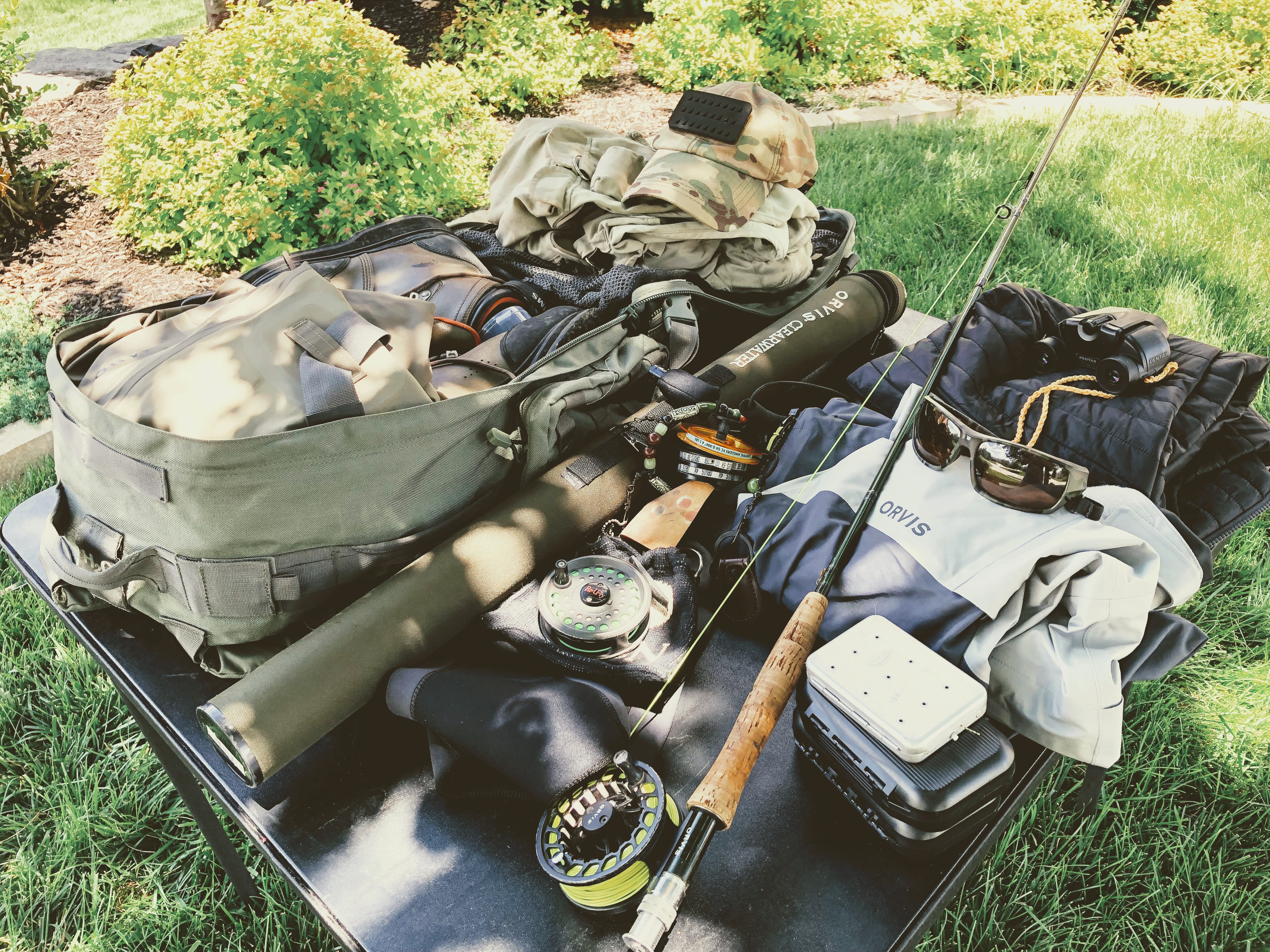
Credit: wadeoutthere.com
Table: Sample Packing Checklist For A Day Fishing Trip
Here’s a quick reference for what to bring. Adjust based on your location and needs.
| Item | Essential | Optional | Purpose |
|---|---|---|---|
| Fishing rod & reel | ✔ | Catching fish | |
| Hooks, sinkers, bobbers | ✔ | Setting up bait | |
| Tackle box | ✔ | Organization | |
| Live bait/lures | ✔ | Attracting fish | |
| Rain jacket | ✔ | Weather protection | |
| Cooler | ✔ | Storing catch & food | |
| First aid kit | ✔ | Medical needs | |
| Camp chair | ✔ | Comfort | |
| Bug spray | ✔ | Insect protection | |
| Fishing license & ID | ✔ | Legal fishing |
Table: Clothing Choices By Weather
Choosing the right clothes keeps you comfortable and safe. Here’s a quick comparison:
| Condition | Recommended Clothing | Key Features |
|---|---|---|
| Hot & Sunny | Lightweight shirt, shorts, hat, polarized sunglasses | UV protection, keeps cool |
| Cold & Windy | Base layer, insulated jacket, gloves, wool socks | Warmth, wind-blocking |
| Rainy | Waterproof jacket, quick-dry pants, rubber boots | Stays dry, prevents chills |
| Bugs Present | Long sleeves/pants, bug spray, neck gaiter | Insect protection |
Table: Essential Vs. Optional Fishing Tools
Some tools are must-haves, while others are nice extras:
| Tool | Essential | When to Bring |
|---|---|---|
| Multi-tool | ✔ | All trips |
| Fish stringer | When keeping fish | |
| Landing net | Bigger fish or catch-and-release | |
| Camera | Photos of catches/scenery | |
| Fishing app | Remote or new locations |
Non-obvious Tips For A Better Fishing Trip
Many beginners think only about the basics, but these extra tips can make your fishing trip much more enjoyable and successful:
- Scout the location in advance. Look for parking, restrooms, and fishing spots before you arrive. Use satellite maps if possible.
- Practice casting at home. If you’re new, a few practice sessions in the yard help avoid frustration at the water.
- Talk to local anglers or bait shops. They often know which bait or techniques work best in the area.
- Bring extra zip ties or rubber bands. These are handy for fixing broken equipment or keeping rods together.
- Pack according to the length of your trip. Overnight trips need more food, water, and shelter—plan accordingly.
Mistakes To Avoid
Even well-prepared anglers can make mistakes. Here’s how to avoid common problems:
- Overpacking or underpacking. Take what you need, but not so much you can’t carry it.
- Ignoring local fishing rules. Check regulations before you go.
- Forgetting to check weather and tides. Sudden changes can end your trip early.
- Not testing gear before leaving. Make sure everything works—especially reels, lines, and electronics.
- Leaving trash behind. Always leave the area cleaner than you found it.
Frequently Asked Questions
What Is The Minimum Fishing Gear I Need For A Short Trip?
You need a fishing rod and reel, line, hooks, a few sinkers, bobbers, and bait. Add a small tackle box, water, sunscreen, and your fishing license. With these, you can fish in most freshwater locations for a few hours.
How Do I Choose The Right Bait Or Lure?
For most beginners, live bait like worms works well. If you fish in lakes, small spinners or soft plastic lures are also a good choice. Ask at a local bait shop or check online for the best bait for your target species.
How Can I Keep My Catch Fresh If I’m Not Going Home Soon?
Use a cooler with ice packs or a fish stringer in the water. Change the ice as needed, and keep the cooler out of direct sun. Don’t let fish sit in warm water or air, as this spoils the meat quickly.
Is Fishing Safe For Children And Beginners?
Yes, fishing is safe if you follow basic safety rules. Always supervise children, use life jackets near water, and handle hooks carefully. Start with simple gear and fish from shore to reduce risks.
Where Can I Find More Information On Fishing Regulations?
You can find the latest fishing rules and license info on your state wildlife agency website or visit U.S. Fish & Wildlife Service for resources on local and national regulations.
Preparing well is key to a fun and successful fishing trip. With the right gear, clothing, and a few smart extras, you’ll have everything you need for a safe, comfortable day outdoors. Remember, fishing is about more than catching fish—it’s about enjoying nature, learning new skills, and making memories.
Happy fishing!