Fishing is more than just throwing a line into the water and waiting for a bite. One of the most important things many anglers overlook is the effect of tides on fishing success. Whether you’re casting from the shore, a pier, or a boat, understanding the difference between low tide and high tide fishing can turn a slow day into a memorable catch. If you’re new to fishing or want to improve your skills, learning how tides affect fish behavior—and how to use this knowledge—will help you catch more fish, more often.
Many beginners think any time is good for fishing, but seasoned anglers know that timing your trip with the right tide can be a game-changer. Tides move huge amounts of water, change underwater landscapes, and affect where fish feed. By the end of this article, you’ll know exactly how to use low tide and high tide to your advantage, what gear to bring, and which mistakes to avoid. Let’s dive into the world of tidal fishing and help you fish smarter, not harder.
What Are Tides And Why Do They Matter For Fishing?
Tides are the regular rise and fall of sea levels caused by the moon’s gravity pulling on Earth’s oceans. Most coastal areas experience two high tides and two low tides every 24 hours. The difference in water level between low and high tide can be just a few inches or several feet, depending on where you fish.
But why does this matter? When the tide moves, it stirs up food for fish and changes their behavior. Fish often feed more actively during certain parts of the tide cycle. If you pay attention to the tides, you’ll have a much better chance of finding fish.
Key Tidal Terms
- High tide: The highest point the water reaches.
- Low tide: The lowest point the water reaches.
- Incoming tide (flood): Water level rising from low to high.
- Outgoing tide (ebb): Water level falling from high to low.
- Slack tide: A short period when the water is not moving much, usually right at the top or bottom of the tide.
Understanding these basics is the first step to fishing success.
How Low Tide Affects Fishing
Fishing at low tide can feel tricky, but it has unique advantages if you know what to look for.
What Happens During Low Tide?
At low tide, the water pulls back, exposing more of the shoreline, rocks, sandbars, and underwater structures. In many areas, water becomes shallower and clearer, making fish more cautious.
Pros Of Low Tide Fishing
- Exposed Structure: Low tide reveals rocks, holes, reefs, and other fish-holding spots that are hidden at high tide. By studying these areas, you can learn where fish might hide once the tide comes back in.
- Easier to Read Water: With less water, it’s easier to spot features like drop-offs or channels where fish gather.
- Fish Concentration: Fish often get pushed into deeper pools or channels as the water drops. This concentrates them in smaller areas, making them easier to target.
- Access to New Areas: Wading anglers can reach spots that are underwater during high tide.
Cons Of Low Tide Fishing
- Fish May Be Spooked: With less water and more light, fish can see anglers and predators more easily.
- Limited Fish Movement: Some species avoid shallow water during low tide, so you may find fewer fish in easy-to-reach places.
- Boat Access Difficulties: Boats may run aground or cannot reach certain spots at low tide.
When Is Low Tide Best?
Low tide is best when you want to explore structure, target fish in deeper pools, or learn a new fishing spot. Some species, like flounder or snook, are often more catchable in these conditions because they wait in channels for food to come past.
Example: Shore Fishing At Low Tide
Imagine you’re fishing from the beach. At low tide, you see a sandbar and a deep channel next to it. Fish often wait in that channel, ambushing baitfish washed off the sandbar. If you cast near the drop-off, you can target these waiting fish.
Non-obvious Insight
Many anglers only fish at high tide, missing the chance to “scout” their spot during low tide. Low tide is the best time to map out where to cast later—look for hidden rocks, holes, or grassy patches that will attract fish when covered by more water.
How High Tide Affects Fishing
High tide brings different challenges and opportunities. Many anglers see it as the “prime time” for fishing, but there are reasons for this belief.
What Happens During High Tide?
At high tide, water covers more of the shoreline. Fish can move into areas that were dry or too shallow before. They chase food into flooded grasses, mangroves, or rocky areas.
Pros Of High Tide Fishing
- Fish Move Closer to Shore: Many species follow the rising water, coming within easy casting range for shore anglers.
- Active Feeding: High tide often brings in fresh food—crabs, shrimp, baitfish—making fish more active.
- More Habitat Available: Fish can spread out into new areas, making it possible to target them in places you can’t reach at low tide.
- Safer for Boats: Deeper water allows boats to access more spots without running aground.
Cons Of High Tide Fishing
- Fish Spread Out: With more water, fish can scatter, making them harder to find.
- Difficult to Spot Structure: Underwater features are hidden, so you need to know the spot well or use electronics.
- More Debris: High tide can bring floating weeds or trash, which can tangle lines.
When Is High Tide Best?
High tide shines when you want to fish near the shore, especially around rocks, jetties, or docks. Many species feed close to the bank, taking advantage of new food sources.
Example: Pier Fishing At High Tide
At high tide, baitfish move under the pier to hide. Predators like snook or striped bass follow them. Casting lures or bait under the pier can result in big catches during this time.
Non-obvious Insight
The very top of high tide—called slack high—can be a slow period. Fish often feed best when the water is moving, not when it’s totally still. Fishing the hour before or after peak high tide is usually more productive.
Comparing Low Tide And High Tide Fishing
It’s easy to think one tide is always better than the other, but the truth is more complex. Each has its own strengths depending on where you fish, the species you target, and your fishing style. Here’s a side-by-side look at the two:
| Factor | Low Tide | High Tide |
|---|---|---|
| Water Level | Lowest, exposes structure | Highest, covers shoreline |
| Fish Location | Deeper channels, concentrated | Spread out, closer to shore |
| Best For | Scouting, targeting deep pools | Shoreline, docks, active feeding |
| Common Mistake | Fishing too shallow | Not finding structure |
| Access | Wading possible, boats limited | Full access by boat |

Credit: fishingbooker.com
The Importance Of Water Movement
Most anglers focus just on high or low tide, but water movement (current) is just as important. Fish are more likely to feed when the tide is moving—either rising or falling—because water stirs up food and brings it to them.
Slack water, when the tide is not moving much, is often the slowest time for bites. Plan your fishing trips to start just as the tide begins to move, either up or down.
Choosing The Best Tides For Different Types Of Fishing
Not all fishing is the same. The best tide can change based on how and where you fish.
Shore And Beach Fishing
- High tide is usually best because fish move closer to shore.
- Look for points, sandbars, or channels where fish can ambush prey.
- Fish the last hour of rising tide and the first hour of outgoing tide for best results.
Pier And Jetty Fishing
- High tide brings fish under and around the structure.
- Some species, like sheepshead or black drum, feed best when the water covers barnacle-encrusted pilings.
Boat Fishing
- Low tide can be good for targeting fish in deep holes or channels.
- High tide allows you to fish flooded grass or mangroves for species like redfish or snook.
Estuary And Backwater Fishing
- Fish often move with the tide. Incoming tide brings bait and fish into backwaters.
- Outgoing tide pulls baitfish and shrimp back out, and predators follow them.
Night Fishing
- High tide at night can be very productive, as many predatory fish move in to feed under cover of darkness.
How Tides Affect Different Fish Species
Not all fish react to tides in the same way. Here’s how some popular saltwater species respond:
| Species | Low Tide Behavior | High Tide Behavior |
|---|---|---|
| Redfish | Wait in deep holes, ambush prey | Move into flooded grass to feed |
| Snook | Hold near deeper docks or channels | Feed along mangroves and shorelines |
| Flounder | Hide in deeper sandy spots | Move onto flats to chase bait |
| Striped Bass | Stay in main channels | Move up onto flats, near rocks |
| Sheepshead | Feed around exposed rocks | Pick at barnacles on pilings |
How To Plan Your Fishing Trip Around The Tides
If you want to maximize your fishing success, start by checking the tide charts for your area. These are available online, in fishing apps, or local newspapers. Here’s how to use this information:
- Pick a Spot: Decide where you want to fish—beach, pier, mangrove, jetty, etc.
- Check the Tide Chart: Find out the times for high and low tide.
- Choose the Right Window: Plan to fish during the last two hours of an incoming or outgoing tide for best water movement.
- Scout at Low Tide: If possible, visit your spot at low tide to look for fish-holding structure.
- Arrive Early: Fish often start biting before the tide peaks.
It’s also important to think about weather, wind, and moon phase. These can all affect how strongly the tide moves and how fish behave.
Essential Gear For Low Tide And High Tide Fishing
Your gear may need to change based on the tide and location.
For Low Tide
- Wading Boots: Protect your feet from sharp rocks or shells.
- Longer Cast Rods: To reach deeper channels from shore.
- Polarized Sunglasses: Spot fish and underwater features more easily.
- Light Lines and Leaders: Clear water means fish are wary.
For High Tide
- Shorter Rods: Useful for fishing under docks or in tight spots.
- Heavier Weights: Stronger current can require more weight to keep bait in place.
- Topwater Lures: Use these when fish move into shallow, flooded areas.
Safety Gear
- Life Jacket: Always wear one when fishing from a boat or wading in deep water.
- Tide Watch or App: To keep track of changing water levels and avoid being stranded.
Reading The Water: Hidden Clues For Success
Successful anglers know how to “read the water. ” This means looking for signs that show where fish might be during different tides.
- Rips and Currents: Small waves or lines on the water can show where water is moving fastest. Fish often wait at the edge of these areas.
- Baitfish Activity: If you see small fish jumping or birds diving, predators are probably nearby.
- Foam Lines: Floating foam can show where currents carry food.
- Change in Water Color: Darker water often means deeper areas, which can hold fish at low tide.

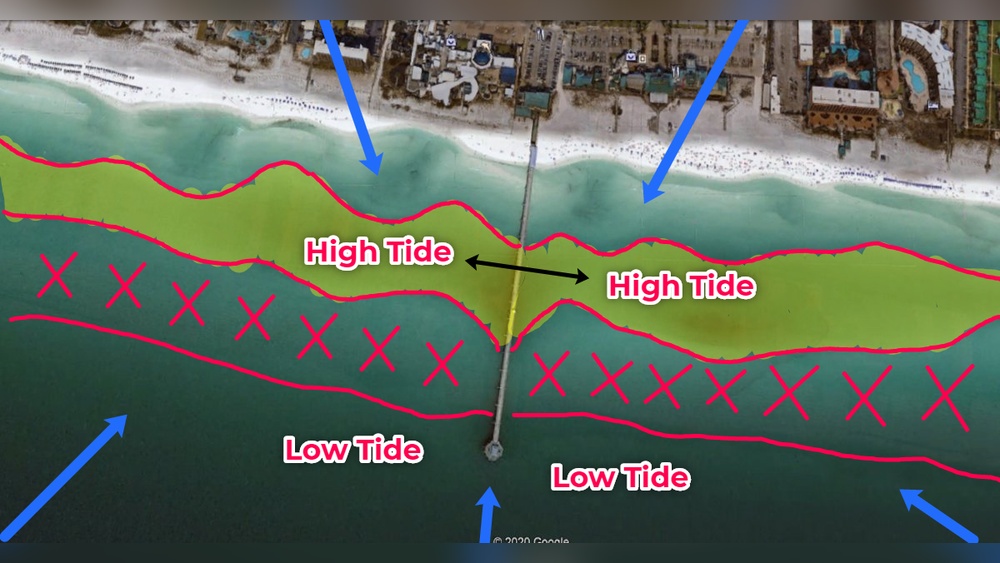
Credit: www.researchgate.net
Common Mistakes Anglers Make With Tides
Even experienced anglers make mistakes. Here are some to avoid:
- Ignoring the Tide Chart: Arriving at the wrong time can mean hours with no fish.
- Fishing Only at High Tide: Low tide offers unique chances to find fish, especially in deep pools.
- Not Adjusting Tactics: Using the same bait or spot at all tides rarely works.
- Overlooking Safety: Rising tide can cut off your path back to shore or flood sandbars.
- Not Observing: Failing to watch how fish and bait move with the tide leaves you guessing.
Advanced Tips: Going Beyond The Basics
If you want to catch more fish, try these advanced strategies:
- Fish the “Edges”: As the tide rises or falls, fish often gather at the edge where shallow meets deep water.
- Match the Hatch: Use bait or lures that look like what the fish are feeding on at that moment.
- Use Tidal Windows: Some species only bite during a short window of a moving tide. Learn these patterns for your target fish.
- Track the Moon: New and full moons bring stronger tides (spring tides) and better feeding, while quarter moons mean weaker tides (neap tides).
- Keep a Journal: Write down what works and when. Patterns will appear over time, helping you predict the best tides for your favorite spots.
Real-world Examples And Data
Scientific studies show that 70% of inshore saltwater fish are caught within two hours of a tide change. In Florida, surveys found that redfish and snook catches doubled during the rising and falling tides compared to slack water.
In places like the Bay of Fundy in Canada, where the tidal range is over 50 feet, fishing success depends almost entirely on the tide. Anglers there often plan trips down to the minute.
For more detailed tidal science, check resources like the NOAA Ocean Service.
Frequently Asked Questions
What Is The Best Tide For Fishing Overall?
There is no single “best” tide for all fishing. The best time is usually during a moving tide—either incoming or outgoing—because fish feed more actively. High tide is good for shore fishing, while low tide is great for finding structure and targeting fish in deep pools.
Is It Worth Fishing During Slack Tide?
Slack tide (when the water is not moving) is usually the slowest time for fishing. Most fish stop feeding actively, and bait is less available. Try to fish when the tide is moving for better results.
Can You Catch Big Fish At Low Tide?
Yes, you can catch big fish at low tide, especially in deeper channels or near exposed structure. Some species, like snook or striped bass, wait in these areas for food to pass by.
How Do I Find The Tide Times For My Area?
You can find tide charts online, in local newspapers, or with fishing apps. Websites like NOAA and many local fishing organizations publish daily tide tables.
What Safety Precautions Should I Take When Fishing With The Tides?
Always check the tide times before you fish. Rising tides can trap you on sandbars or rocks. Wear a life jacket if wading or boating, and always have a way to track the tide, such as a watch or phone app.
Fishing is a lifelong learning journey, and understanding tides is one of its most important lessons. With the right knowledge and a little practice, you’ll turn every fishing trip into a smarter, safer, and more successful adventure. Whether you favor low tide or high tide fishing, using the power of the tides will help you catch more and enjoy your time on the water.
Credit: www.researchgate.net