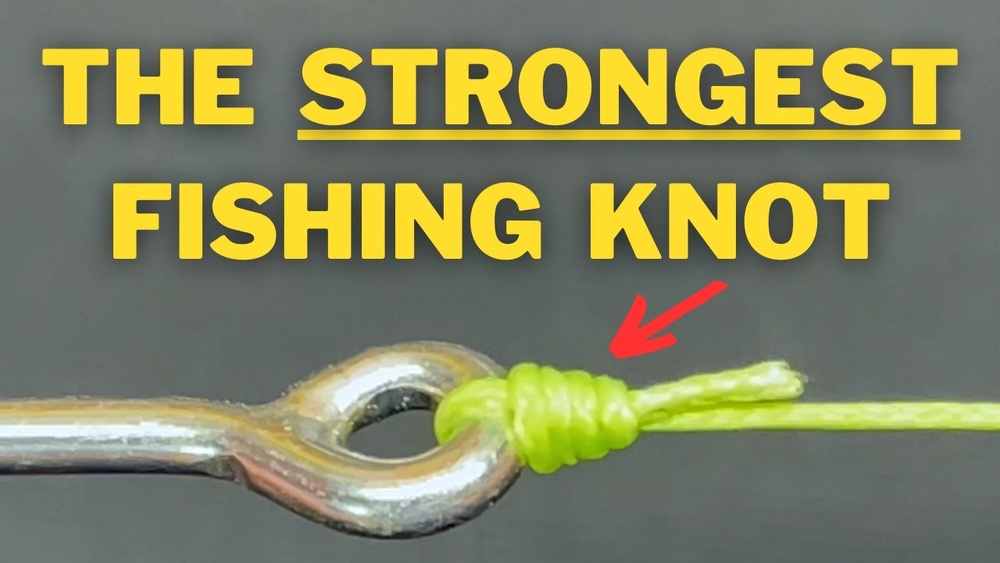
Many anglers spend hours preparing their gear, but often overlook one key detail—the knot. The fishing knot is what connects you to the fish. If your knot fails, even the strongest line or sharpest hook becomes useless. For beginners and experts alike, choosing the strongest fishing knot can make the difference between landing a trophy catch or telling a story about the one that got away. In this article, you’ll discover what makes a fishing knot strong, which knots are considered the best, and how to tie them correctly. We’ll explore real-world tests, practical tips, and clear comparisons, so you can fish confidently, knowing your knot will hold when it matters most.
What Makes A Fishing Knot Strong?
A fishing knot isn’t just about holding two pieces of line together. The strength of a knot depends on several factors:
- Breaking strength: This is how much force the knot can handle before it breaks.
- Slippage: A strong knot won’t slip under pressure.
- Ease of tying: If a knot is too complex, mistakes happen and weaken it.
- Suitability for line type: Some knots work well with monofilament, others with braid or fluorocarbon.
- Resistance to abrasion: Knots that can handle rubbing against rocks or fish teeth last longer.
Research shows that a poorly tied knot can reduce line strength by up to 50%. Even a top-rated knot can fail if tied incorrectly or used with the wrong line. For example, braid lines are slippery, so knots that work for mono may not hold for braid.
This is why choosing the right knot—and tying it right—is critical.
The Most Popular Fishing Knots Tested
Over the years, anglers have relied on many knots. But which one is truly the strongest fishing knot? Independent tests by fishing magazines and tackle companies have compared knots under real pressure. Here are some that consistently rank high:
- Palomar Knot
- Uni Knot
- Improved Clinch Knot
- San Diego Jam Knot
- FG Knot
- Double Uni Knot
- Orvis Knot
- Trilene Knot
Let’s examine how these knots perform, including their breaking strength and common uses.
| Knot Name | Average Breaking Strength (%) | Best For |
|---|---|---|
| Palomar Knot | 95 | Braid, Mono |
| Uni Knot | 90 | Mono, Fluoro |
| Improved Clinch Knot | 85 | Mono |
| San Diego Jam Knot | 92 | Fluoro, Mono |
| FG Knot | 98 | Braid to leader |
| Double Uni Knot | 87 | Joining lines |
| Orvis Knot | 89 | Mono, Fluoro |
| Trilene Knot | 90 | Mono, Fluoro |
Data shows the FG Knot and Palomar Knot often have the highest breaking strength. The FG Knot is excellent for connecting braid to leader, while the Palomar Knot is simple and strong for hooks and lures.
Understanding Knot Strength: Real-world Testing
Testing knots is not just about laboratory conditions. Real-world fishing introduces variables like water, movement, and sudden jerks. Many anglers believe the knot that survives harsh conditions is the strongest.
One of the most respected tests is the “pull test,” where knots are tied with different line types and pulled until they break. Results show:
- Knots tied with wet line perform better, as wetting reduces friction and prevents damage.
- Tight, even wraps are critical. Uneven wraps weaken the knot.
- Tag end length matters. Too short, and the knot slips; too long, and it gets caught.
Experienced anglers know that knots like the Improved Clinch are strong in calm water but less reliable when fighting a big fish. The Palomar Knot, on the other hand, keeps its strength even with sudden jerks.
Here’s a comparison of knot failure rates based on real fishing conditions:
| Knot Name | Failure Rate (%) | Common Cause |
|---|---|---|
| Palomar Knot | 5 | Incorrect tying |
| Uni Knot | 10 | Slippage |
| Improved Clinch Knot | 15 | Tag end too short |
| FG Knot | 2 | Not enough wraps |
| San Diego Jam Knot | 8 | Loose wraps |
Non-obvious insight: While knots like the FG Knot are nearly unbreakable when tied perfectly, they require practice. Beginners often lose strength because they rush or skip steps.
Fg Knot: The Strongest For Braid To Leader
The FG Knot is widely considered the strongest fishing knot for connecting braided main line to a fluorocarbon or monofilament leader. Its design allows the braid to grip the leader without slipping, making it perfect for saltwater and heavy freshwater fishing.
Why The Fg Knot Is So Strong
- The knot uses multiple wraps of braid around the leader, creating a strong connection.
- The wraps act like Chinese finger traps—the harder the pull, the tighter the grip.
- The knot is slim, so it passes easily through rod guides.
How To Tie The Fg Knot
- Hold the braid and leader parallel.
- Wrap the braid around the leader 18–22 times. Make sure wraps are tight and even.
- Tie a series of half-hitches with the braid to lock the wraps.
- Trim both tag ends.
A common mistake is not making enough wraps. If you tie fewer than 18 wraps, the knot can slip. Wetting the line before tightening also helps avoid friction burns.
Real-world Example
Saltwater anglers chasing tuna often use the FG Knot. It survives high-speed runs and heavy pressure. In tests, the FG Knot retained over 98% of line strength, outperforming other knots for braid-to-leader connections.

Credit: saltyscales.com
Palomar Knot: The Easiest Strong Knot
The Palomar Knot is a favorite among bass anglers and beginners because it’s easy to tie and extremely strong. It works well with both monofilament and braided lines.
Why The Palomar Knot Works
- It uses a double line, which spreads out the load and prevents breakage.
- It’s simple—fewer steps mean fewer mistakes.
- The knot stays strong even when wet.
How To Tie The Palomar Knot
- Double about 6 inches of line and pass it through the eye of the hook.
- Tie a simple overhand knot with the doubled line.
- Pass the hook or lure through the loop.
- Pull both ends to tighten and trim the tag end.
Beginners often forget to pull the knot evenly. If you tighten one side more than the other, the knot weakens.
Practical Tips
For braided lines, make sure to wet the knot before tightening. This prevents the braid from cutting itself and losing strength.
Uni Knot: Versatile And Reliable
The Uni Knot is popular because it works for tying hooks, connecting lines, and even attaching to reels. It’s not the absolute strongest, but its reliability and versatility make it a staple.
Why Choose The Uni Knot
- Works with all line types—mono, fluoro, and braid.
- Easy to tie, even with cold hands.
- Can be used for single or double lines.
How To Tie The Uni Knot
- Pass the line through the eye of the hook and make a loop.
- Wrap the tag end around the main line and through the loop 6–8 times.
- Pull the tag end to tighten the wraps.
- Slide the knot down to the hook and trim the tag.
The Uni Knot is great for beginners because it’s forgiving. Even if you make a small mistake, the knot usually holds.
San Diego Jam Knot: High-pressure Performer
The San Diego Jam Knot is favored by tournament anglers for its strength with heavy lines. It’s used for big game fishing and situations where you can’t afford any weakness.
Features Of The San Diego Jam Knot
- Handles heavy mono and fluorocarbon well.
- Can be tied quickly under stress.
- Maintains strength even after multiple catches.
How To Tie The San Diego Jam Knot
- Pass the line through the hook eye and double back.
- Wrap the tag end around both lines 5–7 times.
- Pass the tag end through the loop near the hook eye, then through the big loop.
- Tighten and trim.
Many people rush the wraps. If wraps overlap or are loose, the knot can slip.
Improved Clinch Knot: Classic But Not The Strongest
The Improved Clinch Knot is one of the oldest knots in fishing. It’s reliable for small to medium fish, but not the best for big game.
When To Use The Improved Clinch Knot
- Good for mono lines and light tackle.
- Easy to tie, especially for beginners.
- Not recommended for braid, as it can slip.
How To Tie The Improved Clinch Knot
- Pass the line through the hook eye and wrap the tag end around the main line 5–7 times.
- Pass the tag end through the first loop, then through the big loop.
- Tighten and trim.
If you use braid, add an extra wrap or choose another knot.

Credit: www.youtube.com
Knot Strength Vs. Knot Security
A knot can be strong but still fail if it slips. Knot security means it stays tight under pressure. Here are some non-obvious factors that affect security:
- Line memory: Some lines “remember” their shape. If a knot is tied loosely, line memory can push it apart.
- Lubrication: Wetting the knot reduces friction and prevents damage.
- Tag end management: Leaving a longer tag end can prevent slippage.
Experienced anglers test their knots before fishing. They pull hard and check for slippage. If a knot slips, they retie it.
How Line Type Affects Knot Strength
Different fishing lines affect knot strength. Here’s a quick overview:
- Monofilament: Flexible and forgiving. Most knots work well.
- Fluorocarbon: Stiff and slippery. Knots need more wraps and careful tightening.
- Braid: Very slippery. Only certain knots hold reliably.
Non-obvious insight: Some knots are strong with one line type but weak with another. For example, the Palomar Knot is strong with braid, but the Improved Clinch Knot is not.
| Knot Name | Mono Strength (%) | Fluoro Strength (%) | Braid Strength (%) |
|---|---|---|---|
| Palomar Knot | 95 | 90 | 96 |
| Uni Knot | 92 | 89 | 90 |
| FG Knot | 90 | 93 | 98 |
| Improved Clinch | 85 | 80 | 68 |
The table shows the FG Knot is best for braid, while the Palomar Knot is strong for both mono and braid.
Tips For Tying Strong Fishing Knots
Even the best knot can fail if tied incorrectly. Here are some tips:
- Wet the line: Always wet the knot before tightening. This reduces friction and prevents the line from weakening.
- Tie slowly and carefully: Rushing leads to mistakes.
- Check wraps: Make sure wraps are even and not overlapping.
- Pull on both ends: Tighten the knot using both the main line and tag end.
- Test the knot: Pull hard to check if it slips or breaks.
- Leave a proper tag end: Trim, but leave a bit of length to prevent slippage.
- Practice: The more you tie, the stronger your knots will be.
A common mistake is not testing knots before fishing. Experienced anglers test every knot, especially when using new line or tying in low light.
Choosing The Right Knot For Your Fishing Style
There isn’t one perfect knot for every situation. The strongest fishing knot depends on your gear, target fish, and conditions. Here’s how to choose:
- For braid to leader, use the FG Knot.
- For hooks and lures, use the Palomar Knot.
- For joining lines, use the Double Uni Knot.
- For heavy mono or fluoro, try the San Diego Jam Knot.
- For light tackle, the Improved Clinch Knot is sufficient.
Think about your fishing style. If you chase big fish, use knots with the highest breaking strength. For casual fishing, simplicity and reliability are more important.

Credit: www.youtube.com
Comparing Knot Strength: Field Reports
Anglers and fishing guides report their experiences in tournaments and daily fishing. Here’s what they found:
- FG Knot: Used in saltwater tournaments. Survives battles with tuna and tarpon. Guides trust it for its slim profile and strength.
- Palomar Knot: Bass anglers use it for lures. Rarely fails unless tied wrong.
- San Diego Jam Knot: Popular for deep-sea fishing. Handles heavy tackle and big fish.
- Uni Knot: Used for quick repairs on the water. Reliable but not the absolute strongest.
These reports confirm that the right knot, tied correctly, can withstand even the toughest conditions.
Frequently Asked Questions
What Is The Strongest Fishing Knot For Braided Line?
The FG Knot is considered the strongest for braided line, especially when connecting to a leader. Its design grips the leader tightly and rarely slips, even under heavy loads.
Why Does My Fishing Knot Keep Slipping?
Knots slip for several reasons: not enough wraps, tag end too short, or tying with dry line. Wetting the knot and leaving a longer tag end can help. Also, some knots are not suitable for certain line types.
How Can I Test If My Fishing Knot Is Strong Enough?
Pull hard on the knot after tying. If it slips or breaks easily, retie it. Testing before fishing is important. Field tests show that knots tied