Tenkara Vs Fly Fishing: A Deep Dive For Anglers
Fishing is more than just a way to catch food—it’s a journey into nature, a test of patience, and a skill that brings calm to many people worldwide. Among the many styles of fishing, tenkara and fly fishing stand out for their grace, simplicity, and effectiveness in freshwater streams. But what truly separates these two methods? Many new and experienced anglers wonder which style fits their needs, skill level, and local waters. If you’re curious about the differences, strengths, and unique joys of tenkara vs fly fishing, this guide will give you a clear, in-depth understanding.
Let’s break down each method, compare their gear, techniques, challenges, and even their cultural history, so you can confidently decide which one might be right for your next outdoor adventure.
What Is Tenkara?
Tenkara is a traditional Japanese method of fly fishing. It started in the mountain streams of Japan over 200 years ago, where local fishermen needed a simple, effective way to catch trout in fast-moving water. Tenkara uses only a rod, a line, and a fly—no reel.
The tenkara rod is long and flexible, often telescopic for easy transport. The line is fixed directly to the rod’s tip, usually 8–15 feet long. The fly is simple, often tied with sparse hackle and minimal decoration, designed to mimic insects.
Tenkara was made for catching small to medium-sized fish in tight, clear mountain streams. Its design focuses on simplicity and efficiency. You can set up your gear in less than a minute and start fishing right away, making tenkara popular among hikers, backpackers, and anyone who values minimalism.
What Is Fly Fishing?
Fly fishing is a broader style with roots in Europe and North America. It has developed over centuries into a technique for catching various freshwater and saltwater species. It uses a rod, a reel, a fly line, and an artificial fly.
Unlike tenkara, the fly line in fly fishing is thick and weighted. This helps you cast the nearly weightless fly farther and more accurately. The reel stores the line and gives you control over long runs and big fish.
Fly fishing has many styles:
- Dry fly fishing (flies float on the water)
- Nymphing (flies sink below the surface)
- Streamer fishing (bigger flies that imitate baitfish)
Each style needs different gear and skills. Fly fishing is known for its delicate presentations, long casts, and the use of advanced techniques to “match the hatch” (imitate local insects).
Tenkara Gear Vs Fly Fishing Gear
Understanding the gear is key to choosing the right style for you. Here’s a breakdown of the main differences.
Rods
- Tenkara rods are long (typically 10–14 feet), very light, and have no reel seat. Most are telescopic, collapsing to about 20 inches. Their length helps keep the line off the water, improving control.
- Fly fishing rods come in many lengths (7–10 feet) and weights (from ultra-light 1wt to heavy 12wt). They have guides for the line and are paired with a matching reel.
Lines
- Tenkara lines are fixed to the rod tip and can be level (same thickness throughout) or tapered (thicker at one end). They’re usually 8–15 feet long, with a short tippet attached.
- Fly fishing lines are thicker and heavier, with special tapers for different casts. They can be floating, sinking, or sink-tip. Backing, fly line, leader, and tippet are all part of the setup.
Reels
- Tenkara does not use a reel. Line is managed by hand and stored by wrapping around the rod.
- Fly fishing relies on a reel for line storage, drag, and fighting big fish.
Flies
Both use artificial flies, but tenkara flies are usually simpler. Fly fishing offers thousands of patterns, from tiny dry flies to large streamers.
Gear Comparison At A Glance
Here’s a quick overview:
| Feature | Tenkara | Fly Fishing |
|---|---|---|
| Rod Length | 10–14 ft | 7–10 ft |
| Reel | None | Required |
| Line Type | Level/Tapered | Weighted/Tapered |
| Fly Variety | Simple, traditional | Extensive patterns |
| Setup Time | Very fast | Longer |
Key insight: Many beginners assume fly fishing gear is always more expensive, but high-end tenkara rods can cost as much as entry-level fly fishing setups. The main savings come from fewer accessories needed for tenkara.
How Casting Differs: Tenkara Vs Fly Fishing
Casting is the heart of both styles, but the techniques are quite different.
Tenkara Casting
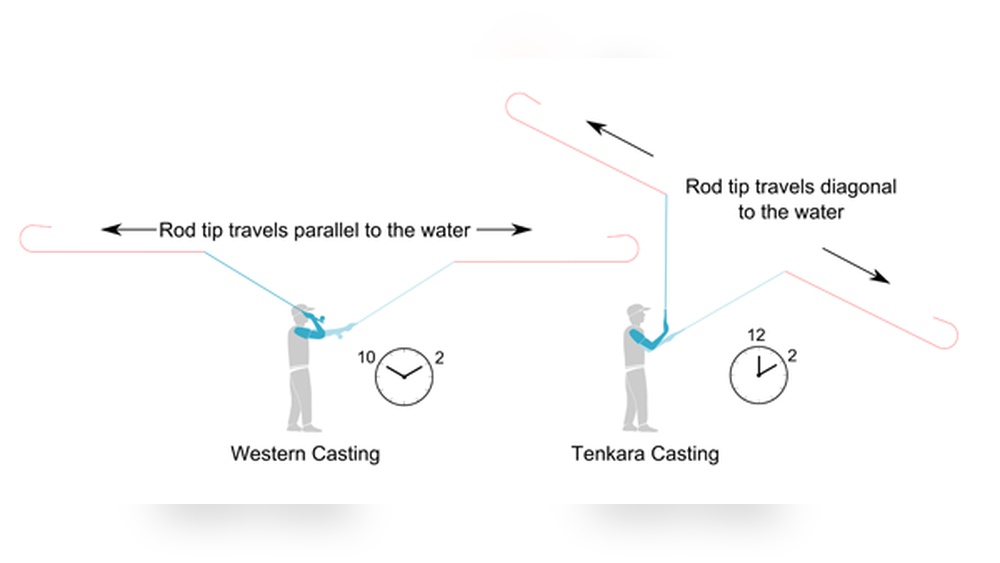
Tenkara casting is about short, controlled movements. The long rod and fixed line let you flick the fly onto the water with a simple “overhead” or “side-arm” cast. Because the line is light and short, you can keep most of it off the water, which helps with drag-free drifts.
A typical tenkara cast uses only wrist and forearm, making it less tiring. Casting distance is limited to the rod and line length—usually 25–35 feet max. But this is perfect for small streams, where longer casts are unnecessary or even a problem.
Fly Fishing Casting
Fly fishing casts are more varied and complex. The extra weight in the fly line lets you cast longer distances (up to 60–100 feet with practice). There are dozens of cast types: roll cast, double haul, false cast, and more.
Learning fly fishing casting takes more time and practice. It also requires space behind you for the backcast, which is sometimes difficult in tight, wooded streams.
Non-obvious tip: Many new anglers think more casting distance means more fish. In reality, most fish are caught within 30 feet in both styles. Good presentation often matters more than distance.
Where Each Method Shines
Choosing between tenkara and fly fishing often comes down to the water you plan to fish.
Tenkara’s Sweet Spot
- Small streams and creeks: Tight cover, fast-moving water, and short casting distances play to tenkara’s strengths.
- Backcountry fishing: Lightweight, simple gear is ideal for hiking and travel.
- High-gradient rivers: Tenkara’s long rod gives you precise control over drifts, helping you reach spots regular fly rods can’t.
Fly Fishing’s Domain
- Larger rivers and lakes: Longer casts and a reel make fly fishing better for open water.
- Windy conditions: Heavier fly lines cut through wind better than tenkara lines.
- Big fish: The reel helps fight strong fish and manage long runs.
- Saltwater: Fly fishing gear is designed to handle bigger, faster fish.
Key insight: While tenkara can handle surprisingly large fish, landing a big trout or bass without a reel becomes much harder. Fly fishing gives you more power and control for those situations.
Learning Curve: Which Is Easier For Beginners?
Many people start fly fishing and feel overwhelmed by the gear, knots, and casting. Tenkara was created for simplicity, but does that mean it’s always easier?
Tenkara
- Setup: Quick to assemble; fewer parts and knots.
- Casting: Easier to learn basic cast, but requires finesse for accurate presentations.
- Line management: No reel, so you must hand-strip line and control fish with the rod.
- Limited range: Great for close-up fishing, not for covering big water.
Fly Fishing
- Setup: More parts; learning to use a reel, attach backing, leader, and tippet.
- Casting: Steeper learning curve, but more versatile in the long run.
- Line management: Reel gives more control, especially for big fish.
- Adaptability: Can be used in almost any water type.
Most beginners find tenkara faster to pick up, especially for trout in small streams. However, fly fishing’s flexibility pays off as your skills grow.
Example: A complete beginner can catch fish with tenkara after a short lesson. Fly fishing often takes several outings to master the basics, but rewards you with more options later.
Credit: www.ginkandgasoline.com
The Fish: What Species Can You Catch?
Both methods focus on freshwater species, but their strengths vary.
Tenkara Targets
- Trout (brook, brown, rainbow): The classic target in Japan and North America.
- Char: Often found in cold mountain streams.
- Panfish: Bluegill, sunfish, and small bass are also fun on tenkara.
- Smallmouth bass: In smaller rivers, tenkara can handle these strong fighters.
Fly Fishing Variety
- Trout and salmon: From tiny streams to big rivers.
- Bass (largemouth, smallmouth): Popular targets in lakes and rivers.
- Pike, carp, musky: Larger species require heavier rods.
- Saltwater species: Bonefish, tarpon, redfish, and more with special gear.
Fly fishing’s adaptability makes it better for larger and more diverse fish. Tenkara is best for fish under 20 inches, though skilled anglers have landed much bigger.
Matching The Hatch: Fly Selection
“Matching the hatch” means using flies that imitate the insects fish are eating. This is a core idea in fly fishing, but how does it fit with tenkara?
Tenkara’s Simple Approach
In traditional tenkara, anglers often use just one or two fly patterns. They focus less on matching insects and more on technique—changing how the fly moves to trigger a strike. This is known as the “one fly” philosophy.
- Sakasa kebari (reverse hackle fly) is the classic tenkara fly.
- Changing your presentation (faster, slower, twitching) often works better than switching patterns.
Fly Fishing’s Variety
Fly fishers often carry dozens (or hundreds) of flies, matching size, color, and shape to local insects. Some anglers even tie their own flies to mimic what they see on the water.
- Dry flies (for surface feeding)
- Nymphs (for underwater insects)
- Streamers (for baitfish, leeches)
Non-obvious insight: While many think more flies mean more success, experts often rely on a handful of proven patterns. The way you present the fly is often as important as the fly itself.
Cost And Accessibility
How much does it cost to get started? And which style is easier for someone with limited time or money?
Tenkara
- Starter kits often include rod, line, and a few flies for $100–$200.
- Low maintenance: No reel to buy, fewer accessories.
- Cheap to replace: Lines and tippets are inexpensive.
Fly Fishing
- Entry-level gear: $150–$300 for rod, reel, line, and basic flies.
- Accessories: Vests, packs, leaders, extra lines, more flies.
- Ongoing costs: Replacing lost flies, upgrading gear.
While both can be affordable, tenkara is usually cheaper to start and maintain. Fly fishing costs can add up quickly as you buy more gear.
Example: If you want the lightest kit for travel or hiking, tenkara is unbeatable. If you want to fish a variety of locations and species, fly fishing’s extra investment pays off.
Maintenance, Durability, And Repairs
How do the two systems hold up over time? Here’s what to expect.
Tenkara
- Simple construction: Fewer moving parts mean less can break.
- Rod sections: Telescopic rods can jam if sand or grit gets inside. Keep them clean!
- Line storage: No reel means you’ll need to wind the line by hand or use a line holder.
- Repairs: Many tenkara rods come with spare tip sections. Easy to fix in the field.
Fly Fishing
- Rods: More durable for heavy use, but breakable if mishandled.
- Reels: Moving parts need cleaning and lubrication, especially after saltwater use.
- Line care: Fly lines need cleaning and replacement every few years.
Both systems need care, but tenkara is simpler for most beginners. Fly fishing gear is more robust for big fish and tough conditions.
Tip: Always rinse gear after use in sand, mud, or saltwater to prevent damage.
Credit: www.adventureexplorations.com
The Cultural Experience
Fishing is about more than catching fish—it’s also about tradition and connection.
Tenkara’s Heritage
- Rooted in Japanese mountain villages
- Focus on simplicity, mindfulness, and respect for nature
- Many practitioners view tenkara as a way to “become part of the stream”
Fly Fishing’s Tradition
- Deep history in Europe and North America
- Emphasis on craftsmanship (rod making, fly tying)
- Strong community and conservation ethic
Both methods connect you to nature, but tenkara brings a Zen-like simplicity, while fly fishing offers endless ways to personalize your gear and approach.
Travel And Portability
If you like to hike, backpack, or travel light, portability matters.
Tenkara’s Advantage
- Telescopic rods collapse small enough to fit in a backpack.
- Minimal gear: No reel, fewer flies, light pack.
- Quick setup: From pack to fishing in under a minute.
Fly Fishing’s Reality
- Rod tubes: Most fly rods break down into 4 pieces, but are still longer than tenkara rods.
- Reel and accessories add bulk.
- Setup time is longer.
Tenkara is the clear winner for ultralight travel. Fly fishing is still portable, but not as fast or simple.
Environmental Impact
Both methods are low-impact, but there are a few differences.
- Tenkara: Less gear means less manufacturing and waste. Simpler flies use fewer materials.
- Fly fishing: More gear and fly tying can mean more plastic, feathers, and packaging.
Catch-and-release ethics are strong in both communities. Many tenkara anglers use barbless hooks to protect fish, and fly fishers are active in conservation efforts.
Tip: Always pack out your trash and use environmentally safe gear.
Community And Learning Resources
Both styles have growing communities and plenty of ways to learn.
- Tenkara: Smaller but passionate community. Resources like Tenkara USA, blogs, and YouTube.
- Fly fishing: Larger, with clubs, guides, classes, and books worldwide.
If you want local events and group trips, fly fishing clubs are easier to find. Tenkara is growing fast, especially in the US and Europe.
External resource: For a deep dive into the history and gear of both methods, check out Wikipedia’s Tenkara Fishing page.
Quick Reference: When To Choose Each Style
Here’s a side-by-side look:
| Situation | Tenkara | Fly Fishing |
|---|---|---|
| Small mountain stream | Excellent | Good |
| Large river/lake | Limited | Excellent |
| Travel/Backpacking | Excellent | Good |
| Big fish (>20 in) | Challenging | Better suited |
| Learning curve | Easy | Moderate |
| Adaptability | Limited | High |
Common Mistakes To Avoid
- Assuming tenkara is “just for kids”: It’s a respected method for serious anglers.
- Buying too much fly fishing gear too soon: Start simple and expand as you learn.
- Using long fly fishing casts in tight streams: Short, accurate casts are often better.
- Ignoring line management in tenkara: Practice how to handle line and land fish without a reel.
- Not adapting presentation: Both styles require you to adjust how you fish, not just what you use.
Which Is Right For You?
Your choice depends on your waters, target fish, and how much you value simplicity vs versatility.
Choose tenkara if:
- You fish small streams.
- You want a lightweight, portable setup.
- You prefer less gear and a “Zen” approach.
- You’re a beginner seeking a quick start.
Choose fly fishing if:
- You fish large rivers, lakes, or saltwater.
- You want to chase bigger or more species.
- You enjoy learning many techniques and collecting gear.
- You want to tie your own flies and try advanced presentations.
Personal note: Many anglers use both styles depending on the situation. There’s no rule saying you must pick only one!
Frequently Asked Questions
What Size Fish Can I Catch With Tenkara?
Tenkara is best for fish up to about 18–20 inches (45–50 cm). With skill and the right rod, some anglers have landed larger trout, but fighting and landing big fish is much harder without a reel. For very large fish, fly fishing gear is safer for both the angler and the fish.
Can I Use My Fly Fishing Flies With A Tenkara Rod?
Yes! Most dry flies, nymphs, and even small streamers can be used with tenkara. Just match the size of the fly to your rod and line. However, very heavy or large flies may not cast well with a tenkara setup.
Is Tenkara Allowed Everywhere Fly Fishing Is?
Almost always, yes. Tenkara is considered a form of fly fishing in most regulations. However, check local fishing rules—some areas have specific definitions or gear restrictions, especially in competitions or special waters.
Can I Catch Saltwater Fish With Tenkara?
Tenkara is not designed for saltwater or very large fish. The gear is too light, and the fixed line system gives little control over strong, fast-running fish. Stick to freshwater streams and small to medium-sized species for best results.
Which Is Better For Kids Or Beginners?
Tenkara’s simplicity and quick learning curve make it excellent for kids and new anglers. Less gear means less confusion. Fly fishing is also great for beginners, but it takes longer to master the basics.
Choosing between tenkara and fly fishing is not about which method is “better”—it’s about matching the right tool to your own fishing journey. Both styles offer a lifetime of learning, excitement, and connection with nature. Try each, discover what you enjoy, and you’ll never look at a river the same way again.

Credit: www.youtube.com