Illegal, unreported, and unregulated (IUU) fishing and overfishing are two of the biggest threats facing our oceans today. These problems may sound similar, but they are not the same. Each one harms marine life, damages local communities, and affects the world’s food supply in unique ways. Many people confuse the two, or think they are just different names for the same issue. But if you look closer, you will see clear differences—and understanding these differences is the first step to solving them.
Let’s explore what IUU fishing and overfishing really mean, how they impact our planet, and why fighting both is essential for the future of seafood and healthy oceans.
What Is Iuu Fishing?
The term IUU fishing stands for illegal, unreported, and unregulated fishing. This is a global problem that affects every ocean and nearly every country. To understand IUU fishing, it helps to break it down into its three parts:
- Illegal fishing means breaking the law. This could be fishing without a license, using banned gear, or fishing in protected areas.
- Unreported fishing is when fishers do not report their catches as required by law. This hides the real scale of fishing and makes management difficult.
- Unregulated fishing happens when there are no rules, or when fishers do not follow the rules set by local or international authorities.
IUU fishing is often secretive and hard to track. It is sometimes linked to other crimes, such as human trafficking or smuggling. According to the Food and Agriculture Organization (FAO), IUU fishing accounts for up to 26 million tons of fish each year—about 15% of the world’s total catch. The economic loss is huge, estimated at $10–$23 billion annually.
How Iuu Fishing Happens
IUU fishing can take many forms. Here are some common examples:
- Fishing in another country’s waters without permission
- Catching protected or endangered species
- Using illegal nets or fishing methods
- Falsifying catch records
- Selling fish on the black market
Many IUU fishers operate at night or turn off their location-tracking devices to avoid detection. They may change the name and flag of their vessels often, making it hard for authorities to catch them.
Who Is Affected By Iuu Fishing?
IUU fishing causes harm in several ways:
- Local fishermen lose their livelihoods because illegal fishers take too much fish or undercut prices.
- Marine ecosystems suffer because unregulated fishing often ignores rules meant to protect species and habitats.
- Consumers may unknowingly buy illegal fish, supporting criminal networks.
- Governments lose tax revenue and struggle to manage their resources.
Developing countries are especially vulnerable to IUU fishing, as they often lack the resources to patrol their waters effectively.
What Is Overfishing?
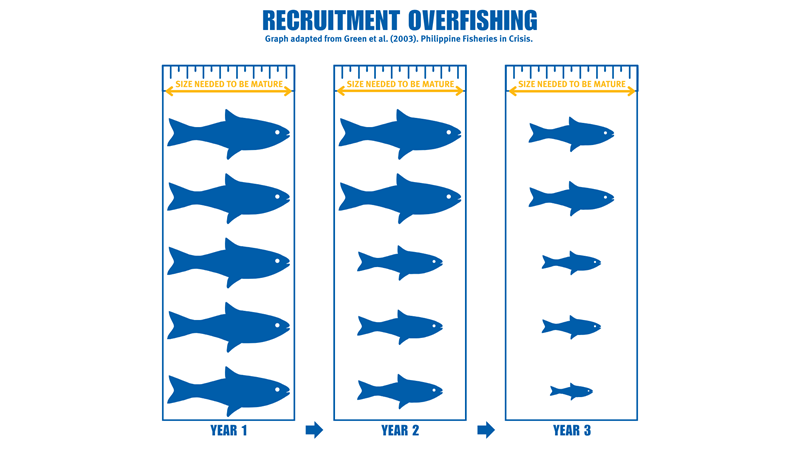
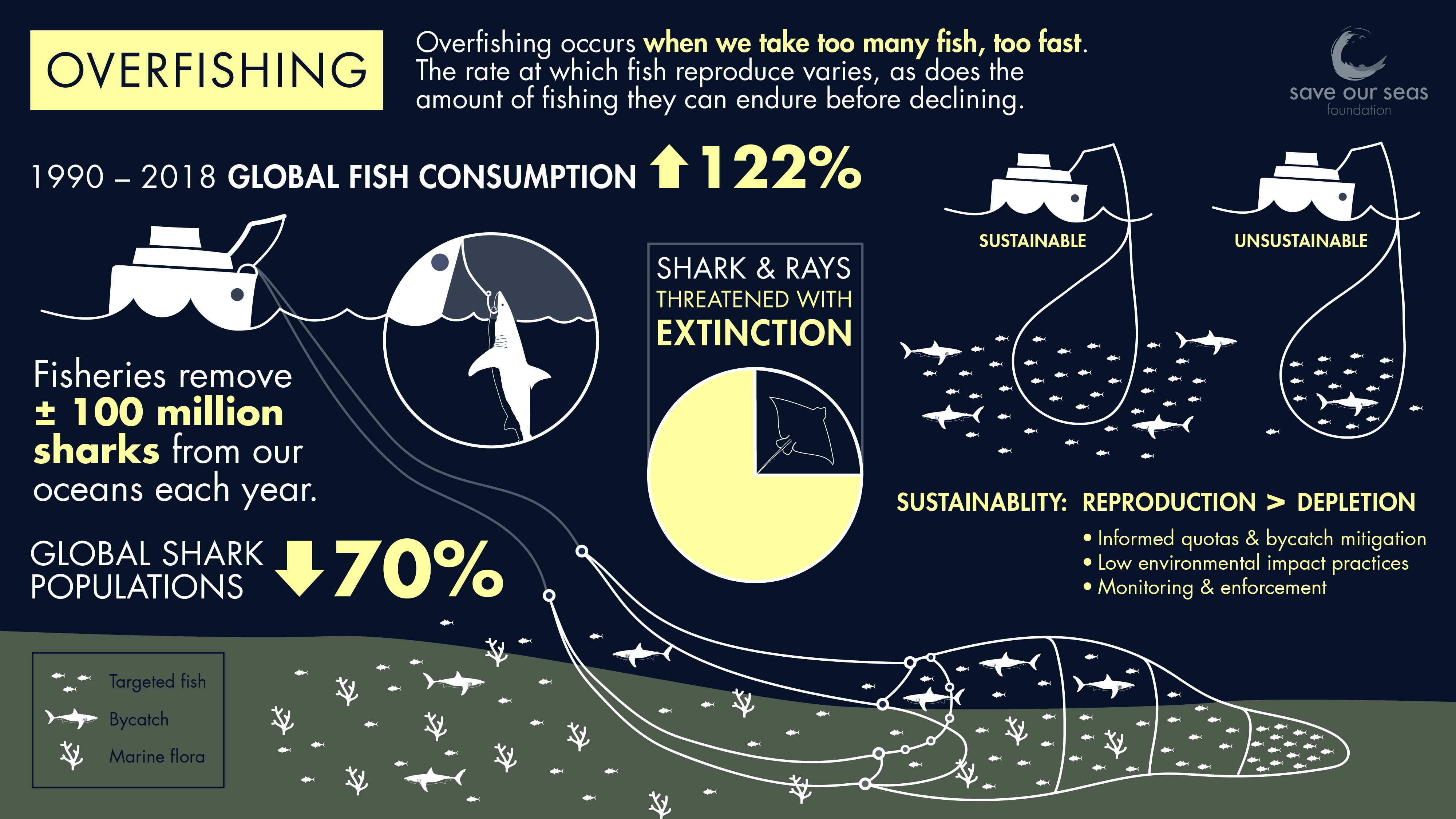
Overfishing is when too many fish are caught from the sea, faster than they can reproduce. Over time, this leads to shrinking fish populations and, in some cases, total collapse. Unlike IUU fishing, overfishing is not always illegal. It can happen even when all the rules are followed—if those rules are too weak, or if fishers simply take too much.
The FAO reports that in 2021, about 35% of the world’s fish stocks were overfished. This number has tripled since the 1970s. Today, many popular fish species—such as Atlantic cod, bluefin tuna, and orange roughy—are at risk because of overfishing.
How Overfishing Happens
Overfishing can result from:
- Poorly designed or outdated fishing quotas
- Lack of data about fish populations
- High demand for certain species
- Use of powerful boats and nets that catch huge amounts at once
- Weak enforcement of fishing limits
Sometimes, overfishing is driven by subsidies that make it cheaper to catch more fish, even when stocks are low. Other times, international waters (areas outside any country’s control) are targeted, because rules there are weaker or harder to enforce.
Impact Of Overfishing
The consequences of overfishing are serious:
- Fish stocks decline or disappear completely
- Food security for millions of people is threatened
- Jobs in fishing and seafood industries are lost
- Ocean ecosystems are damaged, affecting other animals and plants
Some changes caused by overfishing can take decades or even centuries to fix. In extreme cases, species may never recover.
Key Differences: Iuu Fishing Vs Overfishing
It is easy to see why people mix up IUU fishing and overfishing. Both put pressure on the oceans and threaten fish populations. However, there are clear differences in how they happen and how they can be solved.
Here is a comparison to help clarify:
| Aspect | IUU Fishing | Overfishing |
|---|---|---|
| Definition | Illegal, unreported, or unregulated fishing | Taking too many fish, faster than they can reproduce |
| Legality | Usually illegal or outside the law | Can be legal or illegal |
| Main Causes | Breaking rules, lack of enforcement, corruption | Poor management, high demand, weak rules |
| Who is Involved? | Often criminal groups, some regular fishers | Commercial and small-scale fishers worldwide |
| Solutions | Better law enforcement, stronger penalties, global cooperation | Stronger science-based rules, quota systems, better monitoring |
A Simple Example
Imagine a country has a law that only 1,000 tons of tuna can be caught each year. If a fishing company secretly catches 1,200 tons and lies about it, that is IUU fishing. If the government allows fishers to catch 2,000 tons by mistake, and everyone follows the law, that is overfishing.
How Iuu Fishing And Overfishing Are Connected
While they are different, IUU fishing and overfishing often make each other worse. Illegal or unreported fishing means that total catches are higher than what scientists or managers believe. This leads to overfishing because the real catch numbers are hidden. Weak rules or poor enforcement make both problems harder to solve.
For example, in parts of West Africa, IUU fishing by foreign fleets takes much more fish than reported. Local fishers find it harder to make a living, and fish populations drop faster than expected. Even if the legal fishing limit is set correctly, IUU fishing pushes the total catch over safe levels.
Credit: www.msc.org
Main Drivers Behind Iuu Fishing
Understanding what causes IUU fishing helps us know where to focus our efforts.
1. Weak Governance
Many countries lack the resources or political will to enforce fishing laws. Remote coastlines, large exclusive economic zones (EEZs), and limited patrol boats make it easy for illegal fishers to operate undetected.
2. High Profits
Illegal fishing can be very profitable. Some fish, such as toothfish and bluefin tuna, sell for high prices on the black market. Criminal groups use advanced ships and technology to increase their catch and avoid detection.
3. Complex Supply Chains
Fish often pass through many hands before reaching the final consumer. This makes it hard to trace where fish were caught and whether they were caught legally.
4. Corruption
In some places, officials may accept bribes to ignore illegal fishing or to issue fake licenses.
5. Lack Of International Cooperation
Fish do not respect borders, and many species move between countries’ waters. Without strong cooperation, illegal fishers can move easily from one country to another to avoid the law.
Main Drivers Behind Overfishing
Overfishing is not just about breaking rules. Often, the rules themselves are not enough to protect fish stocks.
1. Poor Fisheries Management
Some governments set catch limits too high, do not collect enough data, or fail to adapt to changing conditions. This lets fish populations fall faster than they can recover.
2. Economic And Social Pressures
Fishing provides jobs and food for millions of people. When fish stocks drop, governments may be slow to cut catch limits, worried about unemployment or rising food prices.
3. Global Demand
People all over the world want seafood, and rising incomes mean more people can afford it. This puts more pressure on fish stocks.
4. Powerful Technology
Modern fishing boats can catch huge amounts of fish quickly. Big nets, sonar, and GPS make it possible to find and catch fish that were once hard to reach.
5. Subsidies
Some countries pay their fishing industries to keep working, even when catches are low. These subsidies can keep too many boats on the water, driving overfishing.
Impacts On Ecosystems And People
Both IUU fishing and overfishing cause serious harm, but the ways they affect the world can be different.
Ecosystem Impacts
- Biodiversity loss: Removing too many fish, especially top predators, can change the whole food web. Other species may increase or decrease in number, causing imbalances.
- Habitat destruction: Some illegal fishing methods, like bottom trawling or blast fishing, destroy coral reefs and seafloor habitats.
- Bycatch: IUU and overfishing both increase bycatch—the capture of unwanted species like turtles, dolphins, or seabirds.
Economic And Social Impacts
- Loss of income: Coastal communities and small-scale fishers often suffer the most. When fish stocks drop, they lose jobs and food sources.
- Food security: Over 3 billion people depend on seafood for protein. Both IUU fishing and overfishing threaten this supply.
- Higher prices: As fish become scarce, prices rise, making seafood less affordable.
A less obvious consequence is the loss of “fishing culture” in some regions. As fish populations collapse, traditional skills and ways of life can disappear forever.
Real-world Examples
Understanding the theory is important, but real-world cases show the scale of the problem.
West Africa: Iuu Fishing Hotspot
The waters off West Africa are some of the most heavily targeted by IUU fishers. Foreign vessels—mostly from Asia and Europe—fish illegally, taking up to $2.3 billion worth of fish every year. Local fishermen struggle to compete and often face empty nets.
Atlantic Cod: A Story Of Overfishing
The collapse of the Atlantic cod fishery off Canada’s east coast is a classic example of overfishing. Decades of catching too many cod led to a sudden crash in the 1990s. The fishery has never fully recovered, and thousands of jobs were lost.
Southern Ocean: Toothfish Poaching
Illegal fishing for Patagonian toothfish in the Southern Ocean was once widespread. Stronger patrols and international cooperation have reduced IUU fishing, but poaching still threatens this valuable species.

Credit: www.ejiltalk.org
Solutions: How Can We Tackle Iuu Fishing And Overfishing?
Solving these problems takes more than just good intentions. It requires action at local, national, and international levels.
Tackling Iuu Fishing
1. Better Monitoring And Surveillance
Using satellites, drones, and electronic tracking systems helps authorities see where fishing boats are and what they are doing.
2. International Cooperation
Countries must work together, share data, and agree on common rules. Organizations like INTERPOL and the FAO help coordinate these efforts.
3. Stronger Laws And Penalties
Higher fines, jail time, and taking away illegal vessels can make IUU fishing less attractive.
4. Transparent Supply Chains
Tracking fish from the sea to the plate—using digital records or DNA testing—makes it harder for illegal fish to enter the market.
5. Empowering Local Communities
Giving local fishers a say in management, and supporting community patrols, helps protect resources.
Tackling Overfishing
1. Science-based Quotas
Setting catch limits based on real data helps ensure fish populations can recover.
2. No-take Zones And Marine Protected Areas
Some areas should be fully protected to allow fish to breed and grow.
3. Reducing Subsidies
Ending harmful subsidies can reduce the number of boats and pressure on fish stocks.
4. Encouraging Sustainable Seafood
Consumers can choose certified seafood, like that with the Marine Stewardship Council (MSC) label, to support responsible fishing.
5. Better Data Collection
Investing in research and monitoring helps managers respond quickly to changes.
Non-obvious Solutions
Most people know about quotas and patrols. But two less obvious strategies can also help:
- Using technology for traceability: Some companies now use blockchain or QR codes to let buyers see exactly where their fish came from.
- Changing consumer habits: Promoting lesser-known fish species can take pressure off popular, overfished stocks.
Challenges To Solving Both Problems
Even with the best plans, there are major hurdles:
- Political will: Some leaders worry that strict rules will hurt jobs or the economy.
- Cost: Patrolling large ocean areas is expensive.
- Corruption: If officials are paid off, rules are useless.
- International waters: Outside any country’s control, it’s much harder to enforce rules.
A key insight is that solutions must be global. Because fish move and markets are international, one country’s efforts are not enough.
The Role Of Technology
New tools are making a difference in both fights:
- Satellites: Can spot illegal vessels far from land.
- Automatic Identification Systems (AIS): Track ships’ locations in real time.
- Artificial intelligence: Helps analyze huge amounts of data to find patterns of illegal activity.
The use of technology is not a magic bullet, but it is closing the gap between lawbreakers and those trying to protect the oceans.
Policy And Legal Frameworks
Several international agreements target IUU fishing and overfishing:
- United Nations Fish Stocks Agreement: Promotes cooperation on migratory fish species.
- Port State Measures Agreement (PSMA): Stops IUU fishers from landing their catch at legal ports.
- Regional Fisheries Management Organizations (RFMOs): Groups of countries managing fish stocks in specific regions.
Countries are also updating their own laws to increase penalties and improve monitoring.
Credit: saveourseas.com
How Consumers Can Make A Difference
Every person who eats seafood plays a part in this story. Here’s how consumers can help:
- Buy certified seafood: Look for labels like MSC or ASC.
- Ask questions: Where was the fish caught? Is it a threatened species?
- Try new species: Eating less popular fish reduces pressure on overfished stocks.
- Support transparency: Choose brands that share information about their supply chains.
Even small choices add up when millions of people act.
Data Snapshot: The Scale Of The Problem
To give a clearer picture, here is a table with key statistics:
| Issue | Estimated Scale | Economic Impact | Key Regions |
|---|---|---|---|
| IUU Fishing | Up to 26 million tons/year | $10–$23 billion loss/year | West Africa, Southeast Asia, South America |
| Overfishing | 35% of global fish stocks overfished | Billions in lost income, jobs, and food | North Atlantic, Mediterranean, Pacific Islands |
These numbers show why urgent action is needed.
The Future: Can We Restore Our Oceans?
The good news is that solutions exist and, in some places, are working. Countries like Norway, Iceland, and New Zealand have rebuilt fish stocks with strong science-based management. The recovery of Alaskan pollock and Patagonian toothfish shows that both IUU fishing and overfishing can be reduced with effort.
But the challenge is global. As the world’s population grows and demand for seafood rises, protecting our oceans will take creativity, cooperation, and commitment from everyone—governments, businesses, fishers, and consumers.
If we act now, healthy oceans full of fish are still possible for future generations.
Frequently Asked Questions
What Is The Main Difference Between Iuu Fishing And Overfishing?
IUU fishing refers to illegal, unreported, and unregulated activities that break fishing laws or avoid oversight. Overfishing is the act of catching too many fish, even if it is legal, leading to declining stocks. IUU fishing is usually criminal, while overfishing can happen legally if management is poor.
How Does Iuu Fishing Contribute To Overfishing?
IUU fishing hides the true number of fish taken from the sea. This means that managers set catch limits based on incomplete data, often allowing more fish to be caught than is sustainable. As a result, IUU fishing makes overfishing worse.
Can Technology Really Stop Iuu Fishing And Overfishing?
Technology like satellites, vessel tracking, and digital records help authorities monitor fishing activities and supply chains. While not perfect, these tools make it harder for illegal fishers to hide and help managers make better decisions.
What Can I Do As A Consumer To Help Reduce These Problems?
Choose certified sustainable seafood, ask where your fish comes from, and support brands that are open about their supply chains. Small actions by many people can influence markets and encourage better practices.
Where Can I Find More Information About Sustainable Fishing?
You can learn more from the Food and Agriculture Organization (FAO) and groups like the Marine Stewardship Council, which provide guides and information on sustainable seafood choices.
Together, we can make choices that protect fish, oceans, and communities worldwide.