
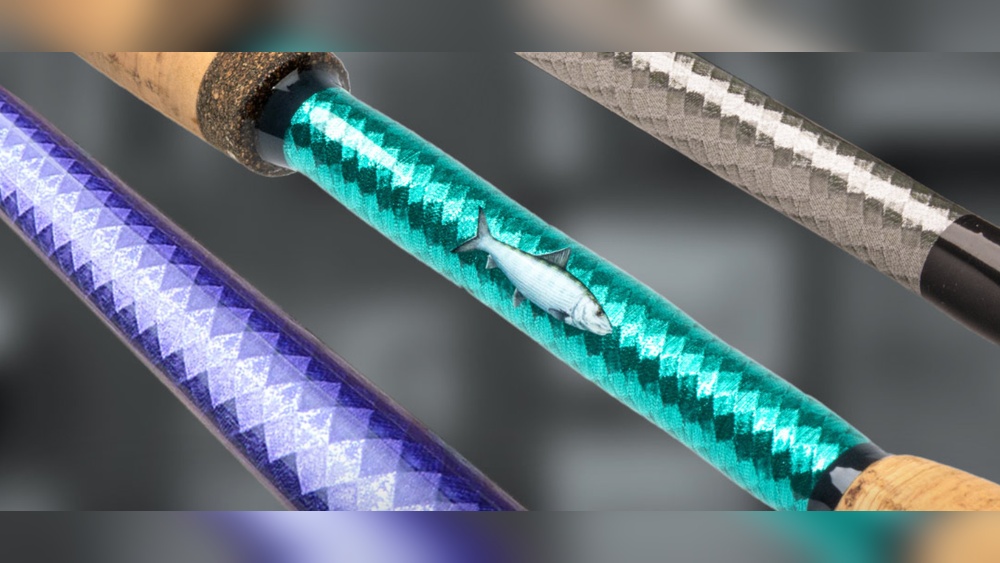
Anyone who loves fishing knows that a well-wrapped rod is more than just a detail—it’s the foundation for performance, longevity, and pride in your gear. Wrapping fishing rods is an art and a skill. Whether you’re restoring an old favorite, building a custom rod, or learning for the first time, mastering this process can give you a sense of accomplishment and let you customize your equipment.
But for beginners, the steps can seem confusing, with many terms, tools, and techniques to understand.
This guide will help you learn exactly how to wrap fishing rods from start to finish. You’ll get clear instructions, practical advice, and insights even experienced anglers sometimes overlook. By the end, you’ll know how to select the right thread, prepare your rod, make strong, smooth wraps, and finish your work for a professional look. Let’s get started on making your rod both beautiful and ready for action.
Understanding Rod Wrapping: Why It Matters
Before you pick up a spool of thread, it’s important to know why rod wrapping is so crucial. Rod wrapping is the process of tightly winding special thread around a fishing rod blank to secure guides (the rings the fishing line passes through) and sometimes decorative elements. This isn’t just about looks—good wraps keep guides in place under heavy strain, protect the rod from damage, and can even improve casting performance.
A poorly wrapped rod can lead to guides coming loose, which affects accuracy, causes line tangling, and may even break the rod. A well-wrapped rod, on the other hand, feels solid, balanced, and can last for many years with proper care.
Essential Tools And Materials For Rod Wrapping
Success starts with the right equipment. Here’s a breakdown of what you’ll need:
- Rod blank – The main shaft of your fishing rod.
- Guides – The rings that guide your fishing line along the rod.
- Wrapping thread – Usually made from nylon or polyester, available in many colors.
- Epoxy finish – A clear, strong coating that seals and protects the wraps.
- Rod wrapper or jig – A device to hold the rod steady while you wrap.
- Burnishing tool – Used to smooth and tighten wraps.
- Razor blade or sharp scissors – For trimming thread.
- Alcohol torch or lighter – To remove bubbles from the epoxy finish.
- Masking tape – Helps position guides and start wraps.
While you can improvise some tools (like using books to hold your rod), investing in a basic wrapper and quality materials makes the job much easier. Beginners often miss the importance of using a thread tension device. This small tool keeps the thread tight as you wrap, preventing loose, sloppy work.

Credit: www.youtube.com
Preparing Your Rod For Wrapping
Preparation is half the battle. Take your time with these steps:
- Clean the rod blank. Use a soft cloth and a little rubbing alcohol to remove oils, dust, or old glue.
- Mark guide positions. Use a measuring tape and a grease pencil or fine marker. Guides need to be spaced correctly for your rod’s length and action; look up a spacing chart for your specific rod type.
- Attach guides with tape. Place each guide at the marked spot and secure with small strips of masking tape. Check that all guides are perfectly aligned in a straight line.
Many beginners overlook the importance of double-checking guide alignment. Even a small misalignment can cause problems when casting. Sight down the rod frequently and adjust until everything is perfect.
Choosing The Right Wrapping Thread
The thread you use will affect both strength and appearance. Here’s a quick comparison of the main types:
| Thread Type | Material | Best For | Durability | Colors Available |
|---|---|---|---|---|
| Nylon | Synthetic | Most rods | High | Wide range |
| Polyester | Synthetic | Saltwater rods | Very high | Many colors |
| Silk | Natural | Traditional rods | Moderate | Limited |
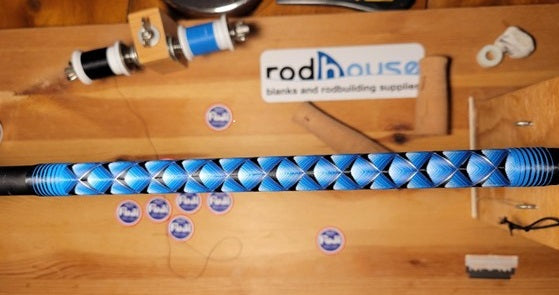
Choose a thread size between A (fine) and D (thicker). Size A is popular for light rods, while D is preferred for heavy-duty or decorative wraps. Think about both function and style—the color will show under the final epoxy, so pick something you’ll enjoy seeing on every trip.
A common beginner mistake is not tension-testing their thread. Before starting, pull a little off the spool and wrap it around your finger to feel how tight it is. If it breaks easily, it’s too thin for heavy rods.
Credit: rodhouse.com
Setting Up Your Wrapping Station
A comfortable, organized workspace makes wrapping much easier. Here’s how to set up:
- Place your rod wrapper or jig on a stable table.
- Set your thread spool on a tension device or holder.
- Arrange all tools within easy reach.
- Use good lighting so you can see fine details.
If you don’t have a wrapper, improvise with boxes or books to support the rod. Just make sure the rod can rotate smoothly, and your hands are free to guide the thread.
Non-obvious tip: Use a white cloth or paper under your work area. This makes it easy to see dark threads and spot any small dropped items.
Wrapping Your First Guide: Step-by-step
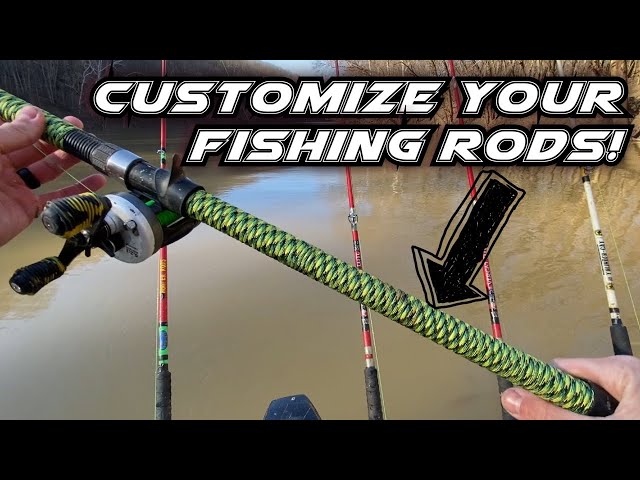
Now comes the main event. Here’s how to wrap your first guide, with clear steps for beginners:
- Start the wrap. Hold the thread at a slight angle and make 3-4 overlapping loops over itself to anchor it just before the guide foot.
- Wrap towards the guide foot. Keep the thread under constant tension and make tight, even coils. Each wrap should sit snugly against the last, with no gaps.
- Cover the guide foot. As you wrap up the sloping foot, the thread will naturally climb the ramp. Continue until the foot is fully covered.
- Insert a pull-through loop. About 1/8 inch before the end, lay a small loop of thread (a “pull loop”) on top of the wrap.
- Finish the wrap. Continue wrapping over the loop for 6-8 turns, then cut the main thread.
- Secure the thread. Pull the main thread’s tail through the loop and gently pull the other end to draw the tail under the last wraps. Trim flush with a razor blade.
If you see a gap or overlap, use the burnishing tool to gently push the wraps together. Don’t rush—taking your time here prevents problems later.
Credit: www.youtube.com
Advanced Wrapping Techniques And Decorative Touches
Once you’re comfortable with basic wraps, you can try more advanced methods. These include:
- Trim bands: Short, colored wraps added at the edges for decoration.
- Inlays: Threads of different colors woven into patterns.
- Underwraps: A layer of thread under the guide for extra cushioning, often used on heavy rods.
For trim bands, start and finish with a pull-through loop, just like with a main wrap. For inlays, use fine thread and a needle to weave the design before adding the guide. These techniques take practice but give your rod a custom look.
Non-obvious insight: Always test a new decorative method on a scrap blank first. It’s easy to make mistakes when learning, and practicing on a spare piece saves frustration.
Applying The Epoxy Finish
A strong, clear finish protects your wraps and keeps guides firmly attached. Here’s how to apply it:
- Mix epoxy carefully. Use equal parts resin and hardener, and stir gently to avoid bubbles. Follow the manufacturer’s instructions for best results.
- Apply with a brush. Use a small, clean brush to coat the wraps evenly. Don’t flood the wrap—just enough to cover the thread.
- Rotate the rod. Keep the rod turning slowly as the epoxy sets. This prevents drips and ensures a smooth finish. Many people use a motorized rod turner, but you can turn it by hand every few minutes if needed.
- Remove bubbles. Pass a small alcohol torch or lighter near the epoxy to pop surface bubbles. Be quick so you don’t scorch the thread.
Let the finish cure in a dust-free area for at least 24 hours. Resist the urge to touch or move the rod—handling too soon can ruin the surface.
Common Problems And How To Fix Them
Even careful wrappers run into issues. Here’s a quick reference for the most common problems:
| Problem | Cause | Solution |
|---|---|---|
| Loose wraps | Low tension, uneven wrapping | Re-wrap with more tension; use a thread tension device |
| Gaps in thread | Wraps not tight or close enough | Push wraps together with burnishing tool |
| Bubbles in epoxy | Over-mixing, applying too thick | Use heat to pop bubbles, apply thinner coats |
| Misaligned guides | Poor marking, not checking alignment | Remove wrap, reposition guide, re-wrap |
If you make a mistake, don’t panic. Carefully cut the wrap with a razor blade and start again. It’s better to redo a section than live with a problem that could affect your fishing.
Practical Tips For Wrapping Like A Pro
- Practice on scrap rods before wrapping your favorite rod. Old broken rods are perfect for learning.
- Keep your hands clean. Oils or dirt can stain threads and affect epoxy adhesion.
- Work in good light. Small mistakes are much easier to spot.
- Rest your eyes. Take breaks every 20-30 minutes to stay accurate and avoid fatigue.
- Store thread properly. Dust and moisture can weaken thread over time.
- Label your thread spools. Note the color and size so you can match them for repairs or future projects.
- Check guide alignment often. Don’t wait until the end—small adjustments are easier early in the process.
- Record your guide spacing. Write down measurements for future reference or repairs.
Many new wrappers think speed is important, but patience is key. Quality wrapping is never rushed.
Maintaining And Repairing Wrapped Rods
Even well-wrapped rods need care. Check your wraps regularly for signs of wear:
- Fraying thread
- Loose guides
- Cloudy or cracked epoxy
If you notice damage, repair as soon as possible. Small problems can be fixed by trimming away loose thread and adding a new wrap, then recoating with epoxy. For serious damage, remove the entire wrap, clean the area, and redo it from the start.
A useful habit: after every fishing trip, wipe your rod with a soft cloth and inspect wraps. Early detection of problems saves time and protects your investment.
Safety Precautions And Environmental Responsibility
Rod wrapping is safe, but follow these precautions:
- Work in a well-ventilated area when using epoxy.
- Wear disposable gloves when mixing or applying finish.
- Dispose of leftover epoxy and thread responsibly.
Many wrappers forget that thread, tape, and epoxy can harm the environment. Collect small scraps and hardened epoxy for proper disposal. If possible, use eco-friendly products.
Comparing Diy Wrapping To Professional Services
Should you wrap your rod yourself or pay a pro? Here’s a quick look at the trade-offs:
| DIY Wrapping | Professional Wrapping |
|---|---|
| Lower cost Full customization Learn a new skill |
Expert finish Saves time Guaranteed results |
| Time-consuming Steep learning curve Mistakes possible |
More expensive Less personal Longer wait times |
Many anglers enjoy the pride and savings of DIY wrapping. If you want fast, flawless results or have a valuable rod, a professional may be a better choice. Either way, knowing how wrapping works helps you care for your gear.
Where To Learn More And Find Supplies
If you want to dive deeper, many resources are available:
- YouTube tutorials show detailed wrapping techniques in action.
- Rod building forums are great for advice and troubleshooting.
- Tackle shops often carry rod wrapping kits and can recommend local wrappers.
For guide spacing charts and more, check out this Mud Hole Custom Tackle resource, a leader in rod building supplies.
Frequently Asked Questions
How Long Does It Take To Wrap A Fishing Rod?
For beginners, wrapping a rod typically takes 3 to 6 hours, including prep, wrapping, and finishing. With practice, you can finish simple rods in 2-3 hours. Decorative wraps and complex builds take longer. Patience leads to better results.
Can I Use Regular Thread Instead Of Rod Wrapping Thread?
No, it’s best to use special rod wrapping thread. Regular sewing thread is weaker and may not hold up under fishing stress. Rod wrapping thread is designed for strength, colorfastness, and to work well with epoxy finishes.
How Do I Fix A Loose Guide On My Rod?
Remove the old wrap with a sharp blade, clean the area, and re-wrap the guide with fresh thread. Apply a new coat of epoxy and let it cure. Make sure the guide is aligned before starting the new wrap.
Is It Possible To Wrap Rods Without A Special Jig?
Yes, you can improvise a rod wrapper with books or boxes to support the rod. What matters most is keeping the rod steady and being able to rotate it smoothly. A thread tension device helps, but you can use your fingers with care.
How Do I Avoid Bubbles In The Epoxy Finish?
Mix epoxy slowly to avoid trapping air. Apply thin, even coats with a small brush. While the epoxy is still wet, pass a flame near the surface to pop any bubbles. Always work in a dust-free area for best results.
Wrapping fishing rods is a rewarding skill that deepens your connection with your gear. With patience, practice, and attention to detail, you can create rods that look and perform better than most factory models. Whether you’re restoring an old rod or building something new, each wrap is a step toward a more satisfying fishing experience.