Fluorocarbon Vs Monofilament Fishing Line
Choosing the right fishing line can make a big difference in your fishing experience. Many anglers, especially beginners, feel confused when deciding between fluorocarbon and monofilament lines. Both have been popular for years, but each one has unique features, strengths, and weaknesses. Understanding these differences will help you catch more fish and avoid common mistakes. Whether you fish in freshwater or saltwater, for bass or trout, knowing when and why to use each line can save you time, money, and frustration.
If you often wonder why some people catch more fish than others, or why your line sometimes breaks or scares away fish, the answer could be the type of line you choose. In this article, we will look closely at fluorocarbon and monofilament fishing lines. We’ll compare their properties, show real-world uses, and explain which line is best for different situations. By the end, you’ll have clear knowledge to pick the right line for your next trip.
What Is Monofilament Fishing Line?
Monofilament fishing line, often called “mono,” is made from a single strand of nylon or similar plastic. This is the most common fishing line type in the world, and has been used for decades by both beginners and professionals.
Mono lines are generally soft and flexible. They are easy to tie and manage because they are not stiff. The line floats, making it a good choice for topwater lures and baits that stay near the surface. Monofilament comes in many colors, including clear, blue, green, and high-visibility yellow.
One of the biggest benefits of monofilament is its affordable price. It usually costs less than fluorocarbon, making it a good option for people who fish often or on a budget. Mono lines are also widely available at almost every tackle shop or online store.
However, monofilament does have its downsides. Over time, it can absorb water and lose strength. It’s also more visible in clear water, which may scare fish. Mono lines stretch more than other types, which can be both a benefit and a problem, depending on your fishing style.
What Is Fluorocarbon Fishing Line?
Fluorocarbon fishing line is made from a material called polyvinylidene fluoride (PVDF). This material is denser and harder than the nylon used in monofilament. Fluorocarbon lines first became popular as leaders (short pieces attached to the end of the main line), but now many anglers use them as main lines, too.
One of the most important features of fluorocarbon is its low visibility underwater. The line has a refractive index close to that of water, so it’s almost invisible to fish. This makes it a favorite for fishing in clear lakes or when targeting shy fish.
Fluorocarbon lines are also known for being abrasion-resistant. They hold up well when rubbing against rocks, logs, or sharp teeth. Unlike monofilament, fluorocarbon does not absorb water, so its strength and properties stay the same even after hours in the water.
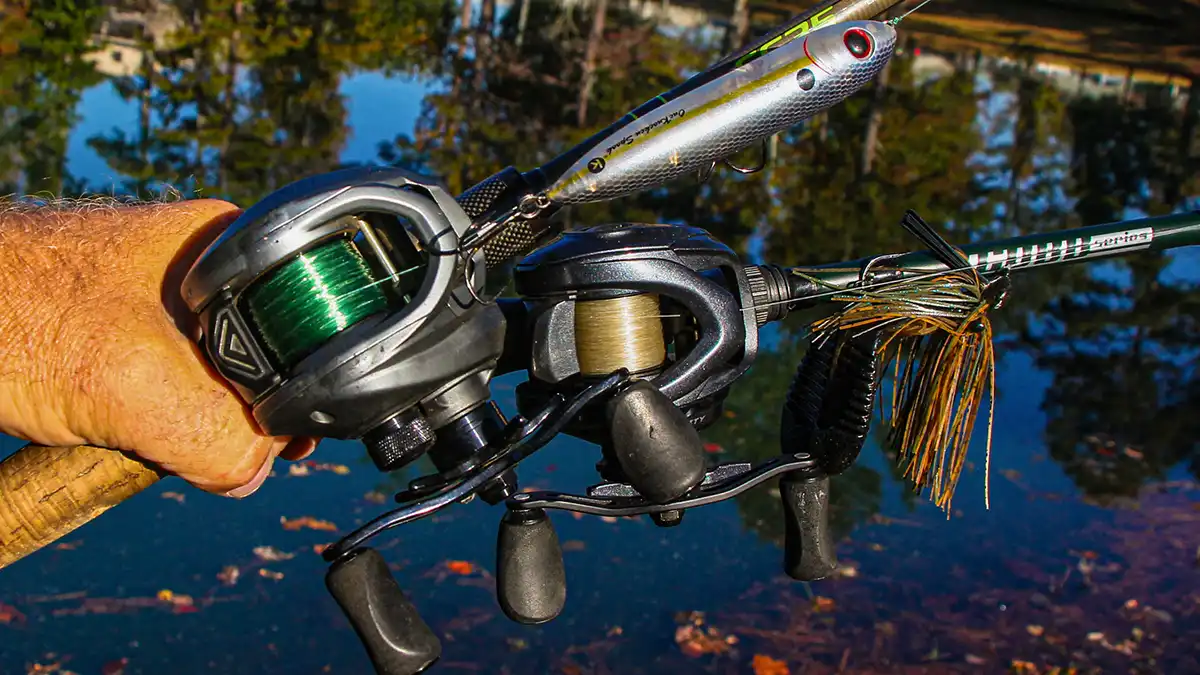
However, fluorocarbon is usually stiffer and can be harder to manage, especially for beginners. It is also more expensive than monofilament, and knots can be trickier to tie. Some anglers find that fluorocarbon has more “memory,” meaning it can hold the coil shape from the spool, which may cause tangles or affect casting.
Credit: www.wired2fish.com
Key Differences Between Fluorocarbon And Monofilament
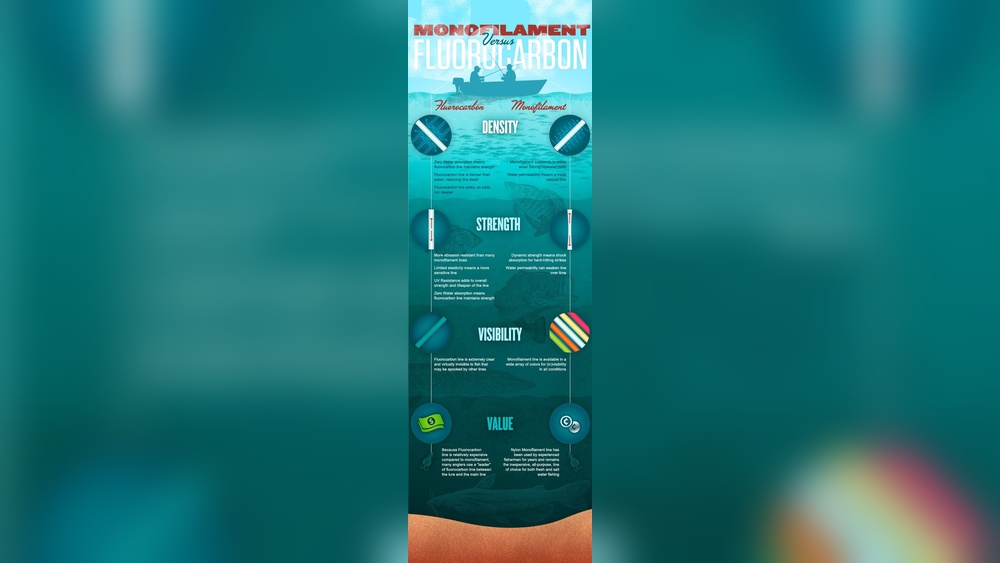
To help you quickly see the most important differences, here is a direct comparison:
| Feature | Monofilament | Fluorocarbon |
|---|---|---|
| Material | Nylon | PVDF (polyvinylidene fluoride) |
| Visibility underwater | More visible | Nearly invisible |
| Stretch | High | Low to medium |
| Price | Lower | Higher |
| Water absorption | Yes | No |
| Buoyancy | Floats | Sinks |
| Abrasion resistance | Moderate | High |
| Ease of tying knots | Easy | Can be difficult |
| Line memory | Low | Medium to high |
This table shows how the two lines differ in ways that affect your fishing results. Let’s look at these differences in more detail.
Visibility: Can Fish See Your Line?
The visibility of fishing line is one of the most important factors, especially when fishing in clear water. Fish often avoid bait if they see the line.
Monofilament is usually more visible underwater, even when you choose clear-colored lines. This is because nylon reflects more light and has a refractive index far from water. In clear lakes or for fish that are easily scared (like trout), using mono can lower your catch rate.
Fluorocarbon, on the other hand, is famous for being nearly invisible in water. Its refractive index is very close to water, so light passes through it easily. This is why many pro anglers use fluorocarbon leaders, even if their main line is different. If you fish for species that get spooked easily, or you fish in crystal-clear water, fluorocarbon is the better choice.
However, visibility is less important in muddy water or at night. In those conditions, fish rely more on sound, vibration, or smell, so you can use monofilament without worrying.
Credit: www.saltstrong.com
Stretch: Sensitivity And Hook Setting
Stretch is how much the line pulls and extends under pressure. This affects how much you can “feel” bites and how well you set the hook.
Monofilament lines stretch a lot. This can be good because it acts like a shock absorber, helping you avoid breaking the line when a big fish pulls hard. The stretch also helps when using treble hooks (like on crankbaits), because it stops the hook from tearing out of the fish’s mouth.
But too much stretch can make it harder to feel soft bites, especially when fishing deep. Sometimes, you might not even notice a fish is on your line until it’s too late. Also, setting the hook (making the hook go into the fish’s mouth) can be harder, especially with single hooks.
Fluorocarbon stretches less. This gives you better sensitivity, letting you feel even tiny nibbles. When you set the hook, the force goes directly to the fish, which improves your catch rate, especially with soft plastics or when fishing deep water. But, less stretch means more shock goes to your knots and rod, so you need to use the right drag setting and avoid jerking too hard.
Buoyancy: Floating Or Sinking?
Buoyancy determines whether your line floats on the water or sinks below the surface. This changes how your bait or lure behaves.
Monofilament floats. This is perfect for topwater lures—baits that move along the surface, like poppers or floating frogs. It’s also helpful when fishing with live bait under a bobber, because the line stays near the top, keeping your bait in the right spot.
Fluorocarbon sinks. It’s great for bottom fishing or using lures that need to stay deep, like jigs or soft plastics. Since fluorocarbon goes down, it pulls your bait lower, which can make your presentation look more natural.
If you use the wrong type, your bait may not move how you expect. For example, using fluorocarbon for topwater lures can make them sink or not perform well.
Abrasion Resistance: Fighting Against Rocks And Obstacles
Fishing often means dragging your line over rocks, logs, or rough surfaces. Abrasion resistance is how well a line can handle this without breaking.
Monofilament has fair abrasion resistance, but it can get nicked or weakened if you fish in rocky areas. Over time, the line will show damage and may break when you least expect it.
Fluorocarbon is much tougher. Its dense material helps it resist cuts and scrapes. That’s why many anglers use fluorocarbon as a leader—the last part of the line before the hook—especially when fishing around sharp rocks, reefs, or fish with sharp teeth.
However, no line is completely “cut-proof. ” Always check your line for damage after catching a fish or pulling it over rocks.
Knot Strength And Tying Ease
Knots are a weak point in any fishing setup. The type of line affects how easy it is to tie strong, reliable knots.
Monofilament is soft and flexible, so it’s easy to tie most fishing knots. Even beginners can tie good knots without much trouble. The stretch of mono also helps knots “lock” tightly.
Fluorocarbon is stiffer and harder to bend. Some common knots (like the improved clinch knot) can slip or break if not tied carefully. It’s important to moisten the line before pulling tight and to use knots that work well with stiff lines, such as the Palomar knot or the San Diego jam knot.
A common mistake is using the same knot for both line types without checking if it works. Practice with your chosen line and test your knots before fishing.
Price: Which Line Is More Affordable?
Cost is a big factor, especially if you fish often or need to change lines regularly.
Monofilament is much cheaper than fluorocarbon. You can usually buy a large spool for just a few dollars. This makes it a good choice for beginners, children, or anyone who fishes in places where lines get lost or damaged often.
Fluorocarbon is more expensive—sometimes two to three times the price of monofilament for the same length. The higher price comes from the material and the more complex manufacturing process.
Some anglers use fluorocarbon only as a leader to save money, while keeping monofilament as the main line.
Line Memory: Coiling And Tangles
Line memory is when the fishing line “remembers” the shape of the spool and forms coils or loops. This can cause problems with casting and tangles.
Monofilament has low line memory, especially when new. It lays smoothly on the reel and casts easily. Over time, especially in hot weather or if left on the reel for months, it can start to coil more.
Fluorocarbon usually has higher memory. It can come off the spool in tight coils, which may create tangles or make the line hard to manage. This is more noticeable with thicker lines or on spinning reels. To reduce memory, you can stretch the line or use line conditioner sprays.
An often-missed tip: spooling your reel correctly and not overfilling it can help with memory issues for both types.
Durability And Uv Resistance
Fishing lines spend hours in the sun and water. Over time, this can weaken the material.
Monofilament is sensitive to UV light. Sunlight breaks down the nylon, making the line weaker and more likely to break. This means you should change your mono line every season, or even more often if you fish a lot.
Fluorocarbon is more resistant to UV damage. It doesn’t break down as quickly in the sun, so it lasts longer on your reel. Also, because it doesn’t absorb water, it keeps its strength after many trips.
Still, both types can get damaged by nicks, scrapes, or harsh chemicals. Always check your line for weak spots.
Real-world Uses: When To Use Monofilament
Monofilament is a classic choice for many fishing situations. Here are some common cases where mono is the better line:
- Topwater fishing: Because mono floats, it’s perfect for lures that stay on the surface.
- Fishing for beginners: The line is easy to handle and tie, great for people just starting.
- Fishing with live bait: Mono’s stretch helps prevent the hook from tearing out of the fish’s mouth.
- Budget fishing: If you need to fill many reels or change lines often, mono is more affordable.
- Night fishing or muddy water: Visibility is less important, so you save money using mono.
Real-world Uses: When To Use Fluorocarbon
Fluorocarbon shines in certain conditions. Here’s when you should consider using it:
- Clear water fishing: The line is nearly invisible, so fish are less likely to get spooked.
- Fishing near rocks or sharp objects: High abrasion resistance protects your line.
- Deep water fishing: The low stretch improves sensitivity for feeling bites.
- As a leader: Many anglers use a short piece of fluorocarbon at the end of their main line for extra stealth and toughness.
- Drop-shotting or finesse fishing: These methods need sensitive, low-visibility lines.
Common Myths About Fishing Lines
Many anglers hear myths about fishing lines. Here are a few you should know:
- Myth 1: Fluorocarbon is completely invisible.
- Fact: It’s nearly invisible, but not 100%. In extremely clear water, wary fish can still see the line, especially if it’s thick.
- Myth 2: Monofilament is weak and breaks easily.
- Fact: Quality mono lines are strong and handle big fish well. Most breaks come from old, damaged line or bad knots.
- Myth 3: You must use only one type of line.
- Fact: Many top anglers use different lines for different parts of their setup. For example, braid as a main line with a fluorocarbon or mono leader.

Credit: www.hfdepot.com
Environmental Impact
Fishing lines can last for hundreds of years in nature. Lost or discarded line can harm birds, turtles, and fish. Both mono and fluorocarbon are not biodegradable, but some companies now offer biodegradable monofilament.
Always dispose of used line properly. Many tackle shops have recycling programs. Cutting line into small pieces before throwing it away can help protect wildlife.
Performance In Different Fishing Conditions
Let’s compare how each line performs in common fishing situations:
| Fishing Situation | Best Line | Why |
|---|---|---|
| Clear lake, shy fish | Fluorocarbon | Low visibility |
| Topwater lures | Monofilament | Floating ability |
| Fishing near rocks | Fluorocarbon | Abrasion resistance |
| Fishing with kids | Monofilament | Easy handling |
| Deep jigging | Fluorocarbon | Low stretch, sensitivity |
| Saltwater trolling | Monofilament | Shock absorption |
Tips For Switching Between Lines
If you want to try both lines, here are some tips:
- Start with monofilament if you are new to fishing. It’s easier to use and tie.
- Use fluorocarbon leaders with braid or mono main lines. This gives you the benefits of both.
- Change your line often, especially if you notice nicks, fraying, or memory issues.
- Practice tying knots with new lines before your trip.
- Use a line conditioner spray to reduce memory and improve casting.
- Store your fishing reels in a cool, dark place to extend the life of your line.
Two Non-obvious Insights For Better Results
- Line Diameter Matters More Than Pound Test
- Many beginners focus only on the “pound test” (the strength rating). But diameter is just as important. Thicker line is easier for fish to see, even if it’s made of fluorocarbon. When possible, use the thinnest line that will handle the fish you’re targeting.
- Mixing Lines Can Give You the Best of Both Worlds
- You don’t have to choose just one. Many advanced anglers use braided line for strength and casting distance, with a fluorocarbon or mono leader for invisibility and shock absorption. This setup is often more effective than using one type alone.
Which Line Should You Choose?
Your best choice depends on your fishing style, target species, water conditions, and budget. Here are some quick guidelines:
- Pick monofilament for topwater fishing, easy handling, or when fishing in dirty water.
- Pick fluorocarbon for clear water, wary fish, or fishing near sharp objects.
- Consider using both: Main line of mono or braid, with a fluorocarbon leader.
If you want more technical information, check out this detailed resource: Wikipedia: Fishing Line.
Frequently Asked Questions
What Is The Main Advantage Of Fluorocarbon Over Monofilament?
The main advantage of fluorocarbon is its low visibility underwater. Fish have a harder time seeing it, which can help you catch more fish in clear water. It’s also more resistant to abrasion and doesn’t absorb water.
Can I Use Fluorocarbon As My Main Fishing Line?
Yes, you can use fluorocarbon as your main line. However, keep in mind it’s stiffer and has more memory than monofilament, which may make it harder to handle, especially on spinning reels. Many anglers use it as a leader with another type of main line.
How Often Should I Change My Fishing Line?
For monofilament, it’s best to change it every season or sooner if you fish often, because sunlight and water can weaken it. Fluorocarbon lasts longer, but you should still check for nicks and damage and replace as needed.
Is Monofilament Good For Saltwater Fishing?
Monofilament works well in saltwater, especially for trolling or using topwater lures. Just remember that saltwater and sun can weaken it faster, so rinse your gear after each use and check the line often.
What Knot Works Best With Fluorocarbon Line?
The Palomar knot and San Diego jam knot are popular choices for fluorocarbon, as they hold well with stiff lines. Always moisten the knot before tightening to avoid friction and weakening the line.
Choosing the right fishing line is a small step that can lead to much bigger catches. With the right knowledge, you’ll be ready for your next fishing adventure, no matter where or how you like to fish.