Setting up a fishing line for bass might seem simple, but the details matter. Many anglers spend years learning the best ways to prepare their lines. If you want to catch more bass, avoid lost fish, and enjoy your time on the water, you must understand each step of the setup process.
From choosing the right line to tying the proper knots, this guide will walk you through everything you need to know—whether you’re a beginner or just looking to improve your skills.
Bass are smart, strong, and can break weak or poorly prepared lines easily. They often hide around rocks, weeds, and logs, so your setup needs to be tough but sensitive enough to feel a bite. While there are many ways to prepare a fishing line, this article covers the methods that actually work for bass fishing in most situations.
You’ll learn about line types, hooks, weights, lures, and the small tricks that experienced anglers use to get more bites.
Understanding The Basics Of Bass Fishing Line
Before setting up your line, you need to know about the three main types of fishing line used for bass: monofilament, fluorocarbon, and braided line. Each has its own strengths and weaknesses.
Monofilament
Monofilament is a single strand of nylon. It’s easy to handle and tie knots with, making it great for beginners. It stretches, which can help absorb the shock of a fighting bass, but too much stretch can reduce sensitivity.
Fluorocarbon
Fluorocarbon is nearly invisible underwater, which is a big advantage in clear lakes. It’s more sensitive than monofilament and sinks faster, but it’s stiffer and can be hard to manage for new anglers.
Braided Line
Braided line is made from several strands woven together. It’s very strong for its diameter and has almost no stretch, so you feel every movement. However, it’s easy for bass to see in clear water, so many anglers tie a leader of fluorocarbon or monofilament to the end.
Here’s a comparison to help you choose:
| Line Type | Visibility | Strength | Sensitivity | Stretch | Best Use |
|---|---|---|---|---|---|
| Monofilament | Medium | Medium | Medium | High | Topwater, beginners |
| Fluorocarbon | Low | High | High | Low | Clear water, finesse |
| Braided | High | Very High | Very High | Very Low | Heavy cover, long casts |
Non-obvious insight: Even if you use braided line for its strength, always use a leader of fluorocarbon or monofilament for better stealth and knot strength.
Choosing The Right Line For Your Situation
The best line for bass fishing depends on where and how you’re fishing.
- Fishing in clear lakes: Use fluorocarbon for its invisibility.
- Fishing in weedy or rocky areas: Use braided line for extra strength, with a leader.
- Fishing with topwater lures: Use monofilament because it floats.
Line Strength (pound Test)
The pound test tells you how much weight the line can handle before breaking. For bass, most anglers use 8-20 lb test, but here’s a simple guide:
- Light tackle (finesse): 6-10 lb test
- Medium setups: 10-14 lb test
- Heavy cover or big bass: 15-20 lb test
Remember, thicker line is stronger but also more visible and harder to cast far.

Credit: www.diocesisdesalamanca.com
Gathering Your Gear
Before you start, make sure you have:
- Rod and reel: Spinning reels are good for beginners, baitcasting reels for experienced anglers.
- Fishing line: Choose based on your fishing spot.
- Hooks: Sizes 2/0 to 4/0 are common for bass.
- Weights/sinkers: For getting your bait down.
- Lures or bait: Soft plastics, crankbaits, spinnerbaits, and live bait all work.
- Swivels and snaps: Sometimes useful for changing lures quickly or reducing line twist.
- Scissors or line cutters: For trimming excess line.
Tip: Always bring extra hooks and line. Snags and break-offs are common.
Spooling Your Reel
Properly putting line on your reel is the first step. If you do this wrong, you’ll face tangles and knots that waste time.
Spooling A Spinning Reel
- Open the bail (the wire arm that flips up).
- Thread the line through the rod guides from tip to reel.
- Tie the line to the spool using an arbor knot. Make sure it’s tight.
- Close the bail.
- Hold the line between your fingers for light tension and slowly turn the reel handle. The line should wind evenly onto the spool.
- Fill the spool until it’s about 1/8 inch from the rim. Don’t overfill.
Spooling A Baitcasting Reel
- Run the line through the rod guides.
- Tie to the spool with an arbor knot.
- Keep the line under tension and turn the handle to wind the line on.
- Fill to about 1/8 inch from the edge.
Non-obvious insight: If your line twists a lot when casting, check if you spooled it in the same direction as it comes off the filler spool. The wrong direction causes memory and twists.
Tying Strong Knots
A weak knot means lost fish. For bass fishing, use knots that are both strong and easy to tie.
The Improved Clinch Knot
This is the most popular knot for tying hooks and lures to line.
- Thread the line through the hook eye and wrap it around the standing line 5-7 times.
- Pass the tag end back through the small loop near the eye.
- Bring it through the big loop you just made.
- Wet the knot and pull tight.
The Palomar Knot
Very strong and easy for braided and fluorocarbon lines.
- Double about 6 inches of line and pass the loop through the hook eye.
- Tie a loose overhand knot with the doubled line.
- Pass the hook through the loop.
- Wet and pull both the standing line and tag end to tighten.
Tying A Leader To Braided Line
When using a braided main line with a fluorocarbon leader, use the Double Uni Knot or Albright Knot for best strength.
Tip: Always wet your knots before tightening. This reduces friction and prevents weakening the line.
Attaching Hooks, Weights, And Lures
Your setup depends on the type of fishing you’re doing. Here are common bass setups:
Texas Rig
Great for fishing in weeds.
- Slide a bullet-shaped weight onto the line.
- Tie on a hook (offset worm hook is best).
- Thread a soft plastic worm onto the hook. Bury the hook tip in the worm to make it weedless.
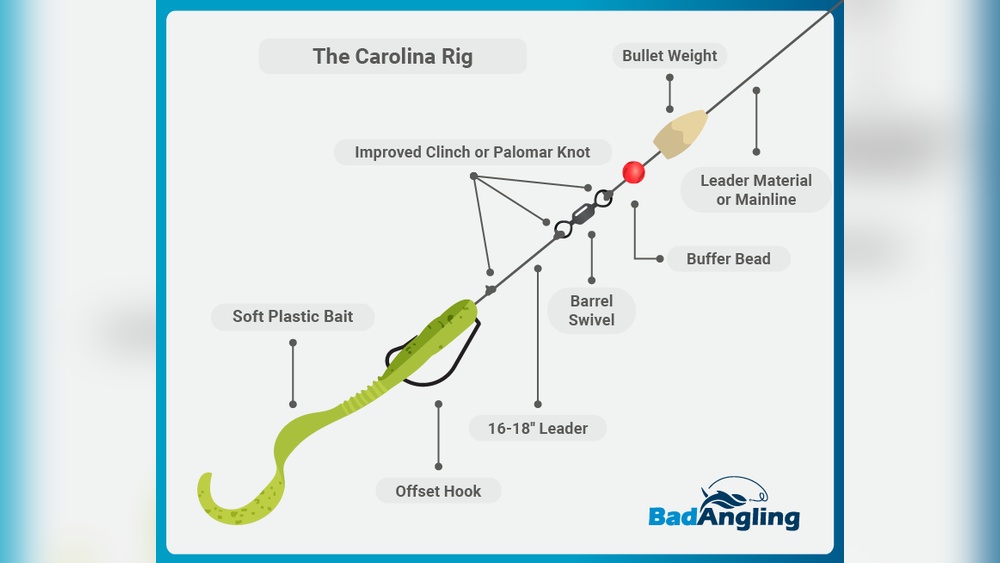
Carolina Rig
Good for covering large areas of the lake bottom.
- Thread a bullet or egg sinker onto the main line.
- Add a bead (optional, but it protects the knot).
- Tie on a swivel.
- Attach a 1-3 foot leader of fluorocarbon.
- Tie a hook to the leader and add your bait.
Drop Shot Rig
Perfect for clear water and finicky bass.
- Tie a small hook 1-3 feet above the end of your line using a Palomar knot.
- Attach a drop shot weight to the end.
- Put a soft plastic bait on the hook.
Wacky Rig
Very simple for beginners.
- Tie a hook to your line.
- Hook a soft plastic worm through the middle.
Here’s a simple comparison of when to use each setup:
| Rig Type | Best For | Water Type | Difficulty |
|---|---|---|---|
| Texas Rig | Weeds, cover | Any | Easy |
| Carolina Rig | Bottom, open water | Clear or stained | Medium |
| Drop Shot | Suspended bass | Clear | Medium |
| Wacky Rig | Finesse, pressured fish | Clear, calm | Very Easy |
Practical tip: For beginners, start with a Texas rig. It’s forgiving and catches bass almost everywhere.

Credit: www.wikihow.com
Adjusting For Different Conditions
Bass behave differently depending on water clarity, temperature, and cover. Adjust your setup for better results.
Water Clarity
- Clear water: Use lighter line (fluorocarbon), smaller hooks, and natural-colored lures.
- Stained or muddy water: Heavier line is fine. Use brighter or darker lures for visibility.
Water Temperature
- Cold water: Bass are slow. Use smaller baits and slower presentations.
- Warm water: Bass are aggressive. Use faster lures like spinnerbaits or crankbaits.
Cover
- Heavy weeds: Use braided line with a Texas rig.
- Rocks: Use fluorocarbon to reduce cuts and abrasion.
Experienced tip: Always check your line for nicks or damage after fishing around rocks or heavy cover. Weak spots cause break-offs.
Selecting Bass Lures And Baits
The right lure makes a big difference. Some popular choices:
- Soft plastic worms: Versatile and effective. Use with Texas or wacky rigs.
- Crankbaits: Good for covering water and finding active fish.
- Spinnerbaits: Work well in murky water and around weeds.
- Jigs: Great for fishing deep or in cover.
- Live bait: Nightcrawlers or minnows are always good for beginners.
Non-obvious insight: If you’re not getting bites, change either the color or the size of your lure before moving spots.
Setting Up For Success: Common Mistakes To Avoid
Even experienced anglers make simple mistakes. Here are some things to watch out for:
- Using too thick line in clear water scares off bass.
- Poor knot tying causes lost fish. Practice knots at home.
- Overfilling the reel leads to tangles. Leave a small gap at the spool edge.
- Neglecting leader knots results in weak spots.
- Not checking line for abrasion after fishing around rocks or wood.
Pro tip: Always retie your knots after catching a fish or if you feel a rough spot on your line.
Advanced Tips And Adjustments
Ready to improve your catch rate even more? Try these tips:
- Use scent attractants on soft plastics. Some bass are picky and extra scent can trigger more bites.
- Match your lure color to water conditions. Natural colors in clear water, bright or dark colors in stained water.
- Vary your retrieve speed. Sometimes fast works, sometimes slow is better. Change it up until you find what the bass want.
- Try “pegging” your weight on a Texas rig with a toothpick or rubber stop. This keeps the weight close to the bait for better control in weeds.
Gear Maintenance And Storage
Taking care of your gear keeps it ready for the next trip.
- Rinse your reel and rod with fresh water after every trip, especially if fishing in dirty or salty water.
- Store lines away from sunlight. UV rays weaken line over time.
- Loosen drag when storing reels to prevent damage to internal parts.
- Replace old line at least once a season, or more often if you fish a lot.
Real-world Example: A Day On The Lake
Imagine you’re fishing a clear-water lake with scattered weeds. You set up a spinning reel with 10 lb fluorocarbon line. You tie on a Texas rig with a 1/4 oz bullet weight, a 3/0 offset worm hook, and a green pumpkin plastic worm.
You cast near the edge of the weed bed. As your worm sinks, you feel a slight “tick”—a bass bite. You pause, then reel in the slack and set the hook hard. The bass dives into the weeds, but your fluorocarbon line holds up.
After a short battle, you land a 2-pound bass.
That’s the power of choosing the right line and setup for the conditions.

Credit: www.cas.cl
Quick Reference: Setting Up A Fishing Line For Bass
- Choose your line (mono, fluorocarbon, or braid) based on water and cover.
- Spool your reel with the right amount of line.
- Tie strong knots (Improved Clinch or Palomar).
- Attach hooks, weights, and lures for the style you plan to fish.
- Check your setup for weak spots, abrasion, or poor knots.
- Adjust for conditions—change line, lure, or rig if you’re not catching fish.
Useful Resources
If you want to go deeper into bass fishing setups, check out this guide from Wired2Fish for expert tips and videos.
Frequently Asked Questions
What Is The Best Pound Test Line For Bass Fishing?
Most bass anglers use 8-12 lb test for spinning reels and 12-20 lb test for baitcasting reels. Go lighter for clear water and finesse, heavier for thick weeds or big bass.
Can I Use Braided Line Without A Leader For Bass?
You can, but in clear water, bass might see the braided line and avoid your bait. Adding a leader of fluorocarbon or monofilament makes your setup less visible and improves your chances.