
Fishing with shrimp is a time-tested method that attracts many types of fish, from saltwater giants to freshwater favorites. Whether you’re standing on a dock, wading in the surf, or casting from a boat, using shrimp as bait can turn an average day into a memorable adventure.
But if you don’t hook the shrimp correctly, fish might ignore your offering, or you’ll end up losing bait to every small nibble. Getting this right is much more than just sticking a hook anywhere; there are different techniques, each suited for various fishing styles and target species.
Mastering the art of hooking shrimp can help you catch more fish, waste less bait, and enjoy your time on the water.
Many beginners believe shrimp is “easy bait,” but there’s more to it than meets the eye. The way you hook shrimp affects its movement, how long it stays alive, and how attractive it is to fish. Even small mistakes—like piercing the wrong spot or using the wrong hook size—can mean missed catches and wasted effort.
This guide will show you not only the basic steps, but also pro-level tricks, practical examples, and common mistakes to avoid. Let’s dive in and help you hook shrimp for fishing like a true angler.
Why Use Shrimp For Fishing?
Shrimp is one of the most effective baits for both saltwater and freshwater fishing. Fish are naturally drawn to the scent, texture, and movement of shrimp. Many species—such as redfish, snook, speckled trout, snapper, and even freshwater catfish—love shrimp. It’s also widely available and affordable, making it a popular choice for anglers of all skill levels.
Live shrimp, dead shrimp, and even frozen or artificial shrimp have their place, but each requires a slightly different hooking method. Knowing which to use—and when—can make a huge difference.
Choosing The Right Shrimp For Bait
Not all shrimp are created equal. The type of shrimp you use can impact your success on the water.
- Live Shrimp: Most attractive to fish due to natural movement. They’re best for inshore species and clear water.
- Fresh Dead Shrimp: Great when live shrimp aren’t available. These release strong scent and work well for bottom feeders.
- Frozen Shrimp: Useful as a backup. They’re less appealing but still catch fish, especially when fresh bait is hard to find.
- Artificial Shrimp: Made from soft plastic or rubber. Effective for catch-and-release fishing or when natural bait is banned.
What Size Of Shrimp To Use?
Use shrimp that match the fish you’re targeting. For example, small shrimp (1-2 inches) are best for panfish or pompano, while larger shrimp (3-5 inches) attract bigger species like redfish or snook. Oversized shrimp can scare off smaller fish, while tiny shrimp may not interest large predators.
How To Keep Shrimp Alive
Live shrimp are fragile. Keep them in a bait bucket with clean, aerated water. Change the water often and avoid overcrowding. Shrimp exposed to heat, dirty water, or rough handling die quickly, reducing their effectiveness.
Picking The Right Hook And Tackle
Using the right hook is essential for hooking shrimp effectively.
Best Hook Types
- Circle hooks: Reduce gut hooking and improve catch-and-release survival.
- J-hooks: Offer quick hooksets; popular for bottom fishing.
- Kahle hooks: Wider gap, good for larger shrimp and fish.
Choosing Hook Size
Match hook size to shrimp and target fish. For most inshore fishing, size 1 to 2/0 hooks work well. For small shrimp and panfish, use smaller hooks (size 4 to 6). Oversized hooks can kill the shrimp and look unnatural.
Line And Leader Choices
Shrimp can be used with monofilament, fluorocarbon, or braided lines. Fluorocarbon leaders (15–30 lb test) are almost invisible underwater, improving bites from wary fish. Use a light split shot or small sinker if fishing on the bottom, but keep weight minimal to allow natural movement.
Basic Ways To Hook Shrimp
There are several tried-and-true methods for hooking shrimp. Each offers unique advantages depending on your fishing style and the conditions.
1. Hooking Through The Horn
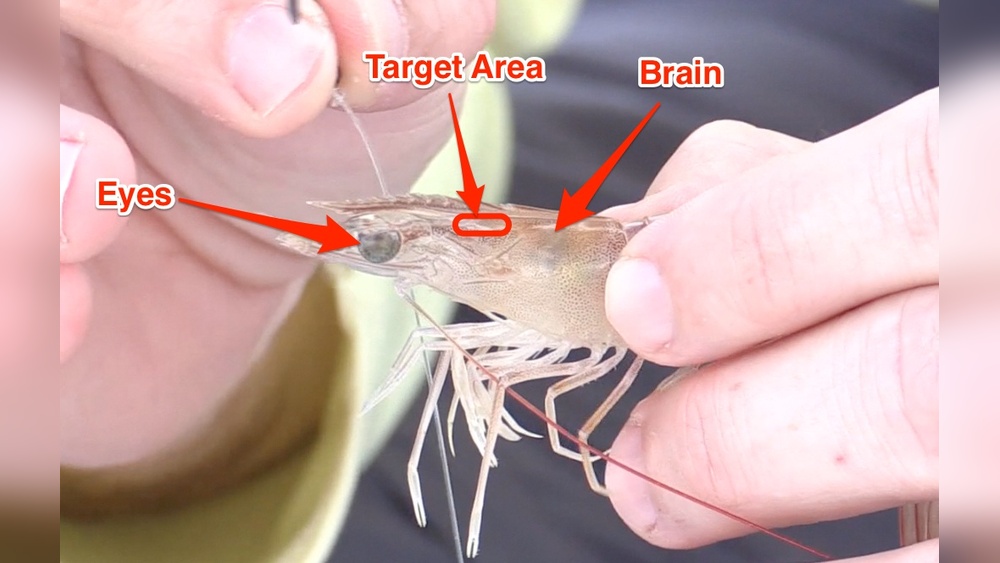
This is the most popular way for live shrimp. The “horn” is the hard part between the eyes. Slide the hook underneath the horn, being careful not to hit the dark spot (the brain). This keeps the shrimp alive and kicking, making it irresistible to fish.
Advantages: Keeps shrimp active, natural presentation.
Example: When fishing for speckled trout in shallow grass flats, hooking through the horn allows the shrimp to swim freely and attract attention.
2. Hooking Through The Tail
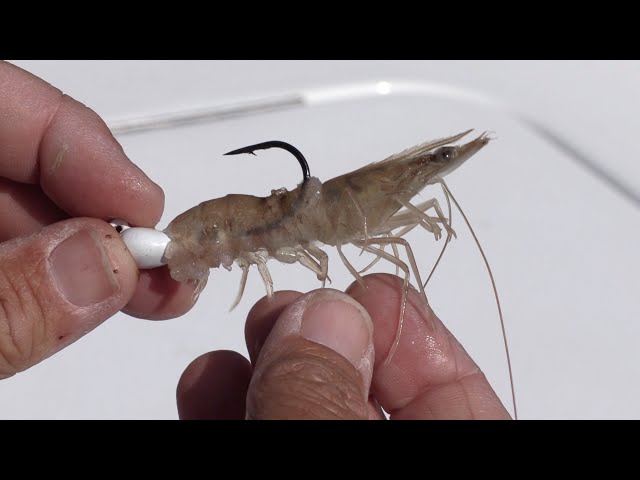
Insert the hook from the underside and out the top of the tail, avoiding the digestive vein. This works well for dead, frozen, or soft artificial shrimp.
Advantages: Secures bait better against strong casts and rough water; exposes more scent.
Example: When bottom fishing for snapper, tail-hooked shrimp stay on the hook longer after repeated bites.
3. Hooking Through The Body
Thread the hook sideways through a body segment, usually just behind the head. This technique is good for live or dead shrimp in moderate current.
Advantages: Bait stays secure; offers a more robust hold.
Example: In strong tidal currents, body-hooking helps keep the shrimp on the hook, even if smaller fish nip at it.
4. Threading The Shrimp
Run the hook through the tail and out near the head, threading the body along the shank. This method is mainly for dead or frozen shrimp.
Advantages: Exposes maximum scent; holds bait longer during heavy bites.
Example: When fishing for catfish in murky rivers, threaded shrimp release more scent, drawing fish from a distance.
5. Double Hooking
Pierce the shrimp first through the tail, then through the head (avoiding the brain). This is used when casting in heavy current or after big predators.
Advantages: Bait stays secure; good for long casts.
Example: Surf anglers after big redfish or snook often double-hook large shrimp to prevent bait loss.
Credit: www.youtube.com
Step-by-step Instructions For Hooking Shrimp
Let’s break down each hooking method with clear steps and practical details.
Hooking Live Shrimp Through The Horn
- Hold the shrimp gently behind the head (avoid squeezing the body).
- Find the “horn” between the eyes.
- Insert the hook point just under the horn, avoiding the dark spot.
- Push the hook until it comes out the top of the head, just above the horn.
Tip: Use sharp hooks to reduce damage and keep the shrimp alive.
Hooking Dead Or Frozen Shrimp Through The Tail
- Pinch off the tail fan for extra scent release (optional).
- Push the hook up through the underside of the tail.
- Exit the hook point through the top shell.
- Make sure the hook gap is clear for a good hookset.
Tip: Remove the digestive vein if it looks dark and dirty—it can deter fish.
Threading Shrimp For Bottom Fishing
- Start at the tail and insert the hook along the body length.
- Push the hook through several body segments, exiting near the head.
- The shrimp should lay straight on the hook, not bunch up.
Tip: This method works well for strong-biting fish like catfish or sheepshead.
Hooking Soft Plastic Or Artificial Shrimp
- Insert the hook point into the head of the lure.
- Thread the hook through the center until it exits halfway down the body.
- Adjust the lure so it sits straight on the hook.
Tip: A straight presentation mimics real shrimp and reduces line twist.
Advanced Hooking Techniques
More experienced anglers sometimes use variations to match specific fish or conditions.
Butterfly Shrimp Method
Remove the shell from the tail, split the meat, and hook both halves to expose more scent. This is effective for bottom feeders like black drum or catfish.
Weedless Rigging
For fishing in grassy or snag-filled areas, rig the shrimp weedless. After threading the shrimp, bury the hook point lightly in the body. This reduces snags but still hooks fish on the strike.
Popping Cork And Slip Float Setups
When using a float, hook live shrimp through the horn or tail so they swim naturally below the cork. Adjust the depth based on water conditions and fish activity.
Comparing Hooking Methods: Table Overview
Here’s a comparison of the most popular shrimp hooking methods and their best uses:
| Method | Best For | Bait Type | Advantages |
|---|---|---|---|
| Through Horn | Active fish (trout, redfish) | Live shrimp | Natural movement, keeps shrimp alive |
| Through Tail | Bottom fishing, rough water | Dead/frozen shrimp | Bait stays on hook, releases scent |
| Threading | Heavy bites, catfish | Dead/frozen shrimp | Max scent, lasts longer |
| Double Hooking | Surf, big predators | Large live/dead shrimp | Very secure, good for long casts |
Matching Hook Size To Shrimp And Fish
Choosing the right hook size is a common struggle for beginners. Here’s a practical guide:
| Shrimp Size | Hook Size | Target Fish | Notes |
|---|---|---|---|
| 1-2 inch | 4-6 | Panfish, small trout | Use light line |
| 2-3 inch | 1-2 | Trout, snapper | Good all-around size |
| 3-5 inch | 1/0-2/0 | Redfish, snook | Strong enough for big fish |
Common Mistakes When Hooking Shrimp
Many anglers—especially beginners—make small errors that lead to poor results. Here are the most common mistakes and how to avoid them:
- Piercing the Brain: Hitting the dark spot between the shrimp’s eyes kills it instantly, reducing movement and attractiveness.
- Using Oversized Hooks: Large hooks tear up small shrimp and look unnatural to fish.
- Improper Threading: Bunching up the shrimp on the hook makes it spin and look fake.
- Neglecting the Scent: Failing to remove the tail fan or split the shell reduces scent release, especially for bottom fishing.
- Not Checking Bait: Casting repeatedly without checking if the shrimp is still on the hook wastes time and opportunities.
Fishing Tactics With Shrimp
How you present your shrimp matters almost as much as how you hook it.
Casting And Retrieval
- Gentle Casting: Live shrimp are fragile—use an underhand or sidearm cast to reduce shock.
- Slow Retrieval: Let live shrimp swim naturally. For dead or artificial shrimp, use slow, short lifts to mimic a shrimp’s movement.
Using Floats Or Popping Corks
Floats keep shrimp off the bottom and in the strike zone. Popping corks add sound, attracting predatory fish. Adjust the depth based on the water you’re fishing.
Bottom Fishing
Let the shrimp settle on the bottom for species like catfish, sheepshead, or drum. Use just enough weight to keep the bait in place without restricting movement.

Credit: www.wikihow.com
When To Use Live Vs. Dead Shrimp
Use live shrimp when targeting species that hunt by sight or in clear water. Use dead or frozen shrimp when fish rely on scent, or in murky water and strong currents.
Pro Insight: In deep water, dead or frozen shrimp often outperform live ones because the scent spreads faster and attracts bottom feeders.
Practical Examples By Target Species
Here’s how to hook and present shrimp for a few popular fish:
- Speckled Trout: Hook live shrimp through the horn under a popping cork.
- Redfish: Use large live or dead shrimp, double-hooked or threaded for surf fishing.
- Catfish: Thread dead shrimp fully onto the hook for maximum scent.
- Sheepshead: Use small live shrimp, hooked lightly through the tail, with a small hook.
- Snapper: Use fresh dead shrimp, hooked through the tail for a secure hold.

Credit: www.woolyyarn.com
Handling, Storage, And Rigging Tips
Handling
Keep shrimp cold and moist but not icy. If using live shrimp, avoid squeezing or tossing them. Use a bait net to transfer shrimp from the bucket to the hook.
Storage
Live shrimp last longer with an aerator or in a flow-through bait bucket. Dead shrimp should be kept on ice but not submerged in water, which turns them mushy.
Rigging
Try using a fluorocarbon leader to avoid spooking fish in clear water. In rocky or heavy cover areas, check your line for damage often.
Using Artificial Shrimp
Soft plastic shrimp lures are popular for catch-and-release fishing or where live bait is banned. Rig them on a jig head or weedless hook. Add scent attractant for better results.
Pro Tip: Artificial shrimp work best with a slow, hopping retrieve to mimic the movement of real shrimp.
Environmental And Legal Considerations
Some areas have restrictions on using live or dead shrimp due to invasive species or disease concerns. Always check local regulations before fishing. For more information, visit your local fish and wildlife department or trusted sources like Florida Fish and Wildlife Conservation Commission.
Cleaning Up And Bait Disposal
Never dump unused shrimp or bait water into lakes or rivers. Dispose of dead shrimp in trash bins and clean all gear to prevent the spread of disease.
Shrimp Hooking Troubleshooting: Quick Reference Table
Here’s a handy troubleshooting guide for common problems:
| Problem | Cause | Solution |
|---|---|---|
| Shrimp falls off | Too forceful casting, weak hook hold | Use smaller hook, thread shrimp, gentler cast |
| Shrimp dies quickly | Hooked through brain, rough handling | Avoid dark spot, handle gently |
| Few bites | Wrong presentation, bait not lively | Switch methods, change bait, check hook size |
| Bait spins in water | Poor threading, bent hook | Rehook shrimp, straighten hook |
Frequently Asked Questions
How Do I Keep Live Shrimp From Dying Quickly?
Keep live shrimp in a well-aerated bucket with clean, cool water. Change the water often, avoid direct sunlight, and never overcrowd. Handle shrimp gently and use a bait net instead of your hands.
Can I Use Frozen Shrimp For Fishing?
Yes, frozen shrimp works well, especially for bottom-feeding species. Thaw shrimp before use, and hook them through the tail or thread them for better scent release. Frozen shrimp is less durable, so cast gently.
What Is The Best Hook Size For Shrimp Bait?
The ideal hook size depends on the shrimp and fish species. For most inshore fishing, hooks from size 1 to 2/0 are best. For small shrimp, use size 4 to 6. Adjust hook size to match bait and target fish.
Is It Better To Use Live Or Dead Shrimp?
Live shrimp attract more fish in clear water and for sight-feeders. Dead shrimp are good for bottom-feeders and when fishing in murky water. Use what’s available and match the method to your target species.
How Can I Make Artificial Shrimp Lures More Effective?
Add scent attractant to artificial shrimp and use slow, hopping retrieves. Rig them straight on the hook and choose realistic colors. Fish artificial shrimp where live bait isn’t allowed or for catch-and-release.
Fishing with shrimp is both simple and full of subtle details. The right hooking method, tackle, and presentation can mean the difference between a slow day and a full cooler. Whether you’re an experienced angler or just starting out, taking the time to hook your shrimp correctly will help you catch more fish and make every trip more enjoyable.
Remember, pay attention to the little things—shrimp size, hook placement, and presentation—and you’ll soon see the results in your catch.