
Fishing is not just about catching fish—it’s about the experience. The sound of water, the thrill of a bite, and the challenge of reaching the perfect spot all matter. In recent years, two craft have become popular among anglers: the fishing paddle board and the kayak. Both offer unique advantages and different challenges. Choosing the right one can make your fishing trips more enjoyable, successful, and safe.
Many people wonder which is better for fishing: a paddle board or a kayak. Some like standing tall with a wide view, while others prefer to sit low, closer to the water. Both options have passionate fans. But the truth is, the best choice depends on your fishing style, skill level, water conditions, and personal preferences.
This article explores everything you need to know about fishing paddle boards and kayaks. You’ll learn the real differences, the pros and cons, and get practical advice for making the right choice. Whether you’re just starting out or want to upgrade your gear, this guide will help you decide with confidence.
What Is A Fishing Paddle Board?
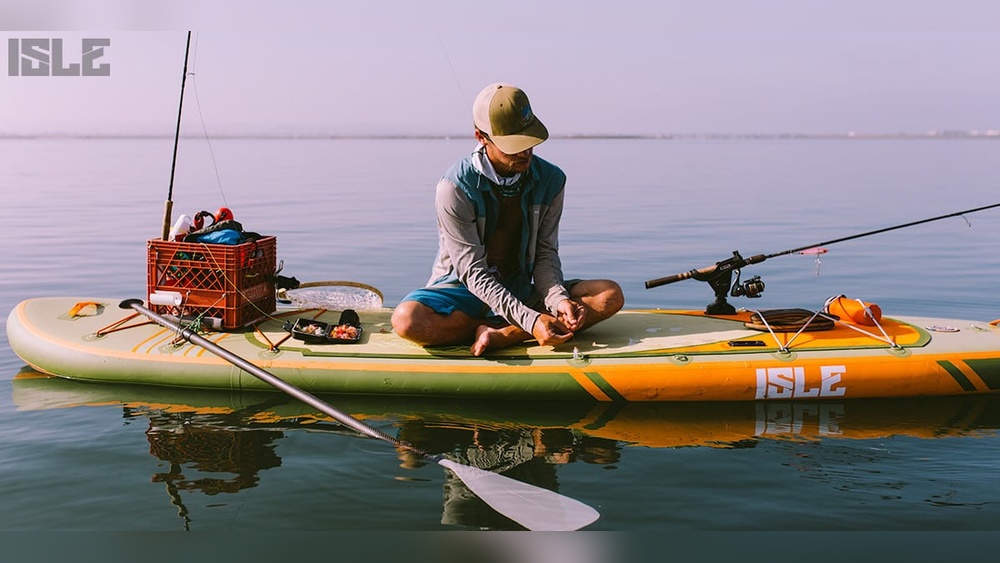
A fishing paddle board is a specialized stand-up paddle board (SUP) designed for anglers. Unlike regular SUPs, fishing models are wider, more stable, and often come with features like rod holders, gear mounts, and non-slip decks. Most are inflatable or made of durable hard materials.
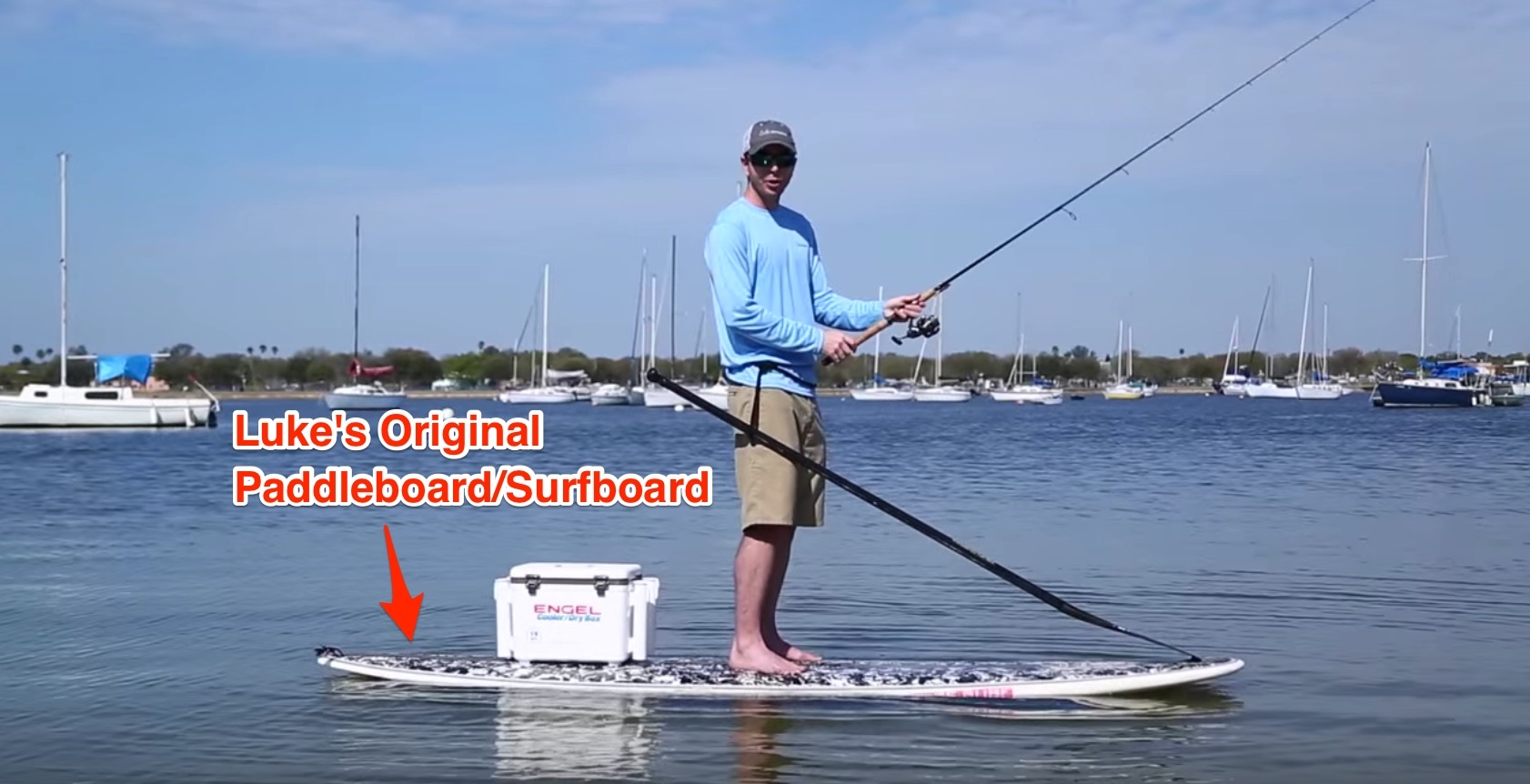
Fishing paddle boards let you stand up while casting, which gives you a higher view of the water. This is helpful for spotting fish, especially in clear or shallow areas. Many boards have bungee storage, D-rings for attaching gear, and even coolers that double as seats.
Key Features
- Wide deck for stability
- Non-slip surface for safe standing
- Rod holders and gear mounts
- Bungee cords for storage
- Lightweight and easy to carry
- Inflatable or solid construction
Who Is It For?
Fishing paddle boards are ideal for:
- Anglers who like to move quietly and explore shallow water
- People who want a full-body workout while fishing
- Those who value easy transport and storage
What Is A Fishing Kayak?
A fishing kayak is a small, narrow boat designed for angling. Fishing kayaks are usually wider and more stable than regular kayaks. They come in sit-on-top and sit-inside models, with the former being more popular for fishing. Most fishing kayaks have built-in rod holders, gear tracks, and comfortable seats.
Kayaks keep you close to the water, which makes paddling easy even in wind or current. You can fish in both fresh and saltwater, and many models are suitable for rivers, lakes, and even the ocean.
Key Features
- Stable, wide hull for fishing
- Multiple rod holders
- Storage hatches for gear
- Adjustable seats
- Pedal or paddle propulsion
- Customizable with accessories
Who Is It For?
Fishing kayaks work well for:
- Anglers who want to cover more water
- Those who fish in different environments (rivers, lakes, bays)
- People who prefer sitting for long hours
Credit: www.lucidpaddleboards.com
Core Differences Between Fishing Paddle Board And Kayak
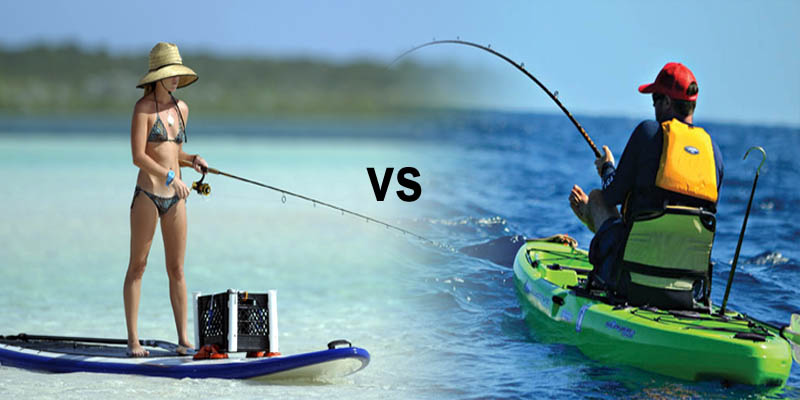
Understanding the main differences will help you decide which fits your style. Here’s a direct comparison:
| Feature | Fishing Paddle Board | Fishing Kayak |
|---|---|---|
| Position | Standing (can sit on cooler) | Sitting (some can stand, but less common) |
| Stability | Very stable (wide deck), but less in rough water | More stable in wind and current |
| Transport | Lighter, easier to carry and store | Heavier, may need a cart or trailer |
| Gear Capacity | Moderate (limited by space) | High (more storage) |
| Water Access | Shallow water, flats, backcountry | All water types, including rougher conditions |
| Learning Curve | Easy to moderate (balance needed) | Easy (sitting is more stable) |
| Cost | Lower to moderate | Moderate to high |
Pros And Cons Of Fishing Paddle Boards
Choosing a fishing paddle board has benefits and drawbacks. Here’s what you need to know.
Advantages
- Great visibility: Standing gives you a better view of the water, making it easier to spot fish and structure.
- Shallow water access: You can glide over water just a few inches deep, reaching places boats and kayaks can’t.
- Quiet approach: Paddle boards make almost no noise, so you won’t spook fish.
- Lightweight: Most paddle boards are easy to carry, even alone. Inflatable models fit in car trunks or closets.
- Full-body workout: Paddling while standing builds core strength and balance.
- Easy storage: Paddle boards take up less space, especially inflatables.
Disadvantages
- Less gear storage: Space is limited compared to a kayak. Large coolers or tackle boxes may not fit.
- Balance required: Standing can be tricky in waves, wind, or when fighting a big fish.
- Less protection: You’re more exposed to sun, wind, and rain.
- Limited range: Paddle boards are slower and harder to paddle long distances.
- Difficult in rough water: Not ideal for strong currents or chop.
Non-obvious Insights
- Many anglers underestimate how tiring standing all day can be. Plan for breaks.
- Wind affects paddle boards much more than kayaks, sometimes pushing you off course quickly.
Pros And Cons Of Fishing Kayaks
Fishing kayaks are a favorite for many anglers, but they’re not perfect for everyone. Here’s a balanced look.
Advantages
- Excellent stability: Sitting lowers your center of gravity, which makes kayaks less likely to tip.
- More gear space: Kayaks have hatches, tank wells, and plenty of room for tackle, rods, and even electronics.
- Versatile: Use them in lakes, rivers, and the ocean.
- Better for distance: Kayaks travel faster and handle wind or current better.
- Comfort: Most have padded, adjustable seats for all-day fishing.
- Hands-free options: Pedal kayaks let you fish while moving.
Disadvantages
- Heavier and bulkier: Hard to carry alone, especially larger models.
- Harder to store: Need a garage, rack, or trailer for transport.
- Less view: Sitting means you see less of the water, especially in shallow or weedy areas.
- Difficult entry/exit: Getting in and out can be tricky, especially for beginners or older anglers.
- More expensive: High-end fishing kayaks can cost over $2,000.
Non-obvious Insights
- Kayaks with pedal drives are great, but weeds and shallow water can jam the pedals.
- Many people forget to check the weight limit. Overloading a kayak can make it unstable and even unsafe.
Performance: Stability, Speed, And Comfort
Performance on the water is key for fishing success. Here’s how paddle boards and kayaks compare in the areas that matter most.
Stability
Fishing paddle boards are designed for standing, so they’re very stable—on calm water. However, the wide flat surface can become a challenge if there are waves or if you shift your weight suddenly. You need to pay attention to your balance when casting or reeling in a big fish.
Kayaks are naturally more stable because you sit low. Wider models (called “sit-on-tops”) are especially steady. You can focus on fishing instead of balancing.
Speed
Kayaks are faster, especially over long distances. Their shape lets them cut through the water, and you can use double-bladed paddles or pedals. This is important if you want to reach far-off fishing spots or need to fight wind and current.
Paddle boards are slower. They’re fine for short trips but not for long paddles or covering big lakes.
Comfort
Fishing kayaks win in comfort. Most have padded seats with back support, footrests, and room to stretch. You can sit for hours without getting tired.
On a paddle board, you stand most of the time. Some boards have a cooler seat, but it’s not as relaxing as a kayak seat. Standing can tire your legs and back.
Weather Protection
Kayaks offer some protection from splashes and wind, especially sit-inside models. You’re less exposed to the elements.
Paddle boards leave you out in the open. Sun, wind, and rain all hit you directly.
Credit: www.saltstrong.com
Portability And Storage
Getting your fishing craft to the water—and storing it afterward—matters more than many beginners realize.
Fishing Paddle Boards
- Lightweight: Most inflatables weigh 20-35 lbs. Easy for one person to carry.
- Compact storage: Inflatable models roll up into a backpack. Hard boards fit in small spaces.
- Easy transport: No trailer needed. Fit in most cars or SUVs.
Fishing Kayaks
- Heavier: Average weight is 50-100 lbs. Some pedal kayaks are even heavier.
- Bulky: Need a roof rack, truck bed, or small trailer for transport.
- Tough to store: Require more space. Can’t roll up or stack easily.
Non-obvious Insights
- If you live in an apartment or have limited storage, a paddle board is much easier to manage.
- Some kayak owners end up fishing less because hauling their craft is a hassle.
Gear And Customization
Modern anglers love to customize their fishing setup. Here’s how paddle boards and kayaks compare.
Fishing Paddle Boards
- Rod holders: Usually 1-2, sometimes removable.
- Mounts: Some boards have tracks for accessories like camera mounts or fish finders.
- Cooler seat: Doubles as storage and a place to rest.
- Bungee storage: For tackle boxes or dry bags.
The main limitation is space. You need to keep your setup simple—no huge tackle bags or extra rods.
Fishing Kayaks
- Rod holders: Many kayaks have 2-4 built-in holders.
- Gear tracks: For mounting electronics, cup holders, or extra rod holders.
- Storage hatches: Keep gear dry and safe.
- Anchor systems: Useful for staying in one spot.
With a kayak, you can bring almost everything you need for a long day on the water.
Non-obvious Insights
- Overloading a paddle board can make it hard to balance. Less is more.
- Kayak anglers sometimes lose small items in deep hatches. Use bags or containers to stay organized.
Where Each Excels: Best Environments
No single craft is perfect for every water. Here’s where each shines.
Fishing Paddle Board
- Shallow water: Perfect for flats, backwaters, and areas with lots of weeds or obstacles.
- Calm lakes and slow rivers: Best where wind and current are light.
- Sight fishing: Stand up and spot fish before casting.
Fishing Kayak
- Lakes and reservoirs: Great for covering distance and carrying gear.
- Moving water: Handles current and wind better.
- Saltwater bays and coastal areas: Pedal or paddle into tide and wind.
Non-obvious Insights
- In cold weather, kayaks keep you drier and warmer.
- Paddle boards are easier to launch from remote or rough shorelines.
Price: What To Expect
Cost is always important. Here’s a look at typical price ranges.
| Type | Entry Level | Mid-Range | High-End |
|---|---|---|---|
| Fishing Paddle Board | $400–$700 | $800–$1,200 | $1,300–$2,000+ |
| Fishing Kayak | $500–$900 | $1,000–$1,800 | $2,000–$4,000+ |
Kayaks cost more, especially with pedal drives and advanced features. Paddle boards are affordable and easier for beginners to try.
Non-obvious Insights
- Accessories add up. Paddles, life vests, and mounts can cost hundreds more.
- Used kayaks hold value well, but used inflatables may wear out faster.
Safety: What You Need To Know
Fishing is fun, but safety is serious business. Both paddle boards and kayaks have risks.
Paddle Board Safety
- Wear a PFD (personal flotation device)
- Use a leash to stay connected to your board
- Practice falling off and getting back on in shallow water
- Stand only in calm conditions if you’re new
Kayak Safety
- Always wear a PFD
- Secure gear so it doesn’t shift or fall out
- Know how to re-enter your kayak if you capsize
- Check weight limits before loading
Non-obvious Insights
- Many accidents happen near shore. Don’t get careless just because you’re close to land.
- Sudden weather changes can turn a safe trip dangerous. Always check the forecast.
For more detailed water safety tips, check the U.S. Coast Guard Boating Safety site.
Common Mistakes To Avoid
Both beginners and experienced anglers make mistakes. Here’s what to watch out for:
- Ignoring wind and weather: Both paddle boards and kayaks can be hard to control in strong wind or storms.
- Overloading gear: Less is more, especially on a paddle board.
- Not practicing before fishing: Try your craft in calm water before heading out to fish.
- Skipping safety gear: Always wear a PFD, even if you can swim.
- Not checking local rules: Some places require specific safety gear or have restrictions.
Which Should You Choose?
Choosing between a fishing paddle board and a fishing kayak comes down to your style, water conditions, and personal needs.
- Pick a fishing paddle board if you want:
- Easy transport and storage
- Standing to see and cast better
- Fishing in shallow, calm water
- Choose a fishing kayak if you want:
- More stability and comfort for long trips
- Extra gear and electronics
- Fishing in all types of water, including rough conditions
If possible, try both before buying. Many outdoor shops or fishing clubs offer demos. What feels right in person is often the best answer.
Frequently Asked Questions
Can You Stand And Fish From A Kayak?
Yes, some fishing kayaks are stable enough for standing. These models are usually wide and flat-bottomed. However, not every kayak is suitable. Practice in calm water before trying to stand and cast.
Are Paddle Boards Good For Saltwater Fishing?
Yes, paddle boards work well for saltwater flats, bays, and calm coastal areas. Look for models with corrosion-resistant fittings and rinse your board with fresh water after each trip to prevent damage.
What’s The Average Weight Capacity For Fishing Paddle Boards And Kayaks?
Most fishing paddle boards hold 250–350 lbs. Fishing kayaks usually support 300–500 lbs, depending on the model. Always check the manufacturer’s rating before loading up your gear.
Do You Need A License To Fish From A Paddle Board Or Kayak?
You don’t need a boating license for a paddle board or kayak in most places. However, you do need a fishing license in most states or countries. Check local regulations before heading out.
Which Is Safer For Beginners: Paddle Board Or Kayak?
Kayaks are generally safer for beginners because you sit lower, making them harder to tip. Paddle boards require more balance, especially in wind or waves. Beginners should always wear a PFD and practice in calm water.
Fishing paddle boards and kayaks both offer unique joys. The right choice will help you catch more fish, enjoy the outdoors, and stay safe. Take your time, try both if you can, and choose the craft that fits your fishing dreams.

Credit: halfhitch.com