Drift fishing is a style of angling that uses the natural movement of water to carry a boat, bait, or lure along with the current or wind. Unlike other methods where you anchor the boat or fish from a fixed position, drift fishing lets you cover a larger area, reaching more fish.
This technique has been used for centuries on rivers, lakes, and oceans, and today it remains a favorite for both beginners and seasoned anglers.
What makes drift fishing so appealing? It’s simple, effective, and doesn’t require expensive gear. You rely on nature to do most of the work, allowing you to focus on reading the water and responding to changing conditions. Whether you’re seeking trout in a fast-flowing river, walleye in a big lake, or even saltwater species like redfish, drift fishing adapts to many situations.
In this guide, you’ll discover what drift fishing is, how it works, and why it’s a valuable technique for any angler to learn.
How Drift Fishing Works
Drift fishing is all about movement. Instead of staying in one spot, you let your boat or bait move naturally with the current or wind. This approach helps you present your bait to fish that may be scattered over a wide area. Here’s how it typically works:
- Boat Placement: You start by positioning your boat upstream or upwind of the area you want to fish. If you’re on a river, this means starting above the stretch you want to drift. On a lake or ocean, you use the wind or current to your advantage.
- Line and Bait Setup: As the boat drifts, you cast your line so that your bait or lure moves with the boat. The goal is to keep your presentation near the bottom or at the depth where fish are feeding.
- Adjusting Speed and Direction: Sometimes, you use a drift sock (sea anchor), trolling motor, or even oars to control your speed. Moving too fast can make your bait look unnatural; too slow, and you might not cover enough ground.
- Detecting Bites: Since your bait moves with the water, you need to pay close attention to your line. Many anglers hold their rod or use sensitive rod holders to feel for bites.
Drift fishing works well in places where fish are spread out or when they’re moving to feed. Because you’re covering more water, your chances of finding active fish increase.
Types Of Drift Fishing
Drift fishing isn’t just one technique—it covers several styles, depending on the water type and target species. Here are the main variations:
River Drift Fishing
In rivers, the current does most of the work. Anglers often use weights to keep bait near the bottom as the boat or line drifts downstream. This method is popular for salmon, trout, and steelhead. The key is to match your speed with the current and avoid snags on rocks or logs.
Lake Drift Fishing
On lakes, wind usually drives the drift. You might target walleye, perch, or pike by letting your boat move across flats, drop-offs, or weed lines. A drift sock can slow your drift if the wind is strong, helping your bait stay in the strike zone longer.
Saltwater Drift Fishing
Saltwater drift fishing can target everything from snapper to sharks. Tides and wind move your boat, and you drop baits or lures over reefs, wrecks, or open water. Because saltwater drifts can be fast, heavier gear and weights are often needed.
Bank Drift Fishing
You don’t always need a boat. In some rivers, you can drift fish from the shore by casting upstream and letting your bait drift downstream, keeping it near the bottom. This method is often used for river trout or salmon.

Credit: www.in-fisherman.com
Essential Gear For Drift Fishing
While drift fishing doesn’t require the fanciest gear, having the right tools makes a big difference. Here’s what you’ll typically need:
| Gear Item | Purpose | Tips |
|---|---|---|
| Rod and Reel | Cast and control your line | Medium-action rods are versatile; spinning reels are beginner-friendly |
| Line | Connects you to the fish | Monofilament for flexibility, braided for strength |
| Weights (Sinkers) | Keep bait near the bottom | Adjust size for current speed |
| Hooks | Hold bait and catch fish | Match hook size to target species |
| Drift Sock | Slow down boat in wind | Essential in lakes with strong winds |
| Boat (optional) | Increase area you can fish | Kayaks, canoes, and small boats all work |
Bait And Lures
- Live bait: Minnows, worms, or shrimp often work best because they move naturally.
- Artificial lures: Soft plastics, jigs, or spinners can be effective, especially if fish are aggressive.
- Scented baits: In murky water, adding scent can help fish find your offering.
Other Useful Tools
- Fish finder: Helps locate schools of fish or underwater features.
- Rod holders: Let you fish multiple rods or give your hands a break.
- Landing net: Makes landing fish easier, especially from a boat.
Setting Up For Drift Fishing
Getting your drift fishing setup right can make the difference between a slow day and a full cooler. Here’s a step-by-step example for a simple river drift fishing rig:
- Attach a sliding sinker (like a pencil weight) above a swivel on your main line.
- Tie a leader (1–3 feet, lighter line) to the swivel.
- Add a hook suited for your bait and target fish.
- Thread bait onto the hook, making sure it looks natural.
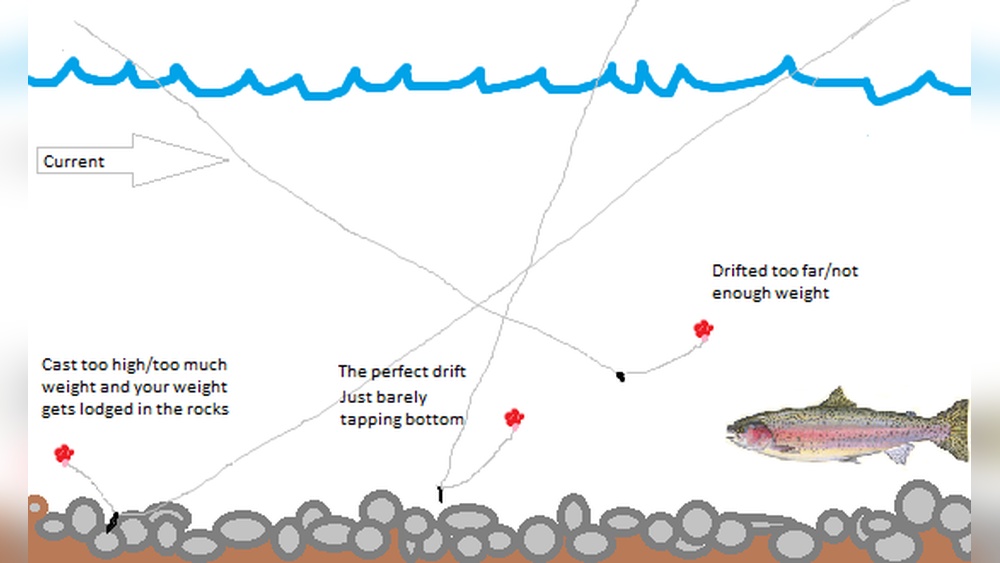
When you cast upstream, the current will carry your bait downstream. Keep your rod tip low and follow the drift, reeling in slack to stay in contact with your bait. If you feel a bump or stop, set the hook quickly—this could be a bite or your weight hitting a rock.
Lake And Saltwater Setup
- Use heavier sinkers if wind or current is strong.
- For multiple rods, stagger the depths to find where fish are biting.
- If drifting over structure, keep your bait just above the bottom to avoid snags.
Key Techniques And Tips
Drift fishing is simple, but small adjustments can make a big impact. Here are some tips to improve your success:
- Control your drift speed: If you drift too quickly, fish may ignore your bait. Use a drift sock or let out more anchor line to slow down.
- Vary your depth: Fish aren’t always on the bottom. Try drifting baits at different depths until you find where they’re feeding.
- Watch the weather: Wind direction and speed affect your drift. On windy days, pick protected areas or use gear to slow your drift.
- Read the water: Look for current breaks, drop-offs, or changes in bottom structure. Fish often gather in these spots.
- Stay alert: Because your bait is moving, bites can be subtle. Hold your rod or use sensitive rod holders to detect strikes.
- Cover ground: If you’re not getting bites, move to a new area. Drift fishing is about finding active fish, not waiting for them to come to you.
Comparing Drift Fishing To Other Methods
It’s helpful to see how drift fishing stacks up against other common techniques:
| Fishing Method | Main Advantage | Main Disadvantage |
|---|---|---|
| Drift Fishing | Covers large area, finds active fish | Can be hard to control speed and direction |
| Still Fishing | Simple, good for beginners | Limited to one spot, can be slow |
| Trolling | Targets fish at specific depths | Requires motor, more gear |
| Fly Fishing | Effective for certain species, like trout | Limited range, requires skill |
Drift fishing offers a balance between covering water and keeping your setup simple. Compared to trolling, you need less equipment, and unlike still fishing, you’re always moving to new spots.

Credit: www.steelheader.net
Common Mistakes Beginners Make
Even though drift fishing is beginner-friendly, some common mistakes can spoil your day. Here’s what to watch out for:
- Drifting too fast: If your bait moves too quickly, fish may not have time to strike. Use a drift sock or adjust your setup to slow down.
- Using the wrong weight: Too heavy, and your bait snags; too light, and it drifts above the fish. Adjust based on current speed and depth.
- Ignoring the wind: Wind can push your boat off course or make your drift too fast. Plan your drift based on wind direction.
- Not watching the line: Bites during a drift can be subtle. Stay focused and react quickly.
- Fishing only one depth: Fish may be higher or lower in the water column. Change your presentation if you’re not getting bites.
- Overcrowding the boat: Too many lines in the water can lead to tangles, especially for beginners.
Non-obvious insight: Many new anglers think more weight is always better for holding bottom, but using a lighter sinker helps your bait look more natural and reduces snags. Another tip—small changes in boat angle can dramatically change your drift path, so minor steering adjustments can help you cover new water.
Where Drift Fishing Works Best
Drift fishing isn’t just for one type of water. Here are some ideal places to try it:
- Rivers: Fast or slow, as long as there’s current to carry your bait.
- Lakes: Especially over flats, drop-offs, or weed beds.
- Reservoirs: Where wind or water release creates movement.
- Saltwater: Over reefs, wrecks, or open water.
- Estuaries and tidal rivers: Moving water attracts feeding fish.
Some famous spots for drift fishing include the Columbia River for salmon, Lake Erie for walleye, and the Florida Keys for a variety of saltwater species.
Drift Fishing For Different Species
Drift fishing can target many kinds of fish. Here’s how to adapt your technique for some popular targets:
Trout And Salmon
- Use lighter line and smaller hooks.
- Natural baits like roe or worms work best.
- Focus on seams, eddies, and behind rocks where fish rest.
Walleye
- Drifting over drop-offs with live minnows or leeches is highly effective.
- Use bottom-bouncers or sliding sinkers to keep bait near the bottom.
Catfish
- Heavy sinkers keep bait on the bottom in strong current.
- Use stink baits, cut bait, or live bait for best results.
Saltwater Species
- Target structure like reefs or wrecks.
- Use heavier gear for larger fish.
- Scented or live baits often outperform artificial lures.
Drift Fishing Safety Tips
Drift fishing is generally safe, but a few precautions help ensure a good day on the water:
- Always wear a life jacket when fishing from a boat.
- Keep an eye on weather conditions—sudden changes can create dangerous waves or currents.
- Make sure your boat is in good condition and has the necessary safety gear (first aid kit, anchor, rope, signaling devices).
- Don’t fish alone in remote areas, especially on large lakes or rivers.
- Be aware of other boats and follow local navigation rules.
- In fast rivers or strong tides, plan your drift so you have room to stop or avoid hazards.
Useful Drift Fishing Strategies
Getting the most from drift fishing requires some strategy. Here are some advanced tips:
- Use electronics: Fish finders or GPS units help you mark productive drifts and return to hot spots.
- Mark your drifts: Drop a waypoint or note landmarks to repeat successful drifts.
- Match the hatch: Use bait or lures that mimic what fish are eating at that time of year.
- Double up: In some areas, you can fish two rods or use tandem rigs to test different baits or depths.
- Stay flexible: If you’re not catching fish, change location, speed, depth, or bait until you find what works.
Environmental Considerations
Drift fishing, when done responsibly, is gentle on the environment. Still, there are a few best practices:
- Avoid dragging heavy gear through sensitive habitats like spawning beds or coral reefs.
- Use biodegradable weights and non-lead sinkers where possible.
- Pack out all trash, including fishing line and bait containers.
- Respect local regulations on catch limits, bait use, and protected species.
- Practice catch and release when necessary, using barbless hooks and handling fish with wet hands to minimize harm.
For more on sustainable fishing, check out the guidelines from the U.S. Fish & Wildlife Service.

Credit: www.sciencedirect.com
Cost And Accessibility
One advantage of drift fishing is that it doesn’t have to be expensive. Here’s a comparison of basic costs:
| Item | Budget Option | Premium Option |
|---|---|---|
| Rod and Reel | $40–$80 | $150–$300+ |
| Line and Hooks | $10–$20 | $30–$60 |
| Weights and Terminal Tackle | $10 | $40 |