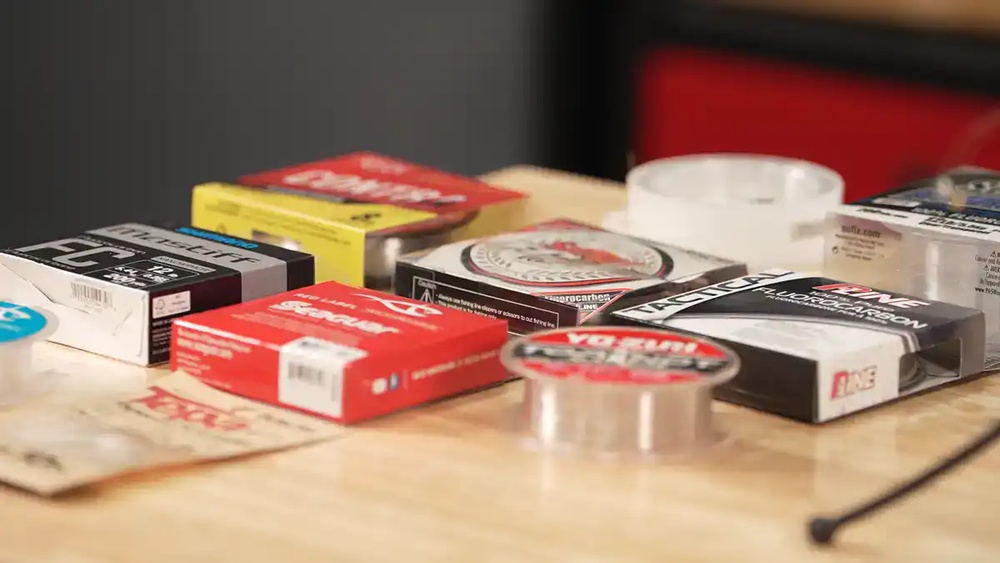
Fluorocarbon fishing lines have become a popular choice for anglers around the world. Their unique properties—like low visibility in water, high sensitivity, and resistance to abrasion—make them stand out compared to traditional monofilament or braided lines. But with so many brands and models on the market, finding the best fluorocarbon fishing line can be confusing, even for experienced fishers. Choosing the wrong line can lead to lost fish and wasted money. In this guide, you’ll learn what makes fluorocarbon special, how to pick the right line for your fishing style, and which brands truly deliver top performance. By the end, you’ll know exactly what to look for and which products are worth your trust.
What Makes Fluorocarbon Fishing Line Different?
Fluorocarbon is made from polyvinylidene fluoride (PVDF), a material that is denser and less visible than nylon, which is used in monofilament lines. When you put fluorocarbon in water, it almost disappears because its refractive index is very close to that of water. This means fish are less likely to see your line, which is a big advantage when targeting shy or pressured species.
Another key feature is that fluorocarbon sinks faster than other lines. This helps your lures reach the right depth quickly. It’s also much more resistant to damage from sharp objects like rocks or fish teeth. Many anglers also love the sensitivity of fluorocarbon—it doesn’t stretch as much as monofilament, so you can feel even the tiniest bites.
Key Factors To Consider When Choosing Fluorocarbon Line
Not all fluorocarbon lines are the same. They vary in strength, stretch, diameter, and even how stiff or flexible they are. Here’s what really matters when choosing the best fluorocarbon fishing line:
1. Line Strength (pound Test)
This tells you how much weight the line can handle before breaking. Common options range from 4 to 25 pounds, but specialized lines can go higher. Match the line strength to your target fish and fishing style. For bass or trout, 6-12 lb is typical.
For bigger saltwater fish, you may need 15 lb or more.
2. Line Diameter
Thinner lines are less visible and let lures move more naturally. But if the line is too thin, it may break under pressure. High-quality fluorocarbon lines often offer higher strength at smaller diameters.
3. Abrasion Resistance
If you fish around rocks, logs, or heavy cover, abrasion resistance is critical. Some fluorocarbon lines have extra coatings to resist nicks and cuts.
4. Sensitivity And Stretch
Fluorocarbon is known for being sensitive, but some brands are even better at transmitting subtle bites. Less stretch usually means better hooksets.
5. Knot Strength
Some fluorocarbon lines are stiff and can weaken knots if tied incorrectly. Look for lines that hold knots well, especially if you use complex knots like the Palomar or Improved Clinch.
6. Memory
“Memory” is how much a line wants to coil. High memory can cause tangles and reduce casting distance. Low-memory lines cast smoother and behave better on the reel.
7. Price And Value
Fluorocarbon is generally more expensive than monofilament. However, cheaper fluorocarbon lines often lack the performance and durability of premium brands. Sometimes, paying a bit more saves you frustration and lost fish.
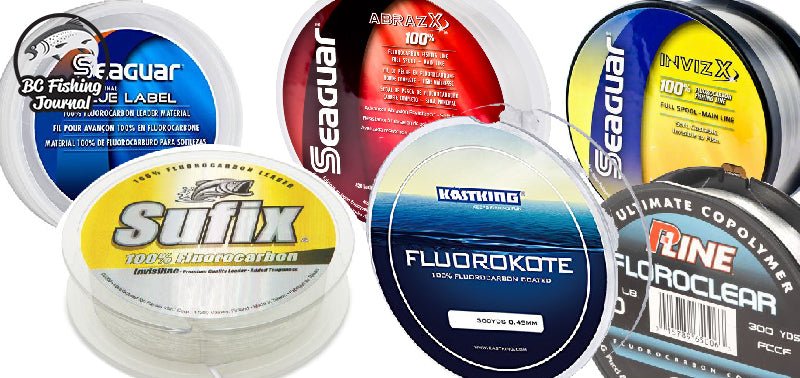
Credit: fishermanshub.com
Top 10 Best Fluorocarbon Fishing Lines (2024)
Let’s look at the most trusted and high-performing fluorocarbon fishing lines available today. Each of these has been tested by both weekend anglers and professionals.
1. Seaguar Invizx
Seaguar InvizX is famous for its balance of strength, sensitivity, and invisibility. It’s soft, easy to handle, and works well for both spinning and baitcasting reels. Anglers love its knot strength and low memory, making it an excellent all-around choice.
- Strengths: Incredibly low visibility, great knot strength, smooth casting
- Best for: Freshwater fishing, especially bass and walleye
2. Sunline Super Fc Sniper
This line stands out for its abrasion resistance and durability. Sunline uses a triple resin coating, making it tough without sacrificing sensitivity. It’s a favorite in tournaments for fishing around rocks, docks, and heavy cover.
- Strengths: High durability, very sensitive, strong knots
- Best for: Heavy cover, clear water lakes
3. Berkley Vanish
Berkley Vanish is a widely available, budget-friendly option. It’s designed to be nearly invisible underwater and is softer than many other fluorocarbons, which helps with casting.
- Strengths: Affordable, low visibility, good for beginners
- Best for: General freshwater use, trout, and panfish
4. P-line Floroclear
P-Line Floroclear blends fluorocarbon coating over a copolymer core. This gives it the low visibility of fluorocarbon with the flexibility and manageability of monofilament.
- Strengths: Very manageable, long casting, good value
- Best for: Light tackle, finesse fishing
5. Seaguar Abrazx
If you need maximum abrasion resistance, Seaguar AbrazX is a top pick. It’s made to handle rough conditions—rocks, timber, and heavy vegetation.
- Strengths: Extremely tough, reliable in harsh conditions
- Best for: Heavy cover, structure fishing
6. Daiwa J-fluoro Samurai
Daiwa’s J-Fluoro Samurai offers high-quality Japanese engineering. It’s known for its consistency in diameter and excellent sensitivity.
- Strengths: Even diameter, high sensitivity, low stretch
- Best for: Finesse presentations, drop shotting
7. Yo-zuri Hd Carbon
Yo-Zuri HD Carbon is designed for saltwater, but many freshwater anglers use it too. It has a hard outer coating for abrasion resistance and comes in clear or pink (which also disappears in water).
- Strengths: Saltwater-tough, multiple color options
- Best for: Saltwater leaders, big game fishing
8. Sufix Invisiline
Sufix Invisiline is another high-end option with a focus on low visibility and smooth handling. It’s soft, easy to tie, and has low stretch.
- Strengths: Soft, smooth, casts well
- Best for: Spinning reels, finesse rigs
9. Kastking Fluorokote
KastKing FluoroKote is a hybrid line—copolymer core with a fluorocarbon coating. It’s cheaper than pure fluorocarbon but still offers many of the same benefits.
- Strengths: Budget-friendly, low visibility, easy to handle
- Best for: Beginners, all-around fishing
10. Spiderwire Ultracast Fluoro
This line is made for long casting and high sensitivity. Spiderwire Ultracast Fluoro is very strong for its diameter and holds up well in tough conditions.
- Strengths: Long casting, strong for size, sensitive
- Best for: Bass fishing, open water
Comparing Top Fluorocarbon Lines
To make things clearer, here’s a comparison of strength, memory, and cost for the top 5 lines:
| Brand/Model | Strength (lb test) | Memory | Approx. Price (200 yd) |
|---|---|---|---|
| Seaguar InvizX | 6-25 | Low | $22-$30 |
| Sunline Super FC Sniper | 5-20 | Low-Med | $20-$35 |
| Berkley Vanish | 4-20 | Med | $12-$18 |
| P-Line Floroclear | 2-30 | Low | $10-$15 |
| Seaguar AbrazX | 4-25 | Low | $25-$35 |
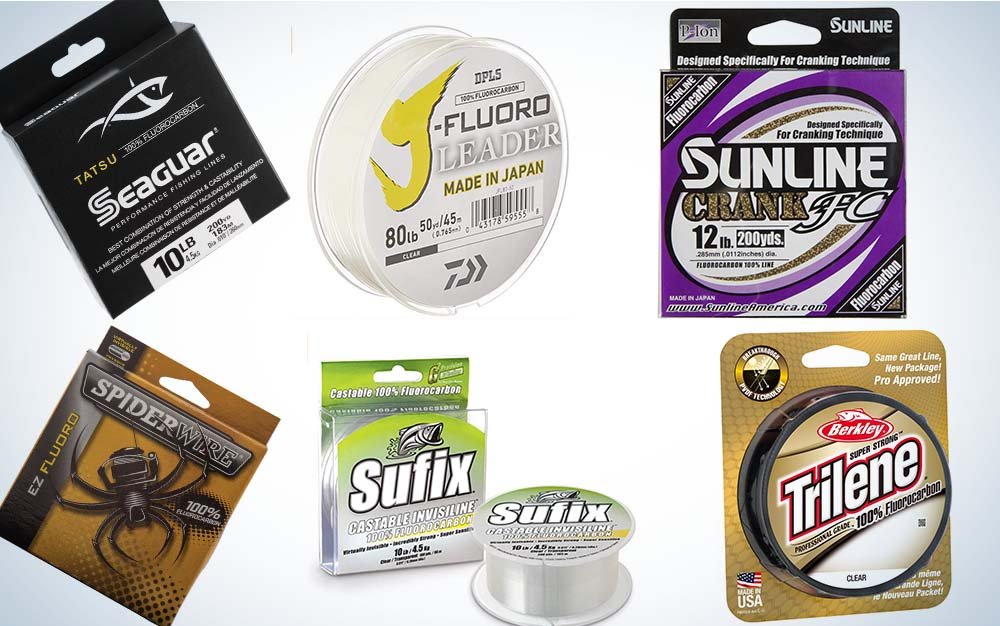
Credit: www.outdoorlife.com
When To Use Fluorocarbon As Main Line Or Leader
Some anglers use fluorocarbon as their main line on the reel, while others use it only as a leader (a short section at the end, tied to a different main line). Here’s when each approach works best:
- Main Line: Use fluorocarbon as your main line when you need low visibility for the whole setup. It’s great for clear water and finesse fishing.
- Leader: Use a fluorocarbon leader with a braided or monofilament main line to get the benefits of invisibility and abrasion resistance only at the business end.
Example Setups
- Bass Fishing in Clear Lakes: 10 lb fluorocarbon main line on a spinning reel for stealthy presentations.
- Saltwater Inshore Fishing: 30 lb braided main line with a 20 lb fluorocarbon leader for strength and invisibility.
Practical Tips For Using Fluorocarbon Fishing Line
Even the best fluorocarbon line won’t help if you use it incorrectly. Here are some hands-on tips:
1. Wet Your Knots
Fluorocarbon can heat up and weaken during knot tying. Wet the line with saliva or water before pulling the knot tight. This reduces friction and helps the knot set stronger.
2. Use Proper Knots
Some knots work better with fluorocarbon than others. The Palomar Knot and Improved Clinch Knot are both reliable. Take your time and check knots for slippage.
3. Avoid Overfilling The Reel
Fluorocarbon can be stiffer than monofilament. If you put too much on your reel, it may jump off in coils. Leave a small gap at the edge of the spool.
4. Stretch Out Memory
If your line develops coils or memory, pull out a length of line and stretch it gently before fishing. This helps reduce tangles and improves casting.
5. Store Away From Sunlight
UV light can slowly weaken fluorocarbon. Keep your spools in a cool, dark place when not in use.
How Fluorocarbon Compares To Monofilament And Braid
If you’re still unsure about fluorocarbon, it helps to see how it stacks up against the other main line types:
| Property | Fluorocarbon | Monofilament | Braid |
|---|---|---|---|
| Visibility | Very Low | Medium | High |
| Sensitivity | High | Medium | Very High |
| Stretch | Low | High | Very Low |
| Abrasion Resistance | High | Medium | Low |
| Price | High | Low | Medium |
Common Mistakes When Choosing Fluorocarbon Line
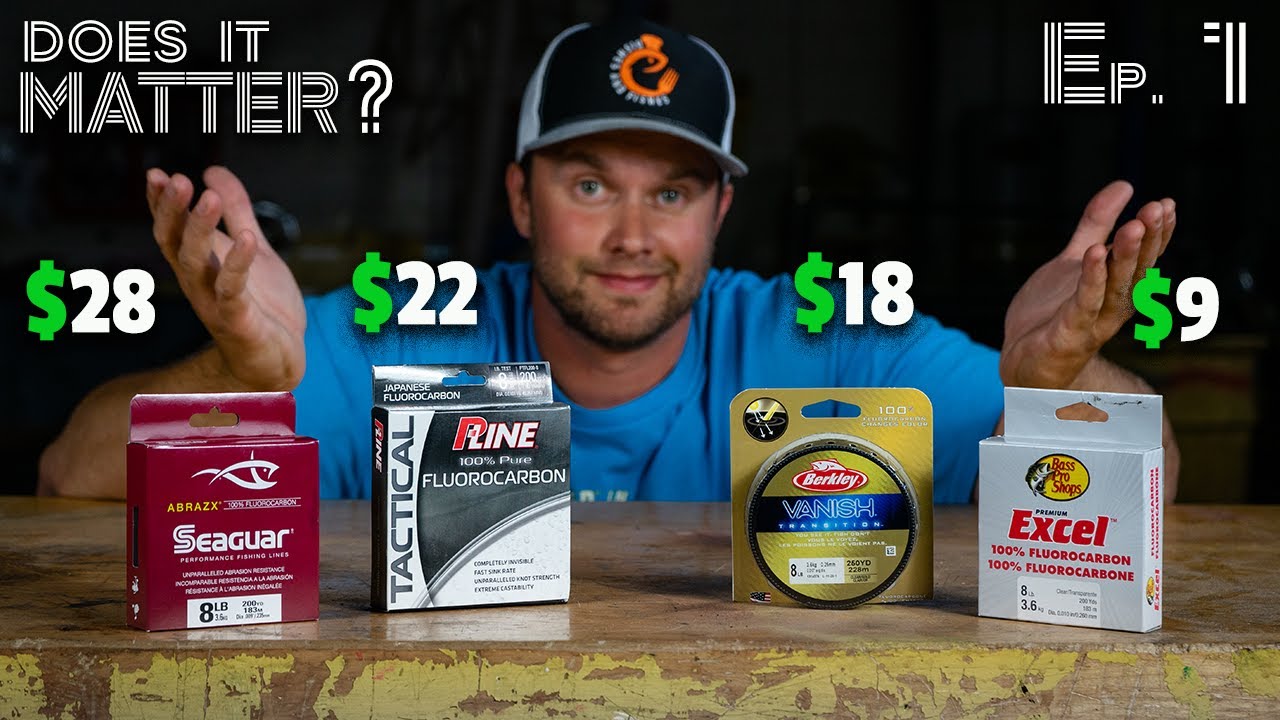
Many beginners buy the thickest or cheapest line they find, but this often leads to problems. Here are some mistakes to avoid:
- Picking a line too heavy for your rod or reel, which reduces casting distance and lure action.
- Using very cheap fluorocarbon, which can be stiff, hard to tie, and less abrasion-resistant.
- Not matching the line to your fishing technique (for example, using stiff leader line as a main line).
- Forgetting to check the line’s actual diameter—some brands label their lines higher than others for the same thickness.
Credit: www.youtube.com
How To Test Fluorocarbon Line Quality Yourself
You don’t have to trust only advertising. Here’s how you can check quality at home:
- Knot Test: Tie your favorite knot and pull hard. The line should not slip or break easily.
- Abrasion Test: Rub the line against a rough surface. Good fluorocarbon will resist nicks and cuts.
- Visibility Test: Put a piece in a glass of water and look from the side. It should almost disappear.
Real-world Scenarios: Choosing The Best Line For Your Fishing
Let’s break down a few common fishing situations and the best fluorocarbon choice for each.
Bass Fishing In Heavy Cover
When fishing for largemouth bass around weeds or wood, you need high abrasion resistance. Seaguar AbrazX or Sunline Super FC Sniper are excellent because they resist sharp edges and let you pull big fish out of thick cover.
Trout Fishing In Ultra-clear Streams
Trout can be very line-shy. A thin, invisible line like Seaguar InvizX in 4-6 lb test is perfect. It lets your bait drift naturally and won’t spook the fish.
Saltwater Leader For Tarpon Or Redfish
Saltwater fish have sharp gill plates and mouths. Yo-Zuri HD Carbon in 20-40 lb test, used as a leader, provides the invisibility and toughness needed for big, powerful fish.
Finesse Drop Shotting For Smallmouth
When using light lures and fishing deep, you want maximum sensitivity. Daiwa J-Fluoro Samurai in 6 lb test keeps you in touch with your bait and detects even gentle bites.
How To Make Fluorocarbon Last Longer
Fluorocarbon is tough, but it’s not indestructible. Here’s how you can extend its life:
- Always check for nicks after fighting a fish or dragging through heavy cover. Retie often if you find damage.
- Keep unused spools away from heat and sunlight, as UV can weaken the material over time.
- Don’t let the line rub against sharp edges on your reel or guides.
Why Some Anglers Still Avoid Fluorocarbon
Despite its advantages, some anglers stick with monofilament or braid. Why? Fluorocarbon can be stiffer, especially in cold weather, making it tricky for casting light lures. It’s also pricier, which adds up if you fish often or need to replace line regularly.
Some find knots harder to tie well, especially with thicker lines. However, modern fluorocarbon lines are much improved, and many of these problems are less severe than they were a decade ago.
Fluorocarbon Line Myths Vs. Facts
There’s a lot of confusion about what fluorocarbon can and can’t do. Here are two myths beginners often believe:
- Myth: All fluorocarbon is 100% invisible.
Fact: It’s much less visible than other lines, but not truly invisible, especially in stained water.
- Myth: Fluorocarbon has no stretch at all.
Fact: It stretches less than monofilament, but more than braid. This gives a good mix of sensitivity and shock absorption.
Environmental Impact Of Fluorocarbon Lines
Fluorocarbon is not biodegradable. Lost or discarded fishing line can last for many years in the environment and harm wildlife. Always collect and properly dispose of old line. Some tackle shops offer recycling programs.
For more about environmental responsibility, check the Wikipedia page on fishing lines.
Summary Table: Best Fluorocarbon Lines By Situation
Here’s a quick reference for the best lines for popular fishing styles:
| Fishing Situation | Recommended Line | Key Reason |
|---|---|---|
| Bass in heavy cover | Seaguar AbrazX | Maximum abrasion resistance |
| Trout in clear streams | Seaguar InvizX | Super low visibility |
| Saltwater leader | Yo-Zuri HD Carbon | Saltwater toughness |
| Finesse/spinning | P-Line Floroclear | Flexibility and easy casting |
| Budget all-around | KastKing FluoroKote | Low price, good performance |
Frequently Asked Questions
What Pound Test Should I Use For Fluorocarbon Fishing Line?
Match the pound test to your target fish and fishing style. For trout and panfish, 4-6 lb is enough. For bass, 8-12 lb works well. For saltwater or large freshwater fish, use 15-25 lb or higher. Always check your rod and reel ratings too.
Is Fluorocarbon Line Really Invisible Underwater?
Fluorocarbon is nearly invisible in clear water because its refractive index is similar to water. Fish see it less than other lines, but it’s not totally invisible, especially in muddy or stained water.
Can I Use Fluorocarbon On A Spinning Reel?
Yes, but choose soft, low-memory fluorocarbon lines for spinning reels, like Seaguar InvizX or P-Line Floroclear. Stiffer lines can coil and cause tangles on spinning setups.
How Long Does Fluorocarbon Fishing Line Last?
Fluorocarbon lasts longer than monofilament if stored away from sunlight and heat. On your reel, check for nicks and replace if damaged. Unused spools kept in good conditions can last several years.
What’s The Difference Between Leader And Main Line Fluorocarbon?
Leader fluorocarbon is usually stiffer, tougher, and designed for short sections. Main line fluorocarbon is softer and better for filling your whole reel. Use the right type for your fishing style for best results.
Selecting the best fluorocarbon fishing line is about understanding your fishing needs and matching them to the right product. With knowledge of the top lines and how to use them, you’ll make smarter choices and land more fish—no matter where or how you like to fish.