
Do Fishing Rods Float? Everything You Need To Know
Fishing is a relaxing hobby for some, and a serious passion for others. No matter your experience level, one question often comes up: do fishing rods float if you accidentally drop them in water? Losing a rod can ruin your day and hurt your wallet. The answer isn’t as simple as “yes” or “no”—it depends on the rod, materials, design, and even the water itself. If you’ve ever wondered what happens if your rod goes overboard, you’re in the right place. This guide will break down why some rods float, why others sink, and how you can protect your gear. We’ll look at real-world examples, share tips, and uncover details most anglers miss.
How Fishing Rods Are Made
Understanding whether a fishing rod floats starts with knowing what they’re made of. The materials used play a huge role in buoyancy.
Common Rod Materials
- Fiberglass: Heavier and less expensive, but durable. Most entry-level rods use this material.
- Graphite/Carbon Fiber: Lighter, stiffer, and more sensitive. These rods are popular for serious anglers.
- Composite: Mixes fiberglass and graphite for balance between strength and flexibility.
Each material has its own density. Fiberglass is denser than water, so it tends to sink. Graphite and carbon fiber are lighter, but not always enough to float, especially with added components.
Key Rod Components
Fishing rods aren’t just a stick. They include:
- Reel seat: Where the reel attaches.
- Guides: Small rings that guide the fishing line.
- Handle/Grip: Often made of cork or EVA foam.
- Butt cap: The end of the rod.
Some parts, like EVA foam grips, are naturally buoyant. Others, such as metal reel seats and guides, add weight.
Do Fishing Rods Float? The Short Answer
Most fishing rods do not naturally float. When dropped in water, many will sink slowly or quickly, depending on their build. However, there are exceptions and ways to make rods float.
Why Most Rods Sink
- Material density: Fiberglass and carbon fiber are generally heavier than water.
- Added hardware: Metal guides and reel seats increase weight.
- Reels attached: The reel is often the heaviest part, making the rod sink faster.
When Do Rods Float?
Some rods might float for a short time if they have large foam handles or are sealed tightly. Children’s rods, which are lighter and sometimes made of plastic, often float.
Credit: www.youtube.com
The Science Of Buoyancy
To really answer “do fishing rods float,” it helps to know a bit about buoyancy—the force that lets things float or sink.
Archimedes’ Principle
An object will float if it displaces enough water to support its own weight. If the rod’s average density is less than water, it floats. Otherwise, it sinks.
- Cork and foam: Less dense than water, so they float.
- Fiberglass and graphite: More dense, so they sink unless balanced by lighter parts.
Air Trapped Inside
Some rods are sealed and have air pockets inside. Air is much lighter than water, so a sealed rod might float for a while. But if water seeps in, it sinks.
Real-world Examples: Which Rods Float And Which Sink
Let’s look at three common rod types and see what happens in the water.
| Rod Type | Material | Typical Buoyancy | What Happens in Water |
|---|---|---|---|
| Budget Spinning Rod | Fiberglass with cork handle | Sinks | Sinks slowly, cork handle may float for seconds |
| High-End Casting Rod | Graphite with EVA foam | Usually sinks | Might float for a few seconds if sealed, then sinks |
| Kids’ Rod | Plastic with foam grip | Floats | Usually stays afloat, easy to recover |
How Rod Design Affects Floating
Handle Material
- EVA foam: Adds buoyancy. A thick foam handle can keep a rod afloat for a short time.
- Cork: Also buoyant, but less so than foam.
- Rubber or plastic: Sometimes buoyant, but depends on thickness.
Hollow Vs. Solid Construction
- Hollow rods: If sealed, may trap air and float briefly.
- Solid rods: Heavier and more likely to sink.
Length And Weight
Longer, heavier rods displace more water but also weigh more. The balance between volume and weight decides if it floats.
Hardware And Accessories
- Metal guides: Add weight and drag the rod down.
- Reel seat: If made from metal, contributes to sinking.
- Lures/hooks attached: These can pull a rod under quickly.
Do Fishing Rods Float With Reels Attached?
A rod by itself might float for a short time. But most anglers use the rod with a reel attached. Reels are made from metal and dense plastic, making them much heavier than the rod alone.
How Much Weight Does A Reel Add?
A typical spinning reel weighs between 200-300 grams (7-10 oz). This extra weight almost always causes the rod to sink, even if the rod alone might have floated for a few seconds.
Testing With And Without Reels
Some anglers have tried dropping rods in shallow water to test this. The results are clear:
- Rod alone: May float for 5–20 seconds if handle is foam or cork.
- Rod with reel: Sinks in less than 5 seconds, usually straight to the bottom.
Special Floating Rods On The Market
Some brands make rods designed to float. These are marketed to beginners, kayak anglers, or those fishing from boats where dropping a rod is a real risk.
Features Of Floating Rods
- Oversized foam grips: Extra buoyant material keeps the rod on the surface.
- Sealed construction: Prevents water from entering and weighs less.
- Bright colors: Easier to spot and retrieve on the water.
Popular Brands And Models
- Ugly Stik Floating Rods: Known for thick foam handles and high visibility.
- Berkley Glowstik: Designed for catfishing, floats due to sealed design.
- Shakespeare Ugly Stik GX2 Youth: Aimed at kids, often floats thanks to plastic and foam build.
Performance And Drawbacks
Floating rods are great for beginners or kayak users, but they can be:
- Bulkier due to large grips
- Slightly less sensitive due to added materials
- More expensive than non-floating models
How Water Type Affects Buoyancy
Where you fish matters too. Water isn’t the same everywhere.
Freshwater Vs. Saltwater
Saltwater is denser than freshwater because of the dissolved salts. This means objects are a bit more likely to float in the ocean than in a lake or river.
For example:
- A rod that sinks slowly in freshwater might float briefly in saltwater.
- Heavier rods may still sink, but slightly slower.
Moving Vs. Still Water
Fast-moving water can push a floating rod away quickly or flip it over, causing any trapped air to escape and the rod to sink. In still water, a rod may float in place for longer.
Surprising Insights Most Anglers Miss
Many anglers assume that if a rod floats for a few seconds, it’s safe. But there are two things beginners often don’t realize:
- Temperature changes can affect buoyancy. Cold water is denser, so rods might float longer in icy lakes than in warm ponds.
- Rods can fill with water over time. If a rod is hollow and not fully sealed, water will slowly seep in, causing it to sink even if it floated at first.
These points are rarely mentioned in product manuals or fishing guides, but can make the difference between saving your rod or losing it forever.
How To Make Your Fishing Rod Float
You don’t need to buy a special rod to prevent it from sinking. There are simple, affordable ways to add floatation to your rod.
Add-on Floatation Devices
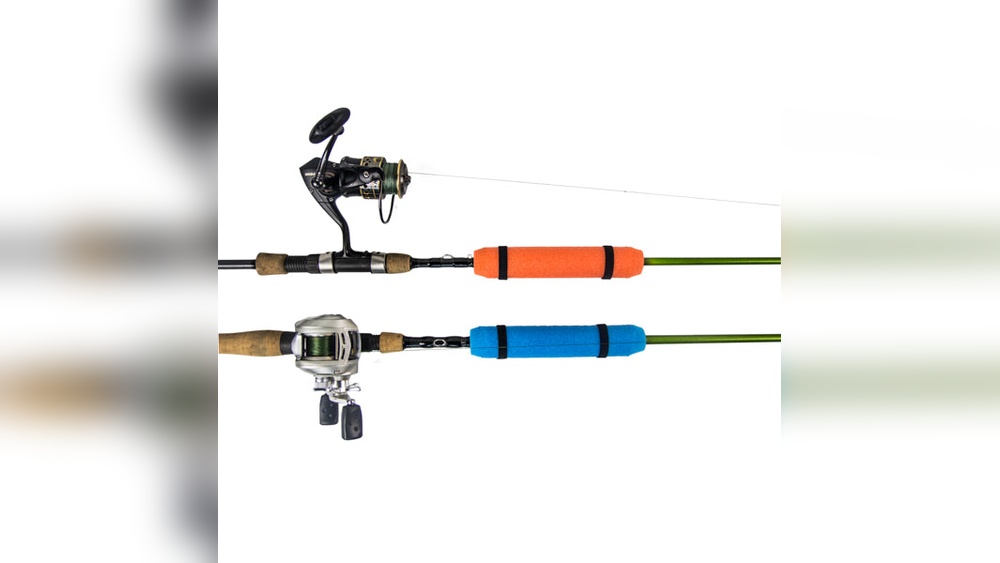
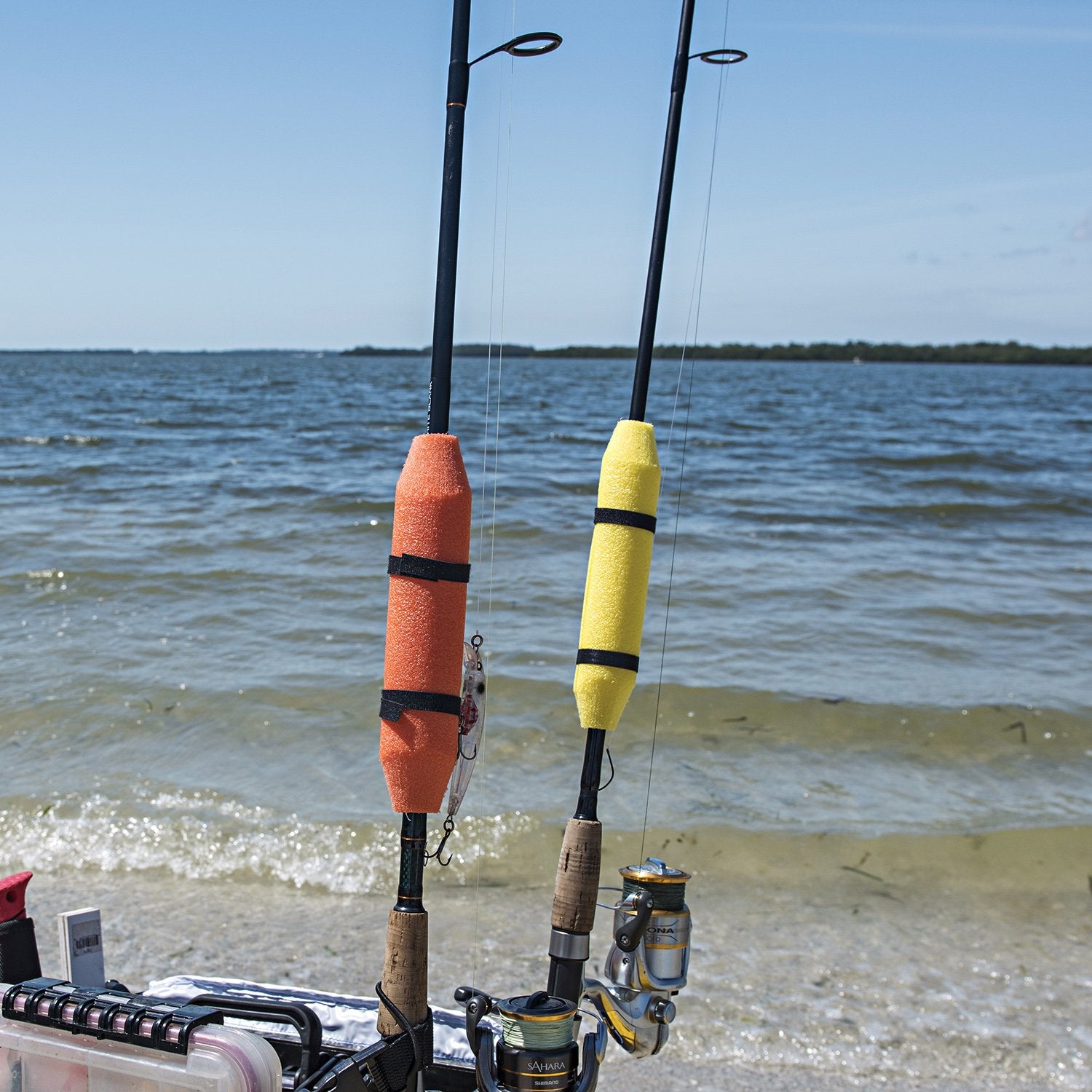
- Rod Floats: Foam tubes that slide onto your rod handle. Available online and in tackle shops.
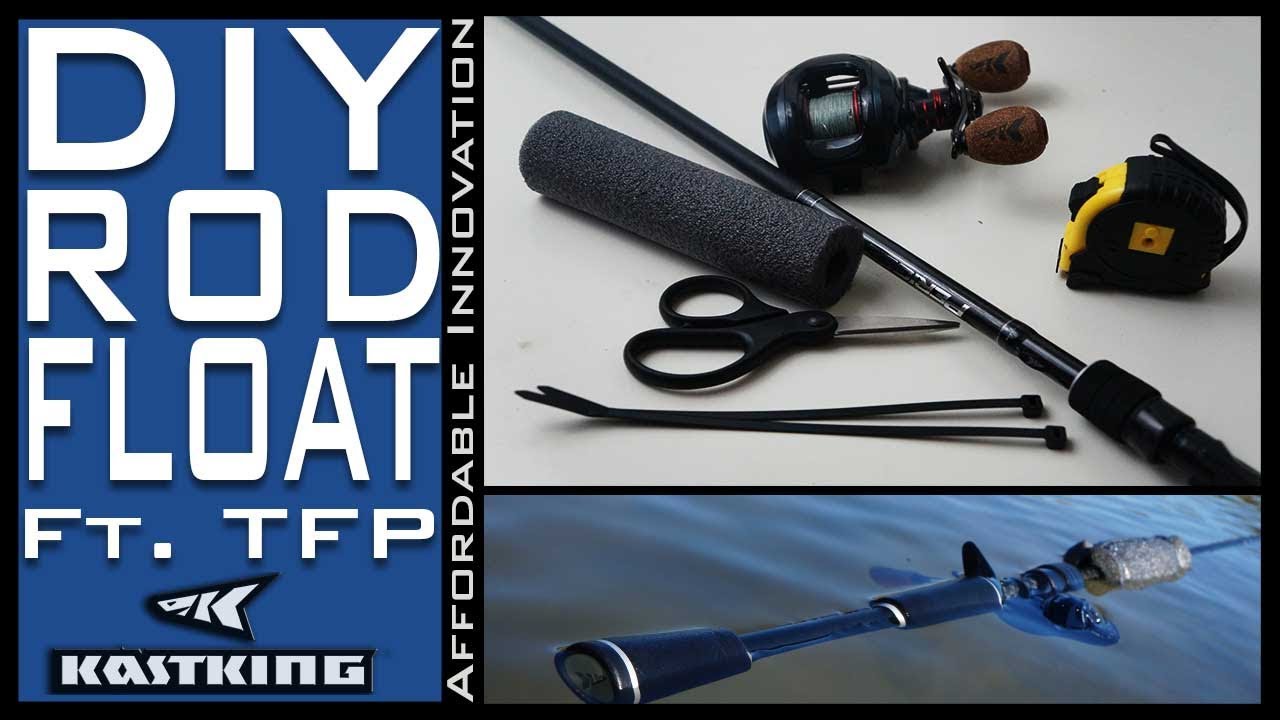
- DIY Foam Wraps: Use pool noodles or pipe insulation, cut to size and taped to the handle.
- Clip-on Floats: Attach to the rod near the reel seat for extra lift.
Bright Tape And Paint
If your rod does go in the water, a bright orange or yellow tape can make it easier to spot and recover.
Floating Lanyards
Attach a floating lanyard or strap to your rod and wrist. If it falls, it stays tethered to you, and the float keeps it on the surface.
Balance Matters
When adding floatation, try to balance it so the rod still feels comfortable and isn’t too top-heavy. Too much foam can make casting awkward.
Common Mistakes Anglers Make
Protecting your gear means avoiding these errors:
- Ignoring the handle material: Many think a cork or foam handle guarantees floatation, but added hardware can still make the rod sink.
- Trusting short-term floatation: Just because your rod floats for a few seconds doesn’t mean it’s safe. It might sink before you reach it.
- Leaving reels attached when testing: Always test your rod’s buoyancy with the reel and any hardware you normally use.
- Not checking for leaks: Hollow rods with small cracks or open ends can quickly fill with water.
- Relying on floating lures: Some lures float, but a heavy rod and reel will overpower their buoyancy.
What To Do If Your Rod Falls In
If your rod does fall into the water, here’s what you should do:
- Act fast: Most rods sink within seconds, so respond immediately.
- Use a net or pole: If visible, try to hook or scoop it before it sinks.
- Mark the spot: If it’s gone under, mark the spot with a buoy or GPS.
- Try retrieval magnets: Some rods have metal parts; a strong magnet on a rope can sometimes help.
- Don’t risk your safety: Never dive after a rod in deep or moving water. It’s not worth your life.
Fishing Rod Floating Myths And Misconceptions
Let’s clear up some common myths about rod buoyancy:
- “All rods with cork handles float.” False. The handle helps, but the rest of the rod’s weight matters more.
- “Freshwater rods sink, saltwater rods float.” Not true. The water density helps, but most rods still sink in both.
- “If it floats for a minute, it’s safe.” Not always. Water can slowly seep in and pull the rod under.
- “All kids’ rods float.” Many do, but not all. Always check before trusting a rod in the water.
Testing Your Own Rod’s Buoyancy
Before heading out, it’s smart to test if your fishing rod floats. Here’s a safe way:
- Fill a bathtub or large container with water.
- Attach your normal reel and any accessories you’d use when fishing.
- Gently place the rod in water and watch what happens.
- Time how long it stays afloat. If it sinks in less than 10 seconds, you may want extra floatation.
Remember, this is safer than testing in a lake or river, where you might lose your rod for good.
Table: Buoyancy Of Fishing Rod Materials
Understanding the materials can help predict whether a rod will float or sink. Here’s a quick look at densities compared to water:
| Material | Density (g/cm³) | Floats in Water? |
|---|---|---|
| Water | 1.00 | N/A |
| Cork | 0.24 | Yes |
| EVA Foam | 0.05–0.20 | Yes |
| Fiberglass | 1.5–2.0 | No |
| Graphite/Carbon Fiber | 1.6 | No |
| Plastic | 0.9–1.4 | Sometimes |
When Is It Worth Buying A Floating Rod?
If you often fish from a kayak, canoe, or small boat, losing a rod is a real risk. A floating rod or adding floatation can save you hundreds of dollars.
You might also want a floating rod if:
- You fish with kids or beginners who might drop gear.
- You fish in deep or murky water where retrieval is hard.
- You want peace of mind, even if you rarely drop things.
For bank fishing or in shallow, clear water, floating rods are less critical, but still useful for beginners.
How Manufacturers Test Rod Buoyancy
Top rod brands sometimes show videos of rods floating in test tanks. But most do not guarantee their rods will float under real fishing conditions. Why?
- Quality control: Small changes in handle material or weight can affect buoyancy.
- Added accessories: Anglers often use heavier reels and lures than those in tests.
- Water conditions: Salt, temperature, and movement all change the outcome.
Some brands, like Ugly Stik and Berkley, advertise floating rods and provide clear details on their websites. If you want a guaranteed floating rod, always check the fine print or ask customer service.
For more details, you can check resources like the Fishing Rod Wikipedia Page.
Table: Rod Types And Buoyancy Accessories
Here’s a practical comparison of rod types and add-ons for extra floatation.
| Rod Type | Floats Naturally? | Best Accessory for Buoyancy | Visibility in Water |
|---|---|---|---|
| Standard Spinning Rod | No | Foam rod float | Low |
| Floating Rod | Yes | Bright tape for easier spotting | High |
| Kids’ Rod | Sometimes | Clip-on float or wrist leash | Medium |
| Kayak Rod | No | Floating lanyard | High |
Credit: www.laborkreis.de
Tips For Keeping Your Rod Safe
Protecting your gear is easier than you think. Here are some smart ways to avoid losing your rod:
- Always use a rod leash or tether when fishing from a boat or kayak.
- Check your grip: Wet or slimy hands are a common cause of dropped rods.
- Add floatation before your trip, not after you lose a rod.
- Label your rod with contact info if you fish in busy areas—someone might return it!
- Practice safe rod handling: Keep your rod in a holder or secure spot when not in use.
Frequently Asked Questions
Do All Fishing Rods Sink?
No, not all fishing rods sink. Most adult rods made from fiberglass or graphite will sink, especially with a reel attached. Some kids’ rods or rods with large foam handles can float, at least for a short time.
How Can I Make My Fishing Rod Float?
You can make your rod float by adding a rod float (foam tube) to the handle, attaching a floating lanyard, or wrapping pool noodle material around the grip. These add-ons help keep your rod on the surface if dropped.
Will My Rod Float Better In Saltwater?
Yes, saltwater is denser than freshwater, so rods are a bit more likely to float or sink slower in the ocean. However, most rods with reels still sink in both types of water.
Should I Test My Rod’s Buoyancy Before Fishing?
Absolutely. It’s smart to test your rod in a bathtub or safe body of water, with all your normal gear attached. This way you know what to expect and can add floatation if needed.
Are There Fishing Rods Guaranteed To Float?
Some brands sell rods designed to float, often with thick foam handles and sealed construction. However, always check the manufacturer’s details and reviews before trusting a rod to float under real fishing conditions.
Fishing rods are valuable gear, and losing one is never fun. Knowing whether your rod floats—and how to make it float—can save you money, stress, and time. With the right knowledge and a few simple accessories, you can enjoy fishing with peace of mind, no matter where you cast your line.

Credit: www.amazon.com