Fishing can be a peaceful hobby or an exciting adventure, but one question always comes up before you cast your line: How many yards of fishing line do I need? Whether you are new to fishing or have some experience, choosing the right amount of line is not as simple as just filling your reel. The answer depends on several factors, like the type of fishing you plan to do, the species you want to catch, your reel size, and even the environment where you fish. Too little line can make you lose a fish or even break your reel; too much line can cause tangles and make casting difficult.
Many anglers, especially beginners, underestimate how important it is to have the right amount of fishing line. If you want more successful fishing trips and fewer problems, learning how to choose the right line length is essential. This article will help you understand all the details, from the basics to advanced tips, so you can confidently fill your reel and focus on catching fish.
Why Line Length Matters
The fishing line is your only connection to the fish. If you do not have enough, you might run out when a big fish makes a long run. If you have too much, the line can come off the reel in a mess, or the reel might not work as it should. The right amount of line gives you better control, smoother casting, and more chances to land a catch.
The Role Of Your Reel
Every reel is designed to hold a certain amount of line. This is usually measured in yards and depends on the line’s thickness (also called “pound test” or “diameter”). Putting the correct amount of line on your reel helps it work smoothly and gives you the best performance.
Common Problems With Wrong Line Length
- Too little line: You might not reach far spots, and a strong fish can break off easily.
- Too much line: More likely to cause knots, tangles, or “bird’s nests.” The reel might also jam.
Many anglers only realize these problems after losing fish or spending a day untangling lines. It’s better to get it right before you go.
Key Factors Affecting How Much Fishing Line You Need
No single answer fits every angler. The right amount of fishing line depends on these main factors:
1. Reel Type And Size
Different reels hold different amounts of line. The three main types are spinning, baitcasting, and spincast reels.
- Spinning reels: Usually show line capacity on the spool (e.g., 200 yards/8 lb).
- Baitcasting reels: Often hold less line than spinning reels of similar size.
- Spincast reels: Typically hold even less line, good for beginners or smaller fish.
2. Line Type And Diameter
Fishing lines come in different materials and thicknesses:
- Monofilament: Common, stretches, easy to handle. Thicker diameter for the same strength.
- Braided: Thinner, stronger, and holds more yards on the reel.
- Fluorocarbon: Sinks well, less visible, usually thicker than braid.
The thinner the line (for the same strength), the more you can fit on your reel.
3. Target Fish Species
Bigger, stronger fish usually need more line. They might run far when hooked. For example, trout need less line than salmon or catfish.
4. Fishing Location
- Small ponds or streams: Less line is usually fine.
- Large lakes or the ocean: You may need extra line for longer casts and bigger fish.
5. Fishing Technique
Some fishing styles need more line than others:
- Trolling: Often requires long lengths of line.
- Bottom fishing: Sometimes needs more line to reach deep water.
- Casting: Usually less line, but enough for long casts and fish runs.
How To Read Line Capacity On Your Reel
Every reel has a label or marking that shows how much line it can hold. For example, it might say:
> “8lb/200yd, 10lb/160yd, 12lb/130yd”
This means:
- With 8-pound test line, you can fit 200 yards.
- With 10-pound test, 160 yards.
- With 12-pound test, 130 yards.
Pound test refers to the strength of the line, not the weight of the fish you can catch. If you use a thicker line, you fit less on the reel. If you use a thinner line, you can fit more.
How Many Yards For Common Fishing Situations
Let’s break down the typical line lengths for different types of fishing and reels. This will help you match your style and location to the right amount of line.
| Fishing Type | Typical Line Needed | Recommended Line Type |
|---|---|---|
| Freshwater (bass, trout, panfish) | 100–150 yards | Monofilament/Braided |
| Saltwater (shore) | 200–300 yards | Braided/Fluorocarbon |
| Trolling (lakes, rivers) | 150–250 yards | Monofilament/Braided |
| Deep sea (big game) | 300–600 yards | Braided/Heavy Mono |
| Ice fishing | 25–50 yards | Monofilament/Fluorocarbon |
This table gives you a quick idea, but let’s look at each one in more detail.
Freshwater Fishing
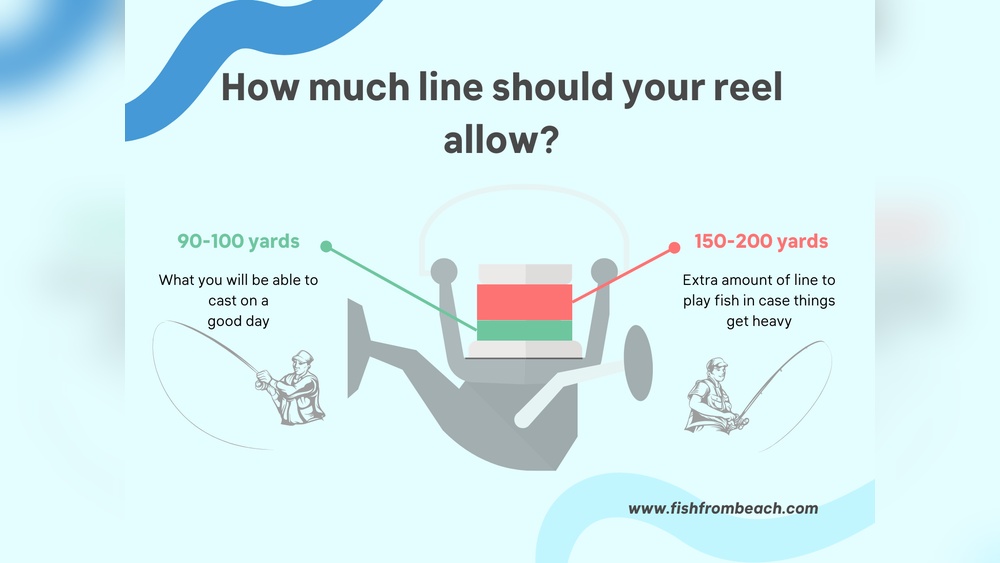
For most freshwater fishing (like bass, trout, bluegill), 100–150 yards is enough. Most fish in ponds and lakes do not make long runs. If you use a spinning reel, fill it to about 1/8 inch below the edge of the spool.
Saltwater Shore Fishing
Ocean fish can be bigger and stronger. From the shore, you may need longer casts and more line for a running fish. 200–300 yards is a safe choice. Braided line helps because it’s thinner and you can fit more on your reel.
Trolling
When trolling, your lure is far behind your boat. 150–250 yards lets you set the lure deep and still have enough line for fish runs.
Deep Sea Fishing
For big game fish like tuna or marlin, the answer is very different. These fish can take hundreds of yards in a single run. Most deep-sea anglers fill their large reels with at least 300–600 yards of braided line, sometimes with a “backing” line underneath.
Ice Fishing
Most ice fishing is done in shallow water. Fish are usually smaller and do not run far. 25–50 yards is plenty for most situations.

Credit: peterloon.org
How To Measure And Spool The Right Amount
Knowing how much line to put on your reel is one thing—spooling it correctly is another. Here’s how to do it with confidence.
Steps To Spool Your Reel
- Check your reel’s line capacity (on the side or in the manual).
- Choose your line type and strength.
- Attach the line to the reel (with an arbor knot for spinning reels).
- Add “backing” if needed (see next section).
- Fill the spool until it’s 1/8 inch from the rim.
How To Measure Line Without A Counter
If you don’t have a line counter, you can estimate:
- Standard filler spools: Most come in 100, 150, or 300-yard packs. If your reel needs 100 yards, use about one-third of a 300-yard spool.
- Average turns: For spinning reels, 10–15 turns = about 1 yard. You can count turns to estimate the length.
Using Backing Line
If your reel holds more line than you need, or you use expensive braided line, start with a cheaper “backing” line (like old monofilament) to fill the bottom of the spool. This saves money and helps the main line sit correctly.
Tip: Always tie the main line to the backing line with a strong knot, like a double uni knot.
Matching Line To Species And Conditions
Choosing the right amount of line is not just about filling the reel. It’s about matching your gear to your target and where you fish.
Small Fish In Ponds Or Streams
If you’re after sunfish or small trout, 50–100 yards is enough. You will rarely need more, and too much line can make casting more difficult.
Medium Fish In Lakes Or Rivers
For bass, catfish, or walleye, go for 100–150 yards. This gives you room for long casts and for the fish to run.
Large Fish In Open Water
For salmon, striped bass, or similar, you may want 200–300 yards. Ocean fish, even from shore, can make long runs, especially if you hook a bigger one.
Big Game Fish
If you dream of catching tuna, marlin, or sharks, use the largest reels and fill them with 300–600 yards of heavy braid. Sometimes, anglers add even more line, depending on the species.

Credit: www.fiberforce.it
Comparing Line Types And Their Effect On Capacity
The type and thickness of line can greatly change how much fits on your reel.
| Line Type | Diameter (for 10 lb) | Yards on 2500-Size Spinning Reel | Stretch |
|---|---|---|---|
| Monofilament | 0.28mm | 140–160 yards | High |
| Braided | 0.18mm | 200–220 yards | Low |
| Fluorocarbon | 0.26mm | 150–170 yards | Medium |
Insight: Many beginners do not realize that using braid allows them to fit up to 30–50% more line on the same reel compared to monofilament. This is a big advantage for saltwater or large fish.
Common Mistakes When Choosing Line Length
Many anglers make the same errors, especially when starting out. Avoiding these will save time and frustration.
Not Reading Reel Labels
Some just fill the reel until it looks full. This often leads to overfilling, which causes loops and tangles.
Using The Wrong Line Type
If you switch from mono to braid without adjusting the amount, you might overfill the reel. Braid is much thinner.
Ignoring Fishing Environment
A pond does not need 300 yards of line. But in the ocean, running out of line is a real risk.
Forgetting About Backing
Putting thin braid directly on a big reel can cause it to slip or dig in, making the reel hard to use.
Overfilling Or Underfilling
Overfilling causes tangles; underfilling reduces casting distance.
Practical tip: When in doubt, use the reel manufacturer’s recommended line capacity. It’s tested for best performance.

Credit: www.reddit.com
Advanced Tips For Getting The Perfect Line Length
If you want your setup to work smoothly every time, these are the details that matter.
Tension And Spooling
Keep steady tension when putting line on the reel. Loose line can dig in and cause knots. You can run the line through a book or have a friend hold the spool with light pressure.
Use A Line Counter
A line counter is a small device that measures how much line you have put on the reel. This gives you exact numbers, which is great for trolling or when you need to be precise.
Mix Line Types For Special Needs
Some anglers put monofilament backing, then braid, then a short leader of fluorocarbon. This setup gives you lots of line, low visibility near the hook, and saves money.
Replace Old Line Regularly
Old line becomes weak and can break easily. If you fish often, change your main line at least once per season.
Consider Local Fishing Rules
Some tournaments or areas have rules about line type or maximum strength. Always check before you fish.
Real-world Examples
Let’s look at three real fishing situations and how much line you would use.
Example 1: Spinning Reel For Bass
You have a 2500-size spinning reel that says “8lb/200yd. ” For bass in a lake, you choose 10lb monofilament. Your reel will hold about 160 yards. Spool it until it is nearly full but not to the very edge.
Example 2: Ocean Pier Fishing
You have a larger spinning reel, rated for “20lb/300yd. ” You use 20lb braided line. Fill with about 270–300 yards, or leave a little space for a fluorocarbon leader.
Example 3: Trolling For Salmon
You have a baitcasting reel, capacity “12lb/150yd. ” You use 30lb braid (same thickness as 12lb mono). You can fit about 200 yards, but for trolling, you only need 150 yards. Add 50 yards of mono as backing, then 150 yards of braid.
How To Estimate Line Left After Use
Over time, you will lose line due to breakage or cutting away tangles. It’s smart to check how much line you have left before each trip.
- Visual Check: If you see the spool bottom or have less than 1/4 inch of line to the edge, it’s time to refill.
- Estimate with Turns: Wind 10–15 turns of the handle and measure how much line comes off.
- Line Counters: Use if you want to be exact.
Is It Worth Buying Bulk Spools?
Many experienced anglers buy line in bulk spools (1000+ yards). This is cheaper per yard and makes it easy to refill reels often. For beginners, smaller spools (100–300 yards) are usually enough.
Insight: If you fish often or have several reels, bulk spools save money and let you keep your gear ready.
Weather And Water Conditions Matter
In cold weather, monofilament shrinks and becomes stiffer, so you may need to check line length more often. In saltwater, line wears out faster, so refill more often.
Environmental Responsibility
Never throw old line in the water or on the ground. Fishing line takes hundreds of years to break down and can harm animals. Use recycling bins or take line home for safe disposal.
Choosing Line For Kids Or Beginners
For children or those just starting, keep things simple:
- Use spincast reels with 50–75 yards of 6–8 lb monofilament.
- Refill after a few trips or if you see damage.
- Do not overfill; it makes tangles more likely.
When To Change Your Line
- After catching a big fish (line may be weakened)
- If you see frays, nicks, or discoloration
- At least once per season if you fish often
This keeps your fishing safe and enjoyable.
Where To Learn More
If you want more details about fishing gear, techniques, or conservation, a trusted resource is Take Me Fishing, which offers guides for all experience levels.
Frequently Asked Questions
How Do I Know If I Have Too Much Fishing Line On My Reel?
If your line is coming off in loops or gets tangled easily during casting, you likely have too much line. You should always leave about 1/8 inch of space between the line and the edge of the spool.
Can I Mix Different Types Of Fishing Line On One Reel?
Yes, you can use a backing line (like monofilament) and add braided or fluorocarbon on top. This saves money and helps your reel work better, especially with thin braids.
How Often Should I Replace My Fishing Line?
Replace your main line at least once per season, or more often if you fish a lot. If the line looks damaged, frayed, or weak, change it right away.
Does Line Color Affect How Much Line I Need?
No, color does not change the amount you need. Choose line color for visibility (high-vis for seeing bites, low-vis for clear water), but always match the length to your reel and fishing style.
How Many Yards Do I Need For Deep Sea Fishing?
For most deep sea fishing, 300–600 yards of strong braided line is common. Big game anglers sometimes use even more. Always check your reel’s maximum capacity and the size of the fish you are targeting.
Finding the right amount of fishing line is a key part of fishing success. With the right approach, you will have fewer problems and more fun on the water. Happy fishing!