Pure Fishing is a name that rings a bell for anyone who enjoys spending time by the water, casting a line, and feeling the thrill of a bite. As one of the world’s leading tackle companies, its products are on the shelves of every serious angler’s shop, and its brands are household names.
But behind every lure, rod, and reel lies a story of ownership—one that has changed hands multiple times and reflects the fast-moving world of global business. Who really owns Pure Fishing today? The answer is more complex than a simple name, and understanding it gives insight into the shifting nature of the fishing industry, private equity, and global markets.
The Origins Of Pure Fishing
To understand who owns Pure Fishing now, it helps to know where the company started. Pure Fishing’s history dates back more than a century, though the company name itself is relatively new. The roots trace to 1937, when The Berkley Fly Company was founded in Spirit Lake, Iowa, by a 16-year-old named Berkley Bedell. He started by selling hand-tied flies to local anglers, working from his parents’ home. The company grew quickly, soon introducing innovative fishing lines and accessories.
Over the decades, Berkley expanded, acquiring and developing several well-known fishing brands. By the late 20th century, the company had become a leader in the fishing tackle industry, with products sold worldwide. In 1995, Berkley merged with Fenwick, a respected rod maker, and later acquired Mitchell, a leader in spinning reels. These moves laid the foundation for what would become Pure Fishing.
The name “Pure Fishing” was adopted in 2007 as an umbrella for all these brands and new acquisitions. This shift allowed the company to present a unified identity, combining deep tradition with a wide range of products.
Key Brands Under Pure Fishing
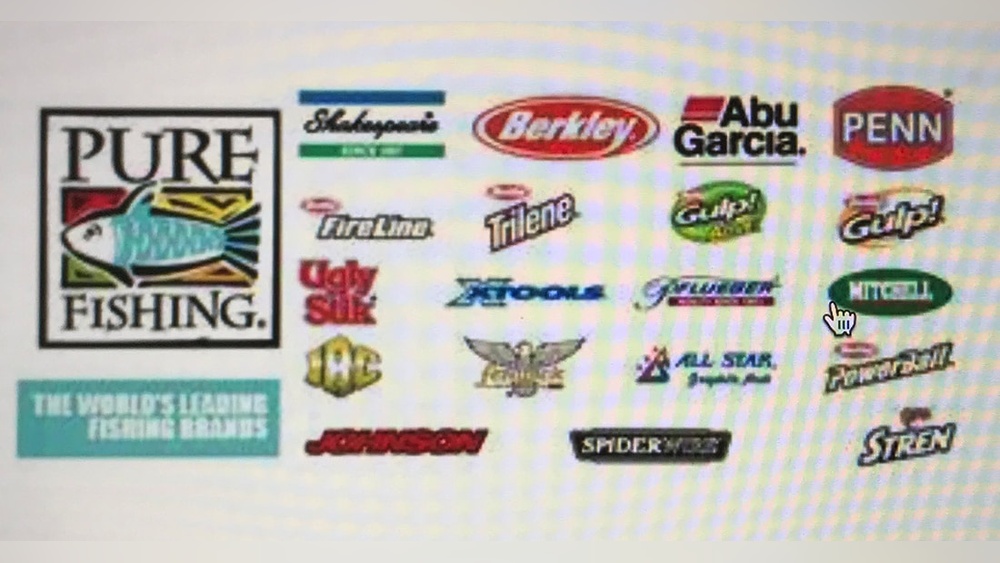
Today, Pure Fishing is not just one company but a collection of some of the world’s most iconic angling brands. Each brings its own legacy and loyal customer base.
Some of the best-known brands under the Pure Fishing umbrella include:
- Berkley – Famous for its fishing lines, baits, and rods.
- Abu Garcia – Swedish brand, renowned for reels and precision engineering.
- Mitchell – Pioneer of the spinning reel.
- PENN – Known for durable saltwater reels.
- Shakespeare – Popular for affordable, reliable gear.
- Stren – Recognized for fishing lines.
- Ugly Stik – Legendary for indestructible rods.
- Fenwick – High-performance rods.
- SpiderWire – Advanced braided lines.
- Greys – Premium fly fishing gear.
This collection makes Pure Fishing one of the largest tackle companies in the world, selling products in more than 100 countries.

Credit: angling-international.com
Ownership Changes: From Family To Multinational
Pure Fishing’s ownership has shifted dramatically in the last several decades—a reflection of both its value and the changing nature of global business.
The Jarden Era
In 2007, the company was acquired by Jarden Corporation, a consumer goods company with a strategy of buying strong brands in niche markets. Jarden combined Pure Fishing with other outdoor and sporting goods companies, building a portfolio that included everything from camping stoves to playing cards.
This era saw strong investment in marketing and product development, as well as further acquisitions to strengthen the company’s position in the fishing world.
The Newell Rubbermaid Merger
A major turning point came in 2016, when Jarden Corporation merged with Newell Rubbermaid. The new company, Newell Brands, became a giant in the consumer goods space, now owning brands like Rubbermaid, Coleman, Sharpie, and of course, Pure Fishing.
However, Newell Brands soon faced challenges. The company’s massive size and diverse portfolio led to operational struggles, and management decided to refocus on core businesses. Pure Fishing, while profitable, was not seen as a strategic fit.
Pure Fishing Goes Private: The Sycamore Partners Acquisition
In 2018, Newell Brands announced the sale of Pure Fishing to Sycamore Partners, a private equity firm based in New York. The deal was valued at around $1.3 billion. Sycamore Partners is known for buying consumer brands and seeking to improve their performance, either by streamlining operations or growing sales.
This move marked Pure Fishing’s return to private ownership for the first time in decades. The sale included all the company’s brands and global operations.
Non-obvious insight: Many anglers and even some store managers didn’t realize this change happened, as the brand names and products stayed the same. However, the company’s focus and strategy began to shift under Sycamore’s ownership, with more emphasis on profitability and targeted product launches.
Sycamore Partners: Who Are They?
Understanding Pure Fishing’s owner means looking closer at Sycamore Partners. Founded in 2011, this private equity group specializes in consumer and retail investments. Their portfolio includes brands like Staples, The Limited, and Talbots.
Key facts about Sycamore Partners:
- Headquarters: New York City
- Assets under management (as of 2026): Over $10 billion
- Focus: Retail, consumer, and distribution companies
Sycamore is known for taking a hands-on approach, often bringing in their own management teams and pushing for operational efficiency.
Private Equity And The Fishing Industry
When a private equity firm buys a company like Pure Fishing, the goal is usually to improve profits and eventually sell the company for a higher value. This often leads to changes behind the scenes—streamlining, restructuring, or even expanding through new acquisitions.
Non-obvious insight: Private equity ownership can sometimes mean less public information about a company’s performance, as private firms are not required to disclose financials like public companies do. This makes it harder for outsiders to track Pure Fishing’s recent results, but it also allows the company to make changes more quietly.
Recent Moves And Acquisitions
Since Sycamore Partners took over, Pure Fishing has continued to expand. A notable move was the purchase of Plano Synergy’s fishing division in 2019, which included brands like Plano (famous for tackle boxes) and Frabill (ice fishing gear and nets).
This acquisition strengthened Pure Fishing’s position in the fishing accessories market and gave it a more complete product offering. As a result, Pure Fishing now covers almost every major segment in the recreational fishing industry, from rods and reels to storage and apparel.
Comparing Pure Fishing’s Brand Portfolio
Here’s a side-by-side look at major brands under Pure Fishing and their main product focus:
| Brand | Main Products | Market Strength |
|---|---|---|
| Berkley | Lines, baits, rods | Global leader in soft bait & line |
| Abu Garcia | Reels, rods | Premium, especially in Europe |
| PENN | Saltwater reels | Top choice for ocean anglers |
| Ugly Stik | Rods | Known for durability |
| Plano | Tackle boxes | Dominant in storage solutions |
Why Ownership Matters To Anglers
Many people buying a rod or reel may not care who owns the company, as long as the gear works. But ownership can have a real impact on:
- Product innovation: New owners may invest more (or less) in research and development.
- Customer service: Private equity owners sometimes cut costs, which can affect support.
- Brand stability: Changes in ownership can lead to shifting product lines or discontinued items.
- Pricing: A focus on profit might mean higher prices or less frequent sales.
Example: After the Sycamore Partners acquisition, some retailers reported faster new product rollouts, but also noticed changes in distribution patterns. Some smaller brands were consolidated, while others got a new marketing push.
Comparison With Other Fishing Tackle Giants
Pure Fishing is not the only big player in the fishing world. Here’s how it stacks up against its main competitors:
| Company | Key Brands | Ownership | Global Reach |
|---|---|---|---|
| Pure Fishing | Berkley, Abu Garcia, PENN, etc. | Sycamore Partners (Private Equity) | 100+ countries |
| Shimano | Shimano, G. Loomis | Public (Japan) | Global |
| Rapala VMC | Rapala, VMC, Storm | Public (Finland) | Global |
| Daiwa (Globeride) | Daiwa | Public (Japan) | Global |
Key takeaway: Pure Fishing is unique as a privately owned giant, while most of its main competitors are public companies with shares traded on stock markets.
The Role Of Leadership
Ownership is more than just a name on the paperwork. The leaders at Pure Fishing shape its strategy, culture, and future. Since being acquired by Sycamore Partners, the company has seen new faces in top roles—often experienced executives with backgrounds in consumer products or retail.
Fact: As of 2026, the CEO of Pure Fishing is Harlan Kent, who has a track record of working with private equity-owned consumer brands.
This management team focuses on:
- Expanding global distribution
- Launching new products quickly
- Improving supply chain efficiency
- Integrating new brands smoothly
Practical insight: For everyday anglers, this often means seeing fresh designs on store shelves and more options in different price ranges.

Credit: www.wired2fish.com
Financial Performance And Market Presence
Because Pure Fishing is privately owned, detailed financial data is not publicly available. However, estimates suggest the company generates over $1 billion in annual sales. With products sold in more than 100 countries, Pure Fishing is often seen as the world’s largest fishing tackle company by revenue.
Data point: According to industry analysts, Pure Fishing controls roughly 15–20% of the global recreational fishing tackle market.
This scale gives it huge bargaining power with retailers and the ability to invest in research, marketing, and global expansion.
The Impact Of Private Equity On Fishing Brands
The move from public to private ownership changes how a company operates. When a private equity firm like Sycamore Partners takes over, the focus often shifts to:
- Efficiency: Streamlining operations to reduce costs
- Growth: Expanding into new markets or product areas
- Exit strategy: Preparing the company for future sale or public offering
Potential downside: Sometimes, this can mean short-term decisions take priority over long-term brand loyalty. For example, some anglers worry about classic products being discontinued if they are not seen as profitable.
Potential upside: Private equity backing can bring fresh investment, allowing innovation and faster product launches.
Global Expansion And Market Strategy
Pure Fishing has become a truly international company, with strong presence in North America, Europe, Asia, and beyond. The company tailors its products to different markets—a lightweight spinning reel for Japanese anglers, heavy-duty surf rods for Australia, or affordable combos for beginners in the US.
The ability to leverage multiple brands helps Pure Fishing target specific markets and customer types. For example:
- Berkley for mainstream American anglers
- Abu Garcia for European tournament competitors
- PENN for deep-sea fishing enthusiasts
Non-obvious insight: Many of Pure Fishing’s brands have separate R&D teams, allowing for specialized products that fit regional needs. This decentralized approach is rare among global tackle companies.
Pure Fishing’s Approach To Sustainability
Modern anglers care about the environment, and fishing companies are under pressure to do their part. Pure Fishing has made some steps toward sustainability, though it faces challenges like any large manufacturer.
Current sustainability efforts include:
- Reducing packaging waste in popular product lines
- Developing more biodegradable baits and eco-friendly tackle boxes
- Supporting fishery conservation groups and clean water initiatives
However, critics say that more transparency is needed. As a private company, Pure Fishing does not publish detailed sustainability reports like some of its public rivals.
Common Myths About Pure Fishing’s Ownership
Because of all the changes, there are several myths about who really owns Pure Fishing. Let’s clear up a few:
- Myth: Pure Fishing is owned by a big retail chain.
- Fact: It is owned by Sycamore Partners, a private equity firm—not a retailer.
- Myth: Pure Fishing is a public company with shares you can buy.
- Fact: It is privately held; there is no stock available to the public.
- Myth: Each brand is still independent.
- Fact: All brands operate under Pure Fishing, though they keep their own identities.
- Myth: Ownership changes have led to lower quality.
- Fact: Product quality depends more on management choices than on ownership type.
- Myth: Pure Fishing is only American.
- Fact: While based in the US, it is a global company with international leadership and markets.
Looking Forward: What’s Next For Pure Fishing?
The future of Pure Fishing depends on both the strategies of its owners and the shifting trends in the fishing world. Private equity firms usually hold companies for five to ten years before selling or going public, so another ownership change in the next few years is possible.
Trends to watch:
- More digital engagement: Online sales, social media, and fishing apps are becoming central to brand strategies.
- Sustainable materials: As anglers demand greener products, companies that deliver will gain loyalty.
- Global competition: Asian brands are growing fast, pushing Pure Fishing to innovate and adapt.
For now, Pure Fishing remains in the hands of Sycamore Partners, run by seasoned managers, and anchored by legendary brands. Its story is a lesson in how even traditional industries are shaped by the fast pace of global finance.
If you want a closer look at the company’s history, the Wikipedia page for Pure Fishing offers more details: Pure Fishing on Wikipedia.