Fly fishing is more than just a way to catch fish—it’s a unique blend of art, science, and outdoor adventure. Among its many techniques, nymph fly fishing stands out as one of the most effective and rewarding. While images of fly fishing often show anglers casting colorful flies on the water’s surface, most fish feed underwater. This is where nymph fly fishing comes in. By imitating the insects fish eat beneath the surface, anglers using nymphs can unlock a whole new world of possibilities. Whether you’re new to fly fishing or looking to refine your skills, understanding nymph fishing can transform your experience on the water.
What Is Nymph Fly Fishing?
At its core, nymph fly fishing is a method where anglers use artificial flies—called nymphs—to imitate the immature stages of aquatic insects. Unlike dry fly fishing, which targets fish feeding on the surface, nymph fishing goes deeper. Nymphs are presented below the water’s surface, where trout and other fish spend most of their time feeding.
Nymphs represent the underwater life stages of insects like mayflies, caddisflies, stoneflies, and midges. These insects form the bulk of many freshwater fish diets. By presenting a lifelike nymph, you offer fish an easy, familiar meal. This method is especially useful when surface feeding is slow or when fish seem uninterested in dry flies.
The Science Behind Nymphs
To fish nymphs successfully, it helps to know a bit about aquatic insect life cycles. Most insects you see around rivers and lakes—mayflies, caddisflies, and stoneflies—spend the majority of their lives underwater as nymphs or larvae. Only for a brief period do they emerge as winged adults.
Key Aquatic Insects And Their Stages
- Mayflies: Spend up to a year as nymphs. Emergence lasts a few days.
- Caddisflies: Build cases from gravel or plant material as larvae. Live underwater for months.
- Stoneflies: Nymph stage lasts up to three years. Only a few weeks as adults.
- Midges: Small, but very abundant. Larvae and pupae are important food sources year-round.
Fish have adapted to feed on these nymphs because they are always available and easy to catch. This makes nymphs a reliable fly choice for most fishing conditions.

Credit: midcurrent.com
How Nymph Fly Fishing Differs From Other Methods
Many anglers start by learning dry fly fishing, which focuses on floating flies on the water’s surface. Nymph fishing, however, targets fish feeding below. The difference in approach changes everything from the gear you use to how you present the fly.
Dry Fly Vs. Nymph Fly Fishing
| Aspect | Dry Fly Fishing | Nymph Fly Fishing |
|---|---|---|
| Target Zone | Surface | Below surface |
| Main Fly Types | Imitates adult insects | Imitates nymph/larval stages |
| Strike Detection | Visual (watching for rises) | Touch or indicator (watching line or bobber) |
| Best Conditions | When fish feed on top | When fish feed underwater (most of the time) |
Most anglers are surprised to learn that trout eat up to 90% of their food below the surface. This statistic alone shows why nymphing is so effective.
Essential Gear For Nymph Fly Fishing
Before you head to the water, it’s important to have the right gear. While much of your fly fishing equipment can be used for both dry and nymph fishing, a few specific items make nymphing easier and more productive.
Rods And Reels
A standard fly rod between 8.5 and 10 feet, in 3 to 6 weight, works for most nymphing situations. Longer rods (9–10 feet) help with line control and reach, especially in rivers. The reel should balance the rod and have a smooth drag, but fish usually aren’t running far when nymphing.
Fly Lines And Leaders
A floating fly line is best, as nymph fishing rarely requires sinking lines. Leaders are usually longer (9–12 feet) and may taper down to light tippets (like 5X or 6X) for better presentation. For deeper or faster water, adding a section of tippet or a weighted leader helps get your nymphs down.
Indicators And Weights
Strike indicators are small floating devices, similar to bobbers, that help detect subtle takes. Split shot or tungsten putty can be added above the fly to help it sink to the right depth. The combination of indicator and weight is key to achieving a natural, effective drift.
Waders And Boots
Most nymphing is done while wading in rivers or streams. Breathable waders and sturdy wading boots with good grip are highly recommended for safety and comfort. Some anglers also use wading staffs for extra balance.
Types Of Nymph Flies
There is a huge variety of nymph patterns, each designed to imitate specific insects or general underwater prey. Some are very realistic, while others are more suggestive.
Most Popular Nymph Patterns
- Pheasant Tail Nymph: Imitates mayflies. Works in almost all waters.
- Hare’s Ear Nymph: Versatile, buggy look. Mimics a range of insects.
- Prince Nymph: Flashy, effective for trout.
- Copper John: Heavy, sinks fast. Good for deep runs.
- Zebra Midge: Small, simple, and deadly for finicky fish.
- Caddis Larva: Resembles caddisfly larvae, a trout favorite.
- Stonefly Nymph: Larger, for big stonefly hatches or larger rivers.
- Scud/Shrimp: Useful in lakes and spring creeks with lots of crustaceans.
Some nymphs are weighted with beads or lead wire to help them sink. Others are designed to drift naturally with the current.
Imitative Vs. Attractor Nymphs
- Imitative nymphs closely match real insects in size, shape, and color.
- Attractor nymphs use bright colors or flashy materials to get a fish’s attention, even if they don’t look exactly like a natural insect.
Both types have their place. When fish are picky, try imitative patterns. When they are aggressive or you’re searching for active fish, attractors can trigger more strikes.
Setting Up Your Nymph Rig
The setup for nymph fishing varies based on water depth, speed, and the type of fish you’re targeting. There are several common ways to rig your nymphs.
Single Nymph Rig
The simplest setup uses one nymph tied to the end of your leader. Add split shot 6–12 inches above the fly to help it sink, and place a strike indicator a few feet above that. Adjust the indicator’s position to match water depth.
Tandem Or Two-nymph Rig
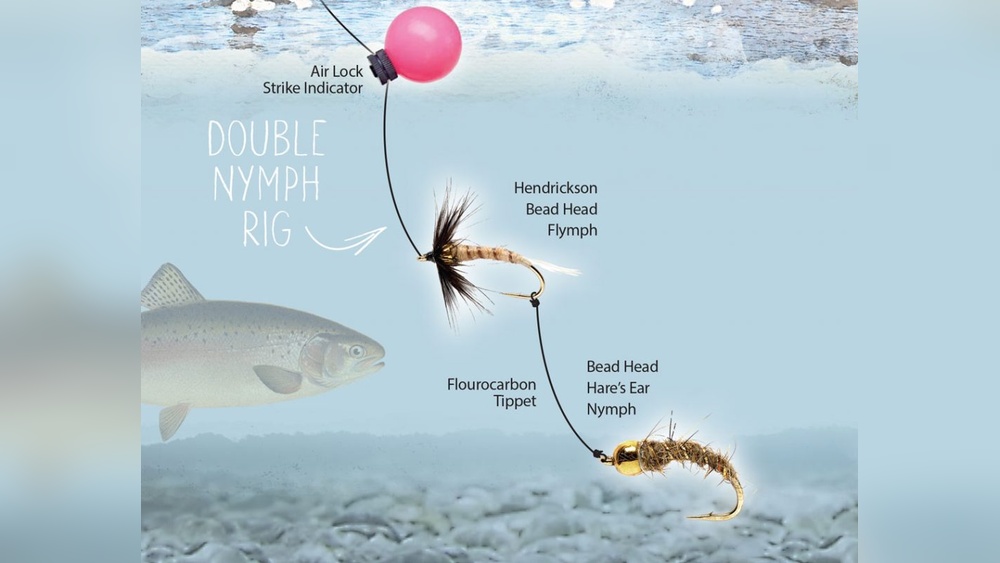
Many anglers use two nymphs at once to cover more possibilities. The top fly (attached to the leader) is usually heavier, and the dropper fly is tied to a short tippet tied to the hook bend or eye of the first nymph.
This setup increases your chances, especially if you use one imitative and one attractor fly.
Euro-nymphing Rig
A more advanced method, Euro-nymphing (also called tight-line nymphing), skips the indicator. Anglers use a long rod and a thin leader to drift nymphs naturally, feeling for strikes directly through the line.
Sample Nymph Rig Setup
| Part | Description | Purpose |
|---|---|---|
| Fly line | Floating, weight-forward | Easy casting, control |
| Leader | 9–12 ft, tapered | Transfers energy, delicate presentation |
| Tippet | 18–36 in, 4–6X | Stealth, flexibility |
| Split shot/weight | 6–12 in above fly | Gets fly to right depth |
| Strike indicator | Adjustable, buoyant | Detects subtle strikes |
| Nymph fly | Pheasant Tail, Hare’s Ear, etc. | Imitates food |

Credit: blog.fishwest.com
Techniques For Nymph Fly Fishing
Success in nymph fishing comes down to three main skills: getting your fly to the right depth, achieving a natural drift, and detecting strikes.
Achieving The Right Depth
Fish rarely move far to feed on nymphs. Your fly needs to be at or just above the fish’s eye level. Adjust weight and indicator position until your fly drifts naturally near the bottom without snagging too often.
A common mistake is fishing too shallow—if you’re not occasionally bumping the bottom, you may not be deep enough.
Presenting A Natural Drift
Trout and other fish are quick to spot unnatural movement. Avoid dragging your flies by mending your line—lifting and repositioning it upstream to prevent the current from pulling your rig unnaturally.
- In fast water, add more weight to keep the fly drifting naturally.
- In slow water, use lighter flies and subtle mends.
Detecting Strikes
Nymph takes are often subtle. Watch your indicator closely. If it pauses, twitches, or moves in an odd way, set the hook. With tight-line methods like Euro-nymphing, feel for the slightest resistance or tap.
Advanced anglers sometimes “high stick”—holding the rod high to keep as much line off the water as possible, improving drift and sensitivity.
Reading The Water
Look for places where fish hold and feed:
- Seams where fast and slow water meet
- Deep pools and runs
- Behind rocks and logs
- Undercut banks
Cast upstream or across, allowing your nymph to drift naturally through these zones.
When And Where To Use Nymphs
Nymph fishing shines in almost any freshwater situation. However, some times and places are especially productive.
Best Seasons
Nymphs work year-round, but are especially effective during:
- Early spring and late fall, when insect hatches are sparse
- Cold mornings before hatches start
- After heavy rains, when rivers are high and stained
Even in the height of summer, if you’re not seeing fish rising, nymphs are often your best bet.
Productive Waters
- Rivers and streams: Ideal, as most nymphs drift naturally with the current.
- Lakes and ponds: Nymphs fished under an indicator or with a slow retrieve can be deadly.
- Tailwaters (rivers below dams): Consistent temperatures mean nymphs are always available.
Common Mistakes And How To Avoid Them
Even experienced anglers sometimes struggle with nymph fishing. Here are some pitfalls to watch for:
- Not using enough weight: Your flies must reach the right depth. If you’re not occasionally touching bottom, add more weight.
- Poor strike detection: Many strikes go unnoticed. Stay focused on your indicator or line at all times.
- Ignoring fly size: Fish can be selective about nymph size. Try smaller or larger flies if you’re not getting bites.
- Skipping water columns: Fish feed at different depths. Experiment with indicator and weight positions.
- Unnatural drifts: Mend your line often to reduce drag and create a lifelike drift.
- Overcomplicating rigs: Start simple, then adjust as needed.
A non-obvious tip: In cold water, fish are less active. Use smaller, more subtle nymphs and slow down your presentation.
Advantages And Challenges Of Nymph Fly Fishing
Nymphing offers some major benefits for anglers, but it also comes with challenges.
Advantages
- Catches more fish: Since most feeding happens underwater, nymphs are usually more productive.
- Works in all conditions: Even if fish aren’t rising, nymphs can tempt them.
- Teaches water reading: Nymph fishing sharpens your understanding of river structure and fish behavior.
Challenges
- Strike detection is harder: Takes are subtle; beginners often miss them.
- More snags: Fishing near the bottom means more lost flies.
- Complex setups: Balancing weight, indicator, and fly selection can be tricky.
Despite these challenges, mastering nymphing is one of the most rewarding skills in fly fishing.
Practical Tips For Success
To get the most from nymph fly fishing, follow these practical guidelines:
- Keep changing depth until you find where fish are feeding.
- Use lighter tippet for spooky fish, but not so thin it breaks easily.
- Carry a variety of nymphs in different sizes and weights.
- Watch experienced anglers or consider a guided lesson to improve faster.
- Fish slower water thoroughly; fish will often hold in softer currents.
A subtle insight: Sometimes adding a small, bright bead or a touch of flash to your nymph can make a difference, especially in murky water.
Notable Nymph Fly Fishing Destinations
Some rivers are famous for their nymph fishing opportunities:
- Madison River (Montana): Known for strong trout populations and classic riffle-run-pool structure.
- Delaware River (New York/Pennsylvania): Technical water, great for wild trout on nymphs.
- San Juan River (New Mexico): Consistent flows and abundant insect life.
- South Platte River (Colorado): Challenging, but rewarding for skilled nymph anglers.
These destinations offer a chance to hone your skills among other passionate fly fishers.

Credit: troutbitten.com
The Evolution Of Nymphing Styles
Nymph fishing has evolved over decades, with new techniques making it more effective.
Traditional Vs. Modern Nymphing
- Traditional nymphing: Uses indicators, standard rods, and