Cast net fishing is a popular method for catching fish in shallow waters, rivers, lakes, and even the ocean. Many people enjoy it for its simplicity, low cost, and the excitement of catching live bait or table fish. But a common question often arises: Is cast net fishing legal? The answer is not always simple. Laws about cast net fishing change depending on the country, state, type of water body, target species, and even the season. If you want to avoid fines or legal trouble, it’s important to understand the rules before you throw your first net.
This article takes a deep look at the legality of cast net fishing. You’ll learn where cast nets are allowed, why some places ban or restrict them, what licenses you need, and how to fish responsibly. We’ll cover the most common rules in the United States and globally, share practical tips, and answer questions that beginners often forget to ask.
Whether you’re a hobbyist, a survivalist, or just curious, you’ll find what you need to know here.
What Is Cast Net Fishing?
A cast net is a circular fishing net with small weights around the edge. You throw it by hand so that it spreads out and sinks quickly, trapping fish as you pull it back. Most nets are between 4 and 12 feet in diameter, though some can be larger. Cast nets are mostly used in shallow water, usually less than 10 feet deep.
People use cast nets to catch live bait like minnows, shrimp, and mullet, but they can also catch fish for eating. The skill is ancient—drawings of cast nets go back thousands of years in Egypt, India, and China.
Why Are There Laws About Cast Net Fishing?
Fishing laws exist to protect fish populations and the water environment. Cast netting, if uncontrolled, can:
- Catch too many fish or young fish (overfishing)
- Disturb sensitive habitats
- Catch protected or endangered species by accident
- Cause conflicts with other fishing methods
Some nets are so effective that they threaten fish stocks if used without limits. Governments and local authorities make rules to balance fishing rights with conservation.
Legal Status Of Cast Net Fishing Around The World
United States
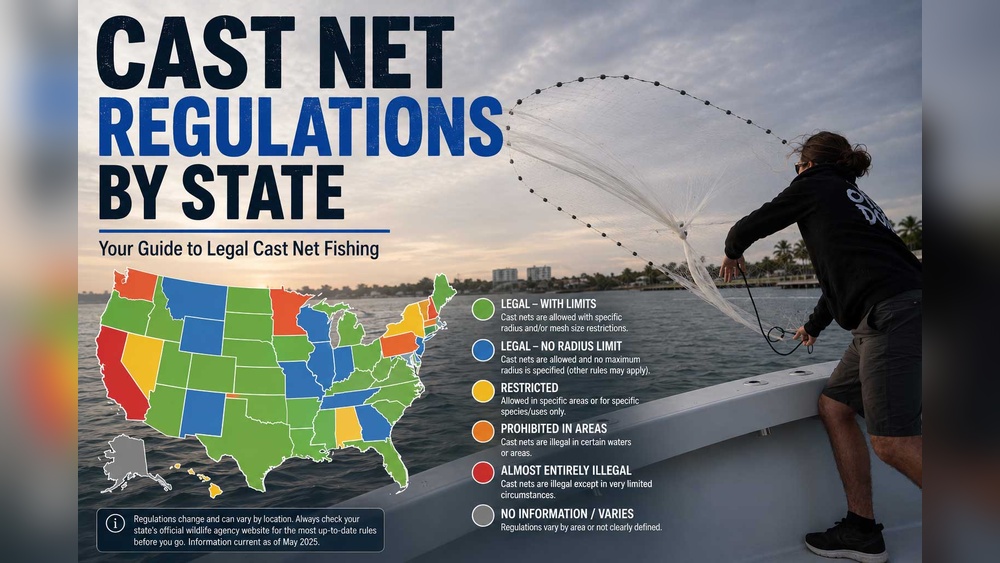
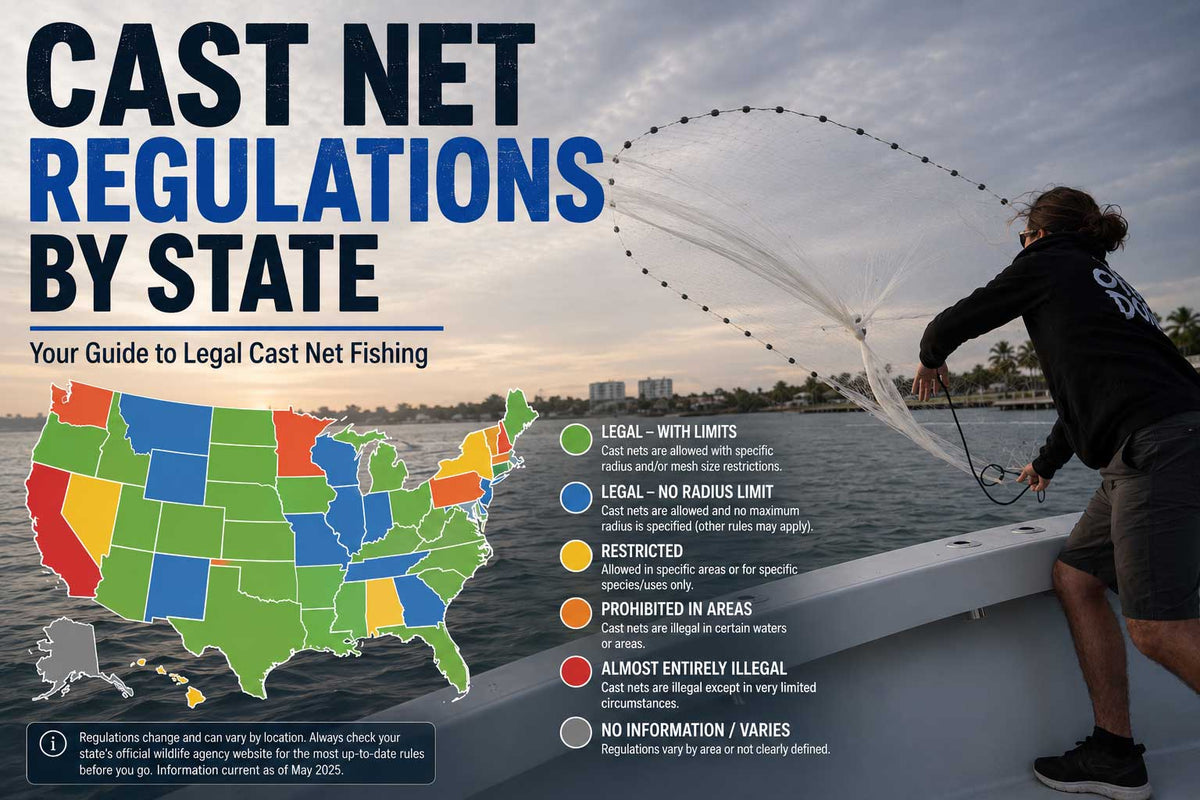
In the US, cast net fishing is generally legal for recreational use, especially for catching bait. However, the details vary from state to state and sometimes by local county or city rules.
| State | Legal for Bait? | Legal for Food Fish? | License Needed? | Net Size Limit |
|---|---|---|---|---|
| Florida | Yes | Yes (some species) | Yes | ≤ 14 ft diameter |
| California | Yes (marine only) | No | Yes | ≤ 6 ft radius |
| Texas | Yes | No (except mullet) | Yes | ≤ 14 ft diameter |
| New York | Yes (limited) | No | Yes | ≤ 7 ft diameter |
| Alaska | No | No | N/A | N/A |
As you can see, there are big differences. In Florida, cast nets are widely used for both bait and some table fish, while in California and New York they’re mostly limited to bait. In Alaska, cast nets are not allowed for recreational fishing.
Other Countries
- United Kingdom: Cast netting is illegal for most inland waters. It is considered a commercial method and banned for recreational use in rivers and lakes.
- Australia: Laws differ by state. In Queensland, cast nets are legal in tidal waters but banned in freshwater. In New South Wales, they’re banned everywhere except for small hand-cast nets for prawns.
- India: Cast net fishing is legal in most states, especially for small-scale and traditional fishers, but some protected areas ban all net fishing.
- South Africa: Cast nets are allowed in some coastal areas but restricted in others to protect juvenile fish.
Always check local rules before you fish. Penalties for breaking net laws can include heavy fines, loss of fishing licenses, and even criminal charges.
Why Some Places Ban Or Restrict Cast Nets
Many beginners wonder why cast nets are banned in rivers or lakes where rod fishing is allowed. There are several reasons:
- Bycatch: Cast nets can catch small, young, or protected fish that must be released. They can also catch non-target species like turtles or crabs.
- Overfishing Risk: In small water bodies, cast nets can remove too many fish quickly, hurting fish populations.
- Habitat Damage: Nets dragged over rocks, plants, or coral can damage sensitive habitats.
- Commercial Abuse: Some people use cast nets to catch large amounts of fish for sale, which is often illegal without a commercial license.
- Conservation Areas: Many parks and reserves ban all types of net fishing to protect rare species.

Credit: www.riverreporter.com
Key Legal Factors To Check Before Cast Net Fishing
1. Location
- Freshwater vs Saltwater: Many states allow cast nets only in saltwater, not in lakes or rivers.
- Protected Areas: National parks, reserves, or certain river sections may ban all nets.
- Private Property: You need permission from the landowner.
2. Target Species
- Bait Only: Some places allow nets only for bait fish, not for game or food fish.
- Prohibited Species: Certain species are off-limits year-round or during spawning seasons.
3. Net Size And Mesh
- Diameter: There may be limits (e.g., max 14 feet in Florida).
- Mesh Size: Small mesh can catch juvenile fish, so many places require a minimum size (e.g., 1 inch).
- Weight: Some regions limit how much weight is allowed on the net.
4. Licenses And Permits
- Fishing License: Most states require a fishing license, even for bait.
- Special Permits: In some areas, you need a permit for any net fishing.
5. Seasons And Time Of Day
- Closed Seasons: Some fish are protected during breeding seasons.
- Night Fishing: Nighttime use may be banned to stop poaching.
Failing to follow any of these rules can result in fines or worse. Always check your local fish and game authority’s website for the latest laws.
Common Regulations In Major Us States
Let’s look at some specific examples of cast net fishing laws in popular US states.
Florida
- Legal in both salt and most freshwater
- Maximum net size: 14 feet in diameter
- Mesh size: Not less than 1 inch stretched
- License required for all fishers age 16+
- Can be used for mullet, menhaden, pinfish, and other baitfish
Texas
- Legal in saltwater for bait and some fish (e.g., mullet)
- Maximum net size: 14 feet in diameter
- Mesh size: Not less than 1 inch
- Prohibited in most public freshwater lakes and rivers
California
- Legal in saltwater for bait only
- Maximum net radius: 6 feet
- Only for anchovies, sardines, squid, and similar baitfish
- Not allowed for game fish or in freshwater
New York
- Legal for taking bait only
- Maximum net size: 7 feet in diameter
- Freshwater use is strictly regulated; only certain waters allow it
How To Find Local Cast Net Laws
Finding the exact law for your area can be tricky. Here’s how to do it:
- Visit your state fish and wildlife website (e.g., Florida Fish and Wildlife Conservation Commission).
- Search for “cast net” or “bait net” regulations.
- Check the current year’s fishing regulations booklet (they change yearly).
- If you’re unsure, call your local game warden or fishery office.
Some states publish online maps showing where cast nets are legal. If you travel, always check rules for your new location.
Legal Vs. Illegal: Real-world Examples
Legal Scenario
John lives in Tampa, Florida. He has a valid fishing license and uses a 12-foot cast net with 1. 5-inch mesh to catch mullet in Tampa Bay for personal use. He stays within the daily bag limits and releases any protected fish.
John is fishing legally.
Illegal Scenario
Susan visits a river in New York and uses a 10-foot cast net to catch sunfish for dinner. She does not have a special bait license, and her net is over the legal size. She is breaking the law and may face a fine.
Why Legal Lines Get Crossed
- Outdated rules: Many people use old advice from friends or family, not realizing laws have changed.
- Unclear boundaries: Rivers and lakes sometimes cross county or state borders, each with different rules.
- Unintentional bycatch: Even if you only want bait, catching a protected species (like sturgeon or trout) can bring penalties.

Credit: q.goteborgskonstmuseum.se
Cast Net Fishing And Conservation
Responsible use of cast nets can be sustainable, but overuse can harm fish populations. Here’s how cast netting can affect the environment:
- Selective fishing: Skilled users can release unwanted fish, but small mesh nets can trap baby fish.
- Habitat impact: Nets dragged over plants or coral can cause damage.
- Population checks: In some places, cast netting is banned during spawning to help fish recover.
Many conservation groups support sensible cast net laws—allowing use for bait or non-threatened species, but protecting sensitive areas and seasons.
Licenses And Enforcement
How To Get A Cast Net License
Most US states include cast netting under the regular fishing license, but some (like New York) have a separate bait license. Applying is usually simple:
- Fill out an application online or at a tackle shop
- Pay a fee (ranges from $10 to $50 per year)
- Receive a paper or digital license
Some states also require you to display your license or have it ready for inspection.
What Happens If You Break The Law?
Penalties vary, but common consequences include:
- Fines ($50 to $500 or more)
- Confiscation of gear
- Loss of fishing privileges
- Criminal charges for repeat or serious offenses
Game wardens and rangers patrol popular fishing spots and may check your gear, license, and catch.
Credit: livebait.com
Practical Tips For Legal Cast Net Fishing
- Know the rules: Keep a copy of current regulations with you or save them on your phone.
- Measure your net: Make sure your net’s diameter and mesh size are legal.
- Target the right species: Only use nets for legal bait or fish species.
- Avoid protected areas: Look for posted signs or check online maps.
- Handle bycatch with care: Release non-target or protected fish quickly and unharmed.
- Respect bag limits: Don’t keep more bait or fish than allowed.
- Be polite to enforcement officers: If checked, show your license and answer questions honestly.
Common Mistakes Beginners Make
- Using the wrong net size: Many buy large nets online that are illegal in their state.
- Fishing in the wrong water: Lakes and rivers often have stricter rules than saltwater.
- Not checking for license needs: Even kids or non-residents may need a license.
- Ignoring local signs: Some areas have posted bans not listed online.
- Assuming “everyone does it”: Just because others are netting doesn’t mean it’s legal.
How Cast Net Laws Change Over Time
Laws about cast net fishing do change. Reasons include:
- Declining fish populations: If too many fish are caught, new bans or limits may appear.
- New invasive species: Rules may be relaxed to allow nets to catch harmful species.
- Better enforcement: High-tech patrols can lead to stricter rules.
- Local complaints: If residents complain about too much netting, more bans can result.
Always check for updates each year. Don’t trust old advice or online forums alone.
Cast Net Fishing Compared To Other Fishing Methods
Here’s a quick comparison of cast net fishing to other popular methods:
| Method | Allowed in Most States? | Target Species | Skill Level | Impact on Habitat |
|---|---|---|---|---|
| Cast Net | Yes (with limits) | Bait, small fish | Moderate | Low to moderate |
| Rod & Reel | Yes | Game fish, bait | Beginner to expert | Low |
| Gill Net | No (mostly banned) | All sizes | High | High |
| Traps/Pots | Sometimes | Crabs, lobster, eels | Beginner to moderate | Low to moderate |
Cast nets are less harmful than gill nets but require more skill than rod and reel. They are best for catching large numbers of bait fish quickly.
Non-obvious Insights For Beginners
- Mesh Size Is Critical: Many people focus only on net diameter, but mesh size is just as important. Too small a mesh can make your net illegal and can catch protected juvenile fish.
- Local Rules Can Change Overnight: If there’s a fish kill, pollution event, or a sudden drop in a species, emergency rules can ban all net fishing in an area without warning.
- Saltwater vs Freshwater