
Braided fishing line has become a favorite among both beginner and experienced anglers. Its strength, thin diameter, and low stretch make it perfect for many fishing situations. But tying knots with braided line is not as simple as with traditional monofilament or fluorocarbon.
If you have ever tried to tie a knot with braid and watched it slip or untangle, you know how frustrating it can be. Learning how to tie on braided fishing line correctly is essential for success on the water.
This guide will walk you through everything you need to know—what makes braid different, which knots work best, step-by-step instructions, common mistakes, and pro tips that most people miss.
Why Braided Fishing Line Is Different
Braided line is made by weaving several strands of synthetic fiber (like Spectra or Dyneema) into a single line. This construction gives braid several advantages:
- High strength for its diameter
- Very little stretch
- Excellent sensitivity
- Long casting ability
However, these benefits come with a few challenges:
- Slippery texture: Braid is slick and can cause knots to slip if not tied correctly.
- Low memory: It doesn’t hold a shape well, so loose knots can unravel easily.
- Abrasion resistance varies: Thinner braid can be cut by sharp objects or rough surfaces.
These unique properties mean that standard knots may not work as expected with braided line. Some knots will slip, and others may weaken the line.
Essential Knots For Braided Line
There are many fishing knots, but only a few work really well with braid. Here are the knots you need to know, each with its strengths:
- Palomar Knot
- Improved Clinch Knot
- Double Uni Knot
- FG Knot
- Albright Knot
- San Diego Jam Knot
- Berkley Braid Knot
- Spider Hitch Knot
- Surgeon’s Knot
- Arbor Knot
Each knot serves a different purpose, from tying hooks and lures to connecting braid to a leader. Let’s explore how to tie each one, with step-by-step instructions and when to use them.
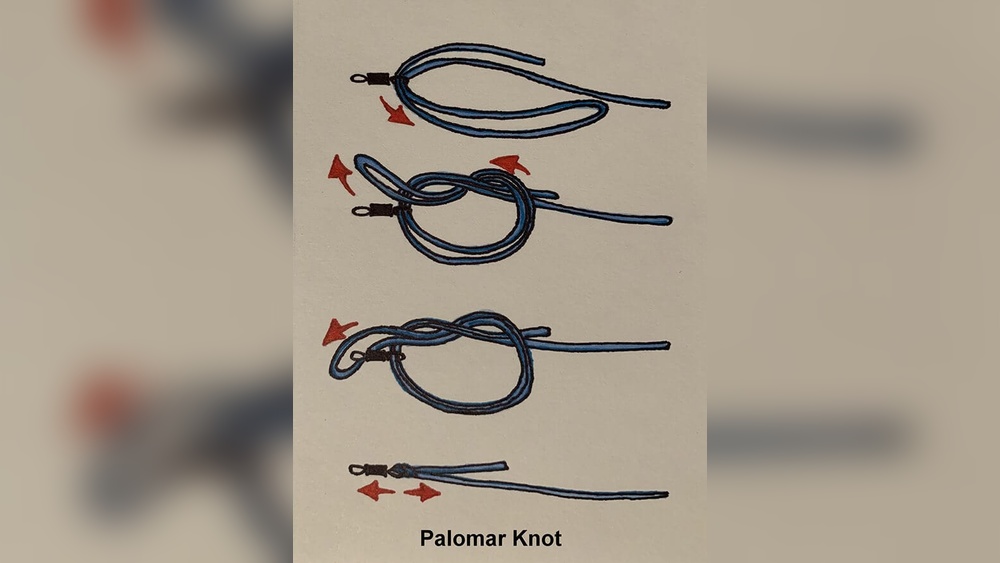
How To Tie The Palomar Knot
The Palomar Knot is a favorite among anglers for tying braid to hooks, swivels, or lures. It’s strong, simple, and works especially well with braided line.
Step-by-step:
- Double about 15 cm (6 inches) of braid and pass the loop through the eye of your hook or lure.
- Tie a loose overhand knot with the doubled line, keeping the hook or lure on the tag end.
- Pass the hook or lure through the loop you just made.
- Wet the knot with water or saliva (reduces friction).
- Pull both the main line and tag end to tighten the knot evenly.
- Trim the tag end, leaving about 5 mm (¼ inch).
Tip: Always wet the knot before tightening. This prevents friction and heat that can weaken the braid.
Improved Clinch Knot With Braided Line
The Improved Clinch Knot is popular but can slip with braid unless tied carefully. Here’s how to make it work:
Step-by-step:
- Pass the braid through the eye of the hook.
- Wrap the tag end around the main line 7-10 times (more wraps than with mono).
- Thread the tag end through the small loop above the eye.
- Pass the tag end back through the big loop just created.
- Moisten the knot.
- Pull tight, holding the hook and main line.
- Trim the tag end.
Non-obvious insight: With braid, use more wraps (7-10) than you would with mono (5-7) to prevent slipping.
Double Uni Knot For Joining Lines
The Double Uni Knot is perfect for connecting braided line to a leader (monofilament or fluorocarbon).
Step-by-step:
- Overlap the braid and leader by 20-30 cm (8-12 inches).
- With the braid, form a loop and wrap the tag end 7-10 times around both lines and through the loop.
- Pull the tag end to tighten this side.
- Repeat with the leader, using 4-6 wraps.
- Pull both main lines to slide the knots together.
- Trim excess.
Pro tip: This knot is more reliable than the Blood Knot with braid due to the extra wraps and friction.
The Fg Knot: Best For Braid-to-leader
The FG Knot is the gold standard for connecting braid to a heavier leader. It’s slim, strong, and passes through rod guides smoothly.
Step-by-step:
- Hold the leader tight and lay the braid over it.
- Wrap the braid around the leader 20-25 times, alternating above and below the leader.
- Lock the wraps with two half-hitches using the braid.
- Pull both lines tight to set the knot.
- Trim both tag ends close.
Common mistake: Not making enough wraps. With braid, 20-25 wraps are needed for a secure hold.
Albright Knot: Classic For Braid To Mono
The Albright Knot is useful when connecting braid to a much thicker leader.
Step-by-step:
- Make a loop in the leader.
- Pass the braid through the loop.
- Wrap the braid 10 times around the leader and back through the loop.
- Wet and tighten.
- Trim excess.
Example: Use this knot when connecting 20 lb braid to 40 lb mono for saltwater fishing.
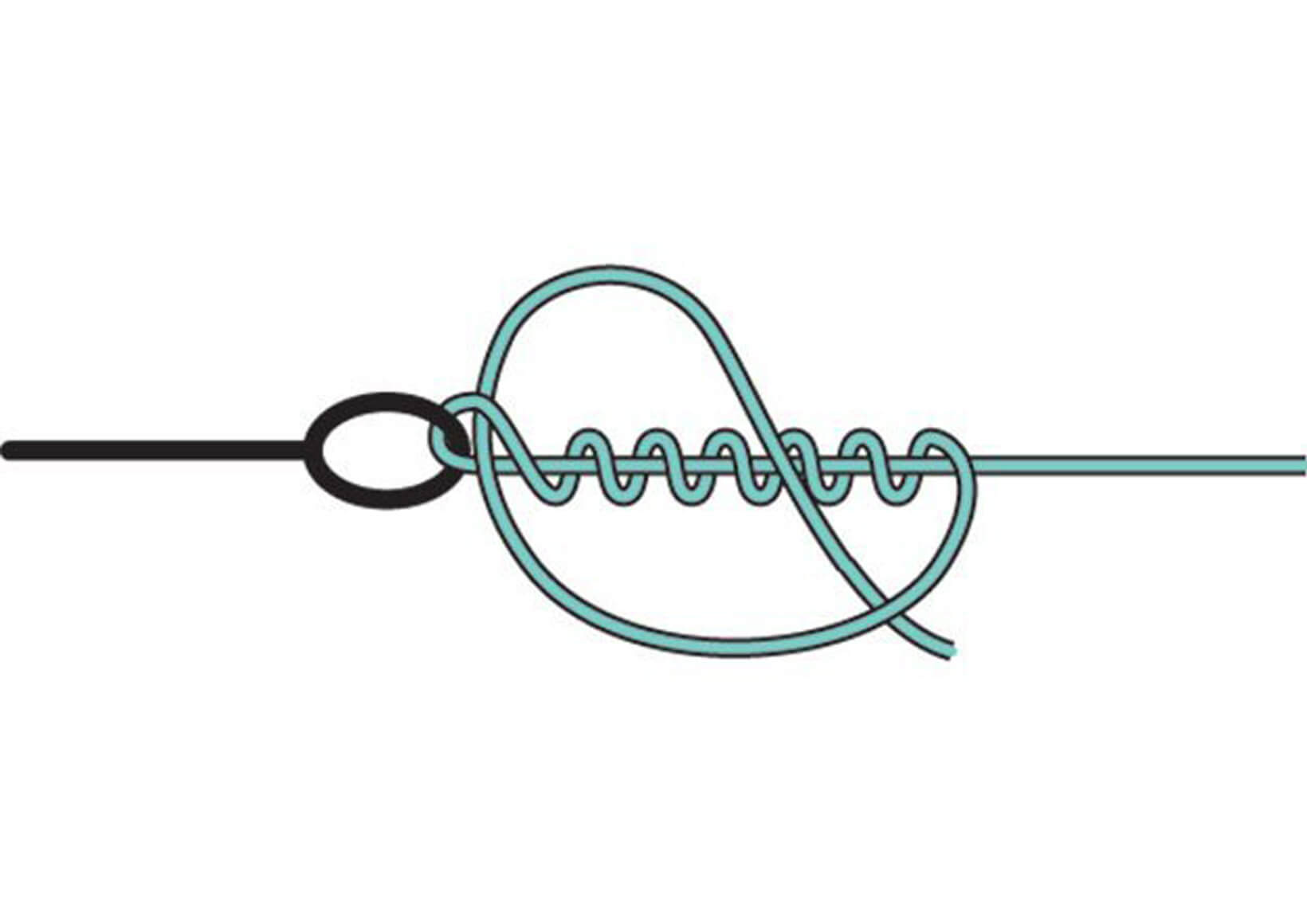
San Diego Jam Knot For Lures And Hooks
The San Diego Jam Knot is a strong knot that resists slipping, making it excellent for braid.
Step-by-step:
- Thread the braid through the hook eye.
- Double back alongside the main line.
- Wrap the tag end around both lines 7 times.
- Pass the tag end through the bottom loop near the eye.
- Pull tight.
Insight: This knot shines with heavy lures and big fish.

Credit: kastking.com
Berkley Braid Knot: Designed For Braided Line
The Berkley Braid Knot was created for slick braid. It gives high knot strength.
Step-by-step:
- Pass the braid through the hook eye.
- Double back, then wrap the tag end 8 times around both lines.
- Pass the tag end through the loop near the eye.
- Moisten and pull tight.
Tip: This is a great go-to knot for beginners learning braid.
Spider Hitch: For Making A Double Line
The Spider Hitch is useful when you want a double main line for extra strength.
Step-by-step:
- Double the braid back to make a loop.
- Twist the loop 5 times.
- Pass the end through the loop and pull tight.
Usage: Often used for big game fishing.
Surgeon’s Knot: Quick Braid-to-leader Connection
The Surgeon’s Knot is simple and fast for connecting two lines.
Step-by-step:
- Overlap braid and leader.
- Tie a simple overhand knot with both lines.
- Pass the ends through the loop twice.
- Tighten and trim.
Note: Not as slim as the FG knot, but very fast on the water.
Arbor Knot: Attaching Braid To The Reel
The Arbor Knot is for tying braid directly to the spool of your reel.
Step-by-step:
- Wrap the line around the spool.
- Tie an overhand knot around the main line.
- Tie another overhand knot in the tag end.
- Pull the main line to slide the knots tight against the spool.
Extra tip: Place a layer of tape or a mono backing on the spool before tying braid to prevent slipping.
Step-by-step Summary Table
Here’s a quick comparison of the most common knots for tying on braided fishing line, including uses and difficulty.
| Knot Name | Best For | Number of Wraps | Difficulty (1-5) |
|---|---|---|---|
| Palomar Knot | Hooks, lures, swivels | 1 (overhand) | 1 (easy) |
| Improved Clinch | Hooks, small lures | 7-10 | 2 |
| Double Uni | Braid to leader | 7-10 (braid) | 3 |
| FG Knot | Braid to leader | 20-25 | 5 (hard) |
| Albright Knot | Braid to thick leader | 10 | 4 |
| San Diego Jam | Lures, heavy fish | 7 | 3 |
| Berkley Braid | Hooks, lures | 8 | 2 |
| Spider Hitch | Double line | 5 | 3 |
| Surgeon’s Knot | Braid to leader | 2 (loops) | 1 |
| Arbor Knot | Line to reel | 1 | 1 |
Why Knot Choice Matters With Braid
Not all knots are equal when it comes to braided line. The wrong knot can slip or fail under pressure. The right knot will let you use the full strength of your braid. Some knots, like the Palomar or FG, are almost made for braid. Others, like the standard Clinch Knot, need adjustments—more wraps, tighter pulls, or even a double line—to avoid slipping.
Hidden insight: Many beginners don’t realize that some knots, when tied with braid, can break at only 50% of the line’s rated strength. A well-tied Palomar or FG knot keeps you close to 90-100%.

Credit: el-greco.ru
Preparing Your Braid: Tips Before Tying
Before you tie any knot, set yourself up for success:
- Check for frays: Braid can wear out faster than mono. Cut back to fresh line if you see any fuzziness.
- Use sharp scissors: Braid is tough and can fray if cut with dull blades.
- Moisten every knot: Always wet the knot before pulling tight. This reduces friction and heat.
- Leave longer tag ends: Braid is slippery, so leave at least 5 mm (¼ inch) tag end after trimming.
- Add a mono backing: On spinning reels, lay down a few turns of monofilament before braid to stop line slip.
Practical Tips For Stronger Knots With Braided Line
- Wrap more times: Braid needs more wraps to grip itself than mono or fluoro.
- Tighten slowly and evenly: Pull the main line and tag end together, not just one side.
- Avoid crossing wraps: Keep wraps neat and parallel for maximum strength.
- Use color markers: Mark your leader knot with a waterproof pen if you want to see when it’s wearing out.
- Change knots for different applications: Use the right knot for leaders, hooks, or spools. Don’t use a leader knot to tie on a lure.
When Should You Use A Leader With Braid?
Braided line is visible in water, so most anglers use a leader (a length of clear mono or fluorocarbon) between the braid and the hook or lure. Here’s when a leader is necessary:
- Fishing in clear water: Fish can see braid, so a leader makes your presentation more natural.
- Fishing around rocks or structure: A thicker leader resists abrasion better than thin braid.
- Targeting sharp-toothed fish: Fluorocarbon or heavy mono can protect against bite-offs.
Example: If you’re bass fishing in clear water, use a 60 cm (2 foot) fluorocarbon leader tied with a Double Uni or FG Knot.
Braid Knot Strengths: Data Table
To help you see how each knot performs with braided line, here’s a table of average knot strength (as a percentage of line strength) from real-world tests.
| Knot | Average Knot Strength (%) | Use Case |
|---|---|---|
| Palomar | 95-100 | Hooks, lures |
| Improved Clinch | 60-70 | Hooks, lures (needs more wraps) |
| Double Uni | 85-90 | Leader connection |
| FG Knot | 95-100 | Braid to leader |
| Albright | 80-85 | Braid to mono |
Note: These numbers are averages. Poorly tied knots, or those with too few wraps, can be much weaker.
Common Mistakes When Tying Braided Line
Many anglers—even experienced ones—make mistakes with braid. Here are the most frequent problems:
- Not using enough wraps: Braid needs extra turns to prevent slipping.
- Not wetting the knot: Dry knots can burn and weaken the line.
- Trimming tag ends too short: Always leave a bit more tag with braid.
- Choosing the wrong knot for the job: For example, tying a simple clinch knot for a heavy lure.
- Skipping a leader when needed: Braid is visible and sometimes spooks fish.
- Over-tightening too quickly: Pulling too hard, too fast can cause knots to fail.
Advanced Tips For Braided Line Knots
If you want to push your skills further, try these pro-level tips:
- Use a tiny dab of super glue: Place a small amount on the finished knot for extra security (especially with leaders).
- Practice at home: Try tying knots with wet hands or cold fingers. This mimics real fishing conditions.
- Test every knot: After tying, pull hard on the line to test the knot before you start fishing.
- Keep a knot-tying tool: Some tools help hold small hooks or keep tension on the line, making knot tying easier with braid.
When To Retie Your Knots
Braided line lasts a long time, but knots can still weaken over time. Retie your knots in these situations:
- After catching a big fish
- If you notice fraying
- After fishing in heavy cover
- If your lure or hook feels loose
- Every few trips, just to be safe
Why Practice Matters
Tying knots with braided line is a skill that improves with practice. The more you practice, the faster and more consistent your knots will be. Try practicing at home with old braid and hooks. It’s easier to learn in a relaxed environment than on a rocking boat or cold riverbank.
Choosing The Right Braid For Easy Knot Tying
Not all braided lines are created equal. Some are rounder and smoother, making them easier to knot. Others are flatter and may slip more easily. Here are a few key features to look for:
- Coated braid: Some have a coating that helps knots grip better.
- Round profile: Rounder braids tie stronger, more reliable knots.
- Multiple carriers: More fibers (8-strand vs. 4-strand) can mean a smoother, stronger line.
If you find your knots are always slipping, try a different brand or style of braid.
Real-world Example: Braid Knot Failure
Imagine you’re fishing for northern pike with 30 lb braid and a heavy lure. You tie a standard clinch knot with only five wraps—like you would with mono. You hook a big fish, but as you fight it to the boat, the knot slips, and you lose both the fish and the lure.
This happens more often than you’d think, especially with beginners.
Lesson: Don’t treat braid like mono. Use more wraps and the right knots for the job.
External Resource For Further Learning
For more detailed knot diagrams and videos, visit the Animated Knots website. Their step-by-step animations can help you master each braid knot visually.
Frequently Asked Questions
What Is The Best Knot For Tying Hooks With Braided Line?
The Palomar Knot is widely considered the best for tying hooks or lures with braid. It is strong, simple, and does not slip when tied properly. Always wet the knot and use a few extra centimeters of tag end for security.
How Many Wraps Should I Use With Braid Knots?
With braided line, you should use more wraps than with monofilament. For example, the Improved Clinch Knot needs 7-10 wraps (instead of 5-7 with mono), and the Double Uni Knot benefits from 7-10 wraps on the braid side.
Why Does My Braided Line Slip Off The Reel?
Braided line is very slick and can slip on bare metal or graphite spools. To stop this, use a few turns of monofilament backing or a strip of electrical tape before spooling your braid. This creates friction and prevents slipping.
Can I Use Regular Knots For Braid?
Some regular knots work with braid if you adjust them (more wraps, tighter pulls), but others will slip. It’s better to use knots designed or proven for braid, like the Palomar, Double Uni, or FG Knot.
Do I Need To Use A Leader With Braided Line?
A leader is recommended in clear water, around rocks or structure, or when fishing for toothy fish. The leader reduces visibility and adds abrasion resistance. Connect the leader to braid with a strong knot like the Double Uni or FG Knot.
Braided fishing line can be a game-changer, but only if you tie your knots correctly. With practice and the right techniques, you’ll enjoy stronger connections, fewer lost fish, and more time catching instead of retying. Try out the knots and tips in this guide, and your next fishing trip will be smoother—and more successful—than ever before.
Credit: kastking.com