
Fishing nets take a lot of wear and tear. Over time, they can break, tangle, or simply wear out. When this happens, many anglers choose to replace just the netting instead of buying a whole new net. This saves money and lets you keep the handle and frame you already like.
But ordering the right size replacement net can be tricky—if you get it wrong, it won’t fit your frame. That’s why knowing how to measure for a replacement fishing net is so important. With the right steps, you can get a perfect fit, avoid hassle, and get back to fishing faster.
Many people think measuring a fishing net is just about finding the width or length. But to get a net that fits and works well, you need to look at several measurements, understand the frame shape, and consider different net materials.
This guide breaks down everything you need to measure and watch out for. Whether you have a round, teardrop, or rectangular net, you’ll learn how to get the right numbers, what tools to use, and what mistakes to avoid. Even if you’re new to fishing gear, these steps are easy to follow.
Let’s make sure your next replacement net is the perfect fit.
Why Accurate Net Measurement Matters
Getting the right size replacement net is about more than just comfort. A net that’s too small might not fit your frame at all. One that’s too large will sag, making it hard to scoop fish and possibly causing tangles.
Both can stress fish, which is a big problem if you practice catch and release. Using a net that fits well means better fish care, smoother fishing, and less chance of losing a catch at the last second.
A common mistake is guessing the size or using numbers from memory. Even small differences—just a few centimeters—can lead to poor fit. Manufacturers often use slightly different sizing systems, so what they call “medium” might not match your net. That’s why taking your own precise measurements is always best.
Tools And Materials You Need
Before you start, gather a few simple items. These will help you get accurate results and make the process easier:
- Flexible tape measure (tailor’s or sewing tape is best)
- Pen and paper (or your phone) to write down numbers
- Flat surface (like a table or the ground)
- Old towel or mat (to protect your net and frame)
- Camera or phone (optional, to take pictures for reference)
Using a flexible tape measure is important because most fishing net frames are curved, not straight. Rigid rulers or sticks can give wrong numbers, especially around bends.
Understanding Your Net Frame Shape
Not all fishing nets are the same shape. The most common frame shapes are:
- Round – Circular, often used for small fish or bait.
- Teardrop/Oval – Wider at one end, narrow at the other, most common for landing nets.
- Rectangular/Square – Used for larger fish or specialty nets.
Each shape needs a slightly different measuring method. Knowing your frame shape first will help you follow the right steps and avoid confusion.
Common Frame Shapes And Their Challenges
- Teardrop/Oval frames often have the widest part near the handle and curve to a point. Measuring the width and length at the wrong spots is a common beginner error.
- Round frames are simpler, but you need to measure the diameter at the widest point, not just side-to-side.
- Rectangular frames may have rounded corners. Always measure the longest sides, not just inside the curve.
Some nets, especially custom or vintage models, might have unique shapes. If you’re unsure, take extra photos and notes. This will help you order a replacement or ask for advice from a supplier.
Step-by-step: How To Measure For A Replacement Fishing Net
Let’s walk through the complete process, from start to finish, so you don’t miss any crucial detail.
1. Remove The Old Net (if Possible)
If your old net is still attached, check if it can be removed without damaging the frame. Most nets are laced, clipped, or screwed onto the frame. Taking it off lets you measure the frame directly, which is more accurate.
If you can’t remove it, measure as closely as possible along the outside of the netting.
2. Place The Frame On A Flat Surface
Lay the frame on a flat, clean surface. If you’re working outside, use a towel or mat to avoid scratches. Make sure the handle hangs off the edge or is out of the way.
3. Identify Key Measurement Points
For each frame shape, look for these main points:
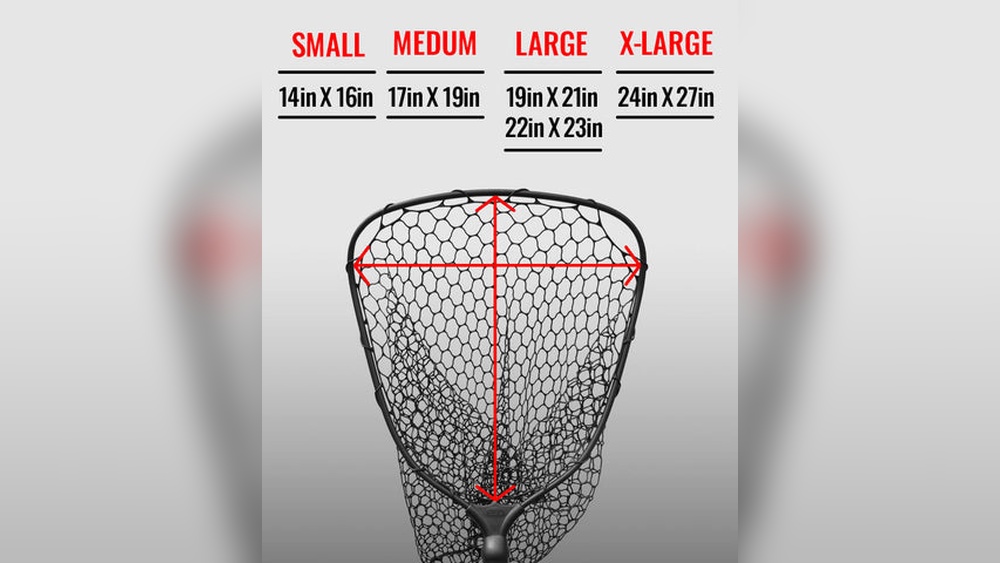
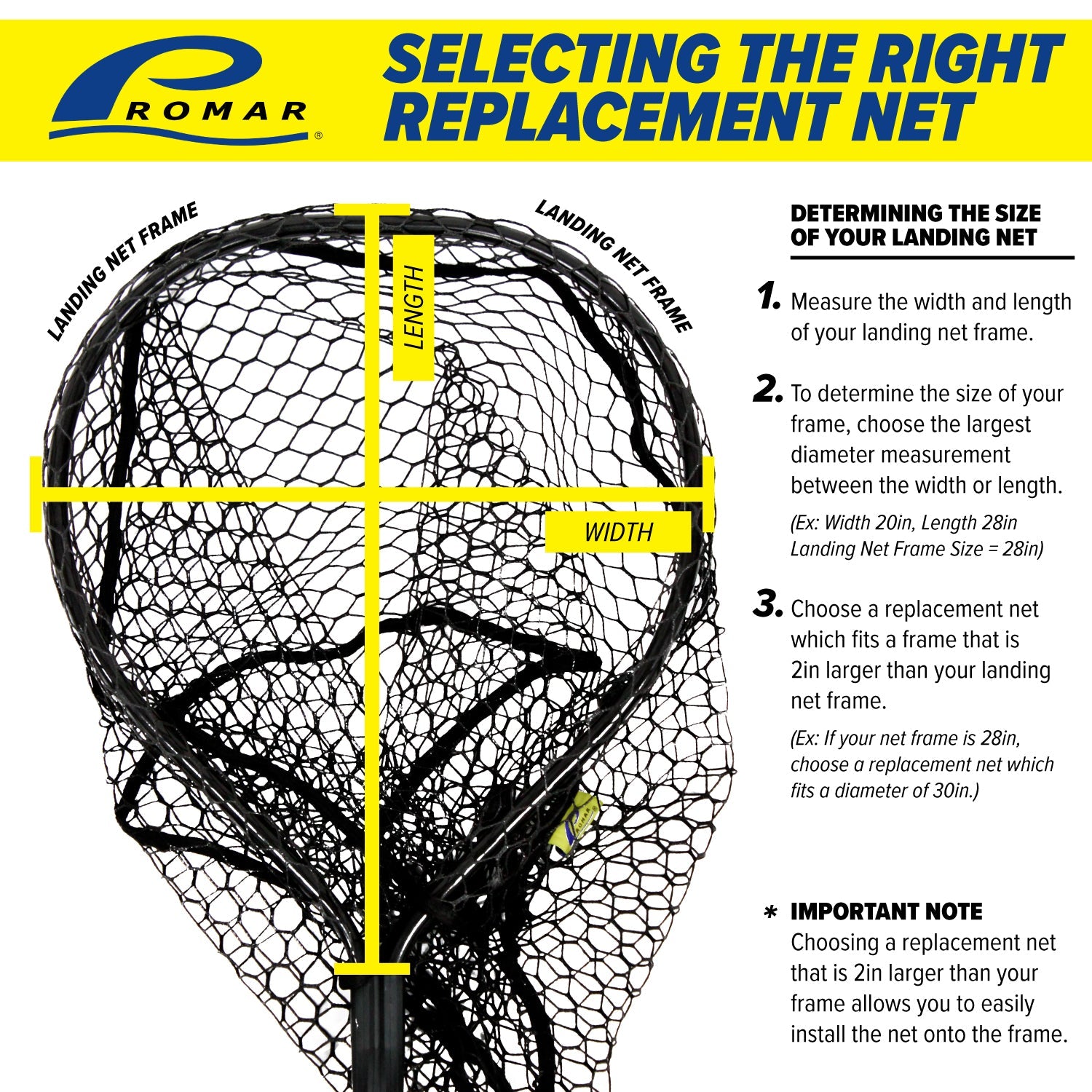
- Length: The longest distance from the top (tip) of the net frame to the bottom (closest to the handle).
- Width: The widest point side-to-side, usually near the middle for teardrop or oval frames.
- Circumference: The distance all the way around the frame. This is crucial for ordering nets that lace onto the frame.
- Depth: How deep you want the net to hang below the frame.
4. Take The Measurements
For Teardrop/oval Frames:
- Length: Place the tape measure at the frame tip (furthest from the handle). Run it straight down the middle to the bottom (nearest the handle).
- Width: Find the widest point of the frame. Measure straight across from one side to the other.
- Circumference: Run the tape measure all the way around the outside edge of the frame. Start at the base (by the handle), go around the tip, and back to the base.
- Depth: Decide how deep you want the net to be. Measure from the inside top center, straight down to where you want the bottom of the net to hang.
For Round Frames:
- Diameter: Measure straight across the center, at the widest point.
- Circumference: Multiply the diameter by 3.14 (pi), or use the tape measure around the edge.
- Depth: As above.
For Rectangular/square Frames:
- Length and width: Measure the longest and shortest sides.
- Circumference: Add up all four sides, measuring around any curves.
- Depth: As above.
It helps to write each measurement clearly and label what it’s for. For example: “Teardrop frame: length 60cm, width 45cm, circumference 160cm, desired depth 55cm.”
Example Measurement
Let’s say you have an oval frame. You find:
- Length: 60 cm
- Width: 45 cm
- Circumference: 160 cm
- Depth: 55 cm
These numbers let you order a net that fits your exact frame and fishing style.
5. Double-check Measurements
Small errors can lead to big problems. Go over each measurement twice. If possible, ask a friend to help or check your numbers. Taking a photo of your tape measure in place is a great way to double-check later.
6. Note The Net Attachment Method
Not all nets attach the same way. Some lace through holes in the frame, others use clips or screws, and a few have special channels or sleeves. Look at your frame and write down how the old net was attached.
If you’re unsure, take a photo for reference.
Buying the right style of replacement net is just as important as getting the size right. If your frame uses lacing holes, order a net with enough lacing cord. If it uses clips, check that the replacement comes with the right attachments.
7. Decide On Net Depth And Material
Net depth affects what kinds of fish you can land. Deeper nets hold big fish better but can tangle easily. Shallow nets are lighter and easier for catch and release. Think about your usual fishing style before choosing.
Net material also matters. Common choices include:
- Rubber: Gentle on fish, resists tangles, easy to clean, but heavier.
- Nylon: Light, strong, but can be rough on fish and tangle hooks.
- Knotless mesh: Best for catch and release, soft, but can wear out faster.
If you fish for trout or practice catch and release, a rubber or knotless mesh is best for fish health. For heavy-duty use, nylon may last longer.
8. Match Your Measurements To Manufacturer Sizing
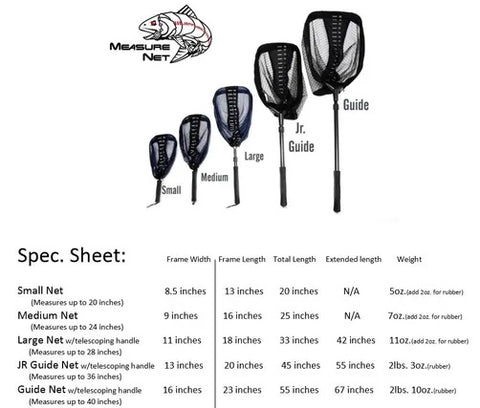
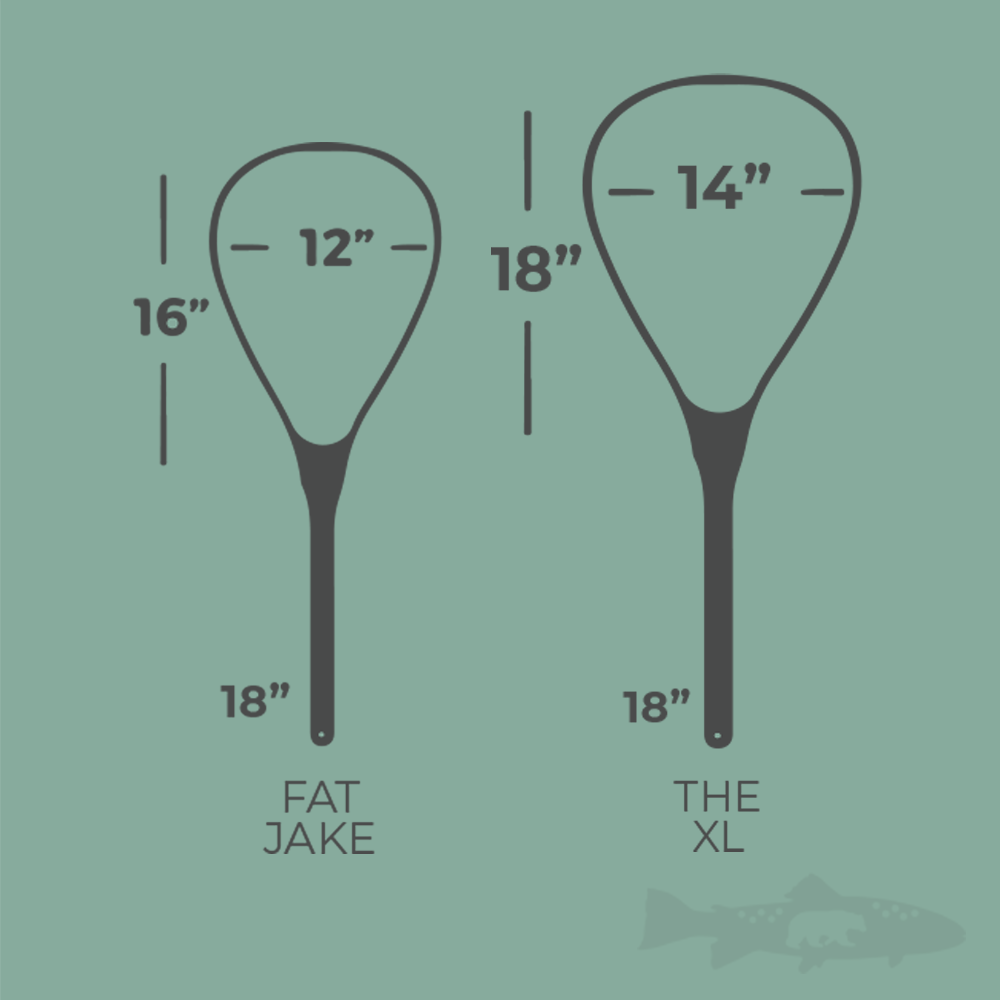
Every manufacturer may list sizes differently. Some sell nets by frame size (e. g. , “fits 60cm x 45cm frame”), others by circumference, or just “medium/large. ” Always use your own measurements to compare to their sizing charts. If you’re not sure, contact customer support and give them your exact numbers.
9. Consider Custom Nets If Needed
If your frame is an unusual shape or size, you may need a custom net. Many suppliers offer custom netting if you provide detailed measurements. Photos and notes about attachment style are helpful here.
10. Keep A Record
Write down your measurements and keep them for next time. You’ll save time if you ever need another replacement or want to try a different net material.
Credit: redsflyfishing.com
Example: Comparing Net Sizes And Materials
Here’s a simple comparison of common replacement net sizes and materials. This can help you see how your choices affect weight, fish safety, and ease of use.
| Net Material | Average Weight | Fish Safety | Ease of Cleaning | Tangle Resistance |
|---|---|---|---|---|
| Rubber | High | Excellent | Easy | Very Good |
| Nylon | Low | Poor | Medium | Poor |
| Knotless Mesh | Medium | Very Good | Easy | Good |
Key insight: Many beginners focus only on net size but forget that material affects fish safety and how easy it is to use.
Net Depth: Why It Matters
The depth of your replacement net makes a big difference in how you fish. Too shallow, and big fish might jump out. Too deep, and small fish get tangled, or the net becomes heavy and awkward.
| Net Depth | Best For | Downsides |
|---|---|---|
| 20-30 cm (Shallow) | Small trout, panfish, catch & release | Not good for large fish |
| 40-60 cm (Medium) | General purpose, bass, medium trout | May still be too short for very big fish |
| 60+ cm (Deep) | Large salmon, carp, pike | Heavy, can tangle easily |
Non-obvious tip: Some anglers order a slightly deeper net for big fish seasons, then switch to a shallow net for catch and release.
Matching Net Size To Fish Species
Choosing the right size isn’t just about your frame—it’s also about what you catch most. Here are examples:
- Small trout or panfish: 30–40 cm width, 20–30 cm depth.
- Bass or medium trout: 40–50 cm width, 40–50 cm depth.
- Salmon, carp, large pike: 50–70+ cm width, 60+ cm depth.
If you chase many species, choose a medium size to cover most cases, or have two nets for different trips.
Common Mistakes When Measuring For A Replacement Net
Many anglers make simple mistakes when trying to measure for a replacement fishing net. Here’s what to avoid:
- Guessing instead of measuring. Even if you think you know the size, always check.
- Measuring inside the net, not the frame. Always measure the frame itself for accuracy.
- Ignoring the attachment style. The net must fit how your frame holds it.
- Not checking depth. Many people order nets that are too shallow or too deep for their needs.
- Using a rigid ruler on a curved frame. This can give false numbers, especially on teardrop or oval nets.
- Forgetting about manufacturer differences. A “medium” from one brand may not match another.
- Not double-checking. Always measure twice to be sure.
Non-obvious insight: If you fish catch and release, look for a net that is both soft and knotless; this helps protect fish slime and scales.
Practical Tips For Smooth Measuring
- If your frame is dirty, clean it before measuring for more accurate results.
- Use a helper for very large frames—one person can hold the tape while the other reads the number.
- Take photos of your setup and measurements. Suppliers often find photos more helpful than written descriptions if you need help.
- If you’re unsure about depth, err on the side of a bit deeper. You can always shorten a net, but you can’t make it longer.
- If ordering online, read reviews to see if other buyers had sizing issues.
When To Replace The Entire Net Versus Just The Mesh
Sometimes, the frame itself is bent or damaged. In that case, it may be safer and easier to replace the whole net. But if the frame is in good shape, just getting new mesh is cheaper and more eco-friendly.
Signs you need a whole new net:
- Frame is cracked, bent, or rusted beyond repair.
- Attachment points are broken or missing.
- Handle is loose or unsafe.
If only the mesh is worn or has holes, a replacement net is the smart choice.
Credit: www.customflyfishingnets.com
Where To Buy Replacement Fishing Nets
You can buy replacement nets from local tackle shops, online fishing stores, or directly from net manufacturers. Always compare your measurements to their product details. Some sites allow you to enter your frame size and suggest options.
For more details on net types and fish-friendly options, you can check the Wikipedia Fishing Net page.
How To Attach A Replacement Net
Once you get your new net, you’ll need to install it. Here’s a basic process:
- Lay the net flat and spread out the mesh.
- Align the center of the net’s top with the tip of the frame.
- Start at one end (usually near the handle), and attach the net using the same method as the old one—lace, clip, or screw.
- Work your way around the frame, keeping the net even and taut.
- Tie off or secure the net when you finish the circle.
- Check for gaps or slack. If you find any, adjust before using.
Some nets come with detailed instructions or even video guides. If you’re new to this, watching a how-to video can be very helpful.
Storing Your Net Measurements
Keep your measurements saved in your phone or notebook. This saves time next season or if you want to try a new material or depth. You can even write them on the handle with a marker for quick reference.
Frequently Asked Questions
What’s The Most Important Measurement For A Replacement Fishing Net?
The circumference of the frame is usually the most critical, especially for nets that lace around the edge. Length and width are also important, but circumference ensures a snug, even fit.
How Do I Measure Net Depth Correctly?
Measure from the inside top center of the frame straight down to where you want the net to hang. Don’t include the handle in this measurement. If you’re unsure, deeper is usually safer than too shallow.
Can I Use Any Type Of Net Material For All Types Of Fishing?
Not always. Rubber and knotless mesh are best for catch and release and fish health. Nylon is tougher but can damage delicate fish. Match the net material to your target species and fishing style.
What If My Frame Is An Unusual Shape Or Size?
Many manufacturers offer custom nets. Send them your exact measurements and photos. Custom nets may cost more but will fit perfectly and last longer.
Do I Need To Replace My Net If It Has Small Holes?
Small holes can sometimes be repaired with fishing line or net repair kits. If the damage is large or the netting is old and weak, it’s safer to replace the whole net.
Getting the right fit for your replacement fishing net isn’t hard, but it does take care and attention to detail. Measure carefully, double-check your numbers, and think about both the net material and depth for your fishing needs. A well-fitted net makes fishing more enjoyable and helps protect the fish you catch.
With these steps, you’ll be ready to order with confidence and enjoy more successful days on the water.
Credit: charkbait.com