
Mooching fishing is not just a way to catch fish; it’s a careful dance between angler, bait, and water. If you’ve ever watched someone gently rocking a small boat, holding a rod, and letting the line drift naturally with the tide, you’ve already seen the heart of mooching.
It’s a fishing technique that values patience, finesse, and a deep understanding of both fish behavior and the surrounding environment. Unlike trolling or casting, mooching is all about subtlety—letting the bait move as if it’s alive, tempting salmon or other species to bite.
For many, it’s as much about the experience as the catch.
But what exactly is mooching fishing? How does it differ from other popular methods? Why do some anglers consider it the ultimate test of skill? This guide explores every aspect of mooching fishing, from its origins to the gear, techniques, and the special mindset required.
Whether you’re new to fishing or looking to expand your skills, you’ll find everything you need to understand and try mooching for yourself.
Understanding Mooching Fishing
Mooching is a fishing technique that involves drifting or slowly motoring a boat while allowing a natural bait to move freely in the water. The goal is to present the bait in a way that closely mimics the movement of live prey, especially herring or anchovy. The method is most famous on the Pacific Northwest coast of North America, where it’s primarily used to catch salmon.
Unlike trolling, where lures or bait are pulled behind a moving boat at higher speeds, mooching uses a slower, more controlled drift. The angler holds the rod, feeling for the lightest tap, and works the line by slowly lifting and lowering the rod tip.
This creates a gentle, life-like action that often entices even the most cautious fish.
Key Elements Of Mooching
- Natural Drift: The bait moves with the current, not forced by speed.
- Light Tackle: Sensitive rods and reels are used to detect subtle strikes.
- Active Participation: The angler is always involved, adjusting the bait depth and action.
- Bait Presentation: Fresh or brined bait, cut and hooked to look as alive as possible.
The History And Origins Of Mooching Fishing
The roots of mooching fishing trace back to the early 20th century in Puget Sound, Washington. Local anglers wanted a more effective way to catch Chinook and Coho salmon. They noticed that salmon often fed on small, injured fish drifting naturally in the water, especially during tidal changes. By mimicking this movement with a cut plug herring, they developed the mooching technique.
Mooching quickly became popular because it worked. Guides in the Pacific Northwest refined the method, passing it down through generations. Today, mooching is not only a tradition but also a sport that draws dedicated anglers from around the world. It’s especially strong in areas like Vancouver Island, British Columbia, and Southeast Alaska, where salmon runs are legendary.
Credit: anglingunlimited.com
Mooching Vs. Other Fishing Techniques
Understanding what sets mooching apart helps you decide if it’s right for you. Here’s a side-by-side comparison of mooching with trolling and casting, two common methods used for salmon and other species:
| Feature | Mooching | Trolling | Casting |
|---|---|---|---|
| Boat Speed | Drifting/slow motoring | Constant, usually faster | Stationary or slow movement |
| Angler Involvement | Active (rod held) | Passive (rod in holder) | Active (casting/retrieving) |
| Bait/Lure Type | Natural bait (cut plug herring) | Lures or bait | Lures, sometimes bait |
| Strike Detection | By hand, very sensitive | Rod bends, less sensitive | By hand, often aggressive |
| Main Target | Salmon, rockfish | Salmon, many others | Variety of species |
While trolling allows you to cover more water, mooching gives you direct feedback from the fish. It’s a more personal, skill-based approach that many anglers find rewarding.
Essential Gear For Mooching Fishing
Choosing the right gear makes a big difference in your success and enjoyment. Mooching uses specialized rods, reels, and terminal tackle designed for sensitivity and control.
Rods
A classic mooching rod is 8.5 to 10.5 feet long, with a soft tip and moderate action. The length allows you to control the bait and feel light bites, while the soft tip keeps fish from pulling the hook out during the fight.
Reels
The mooching reel is a single-action, centerpin style, similar to a large fly reel. It allows the line to pay out smoothly and gives the angler precise control. Some anglers use levelwind reels, but most purists prefer the traditional centerpin for its smooth drag and simple design.
Lines
Most anglers use 15-25 lb test monofilament or fluorocarbon mainline. A lighter leader (12-20 lb) is attached to the end. The leader length can vary from 5 to 8 feet depending on water clarity and target species.
Terminal Tackle
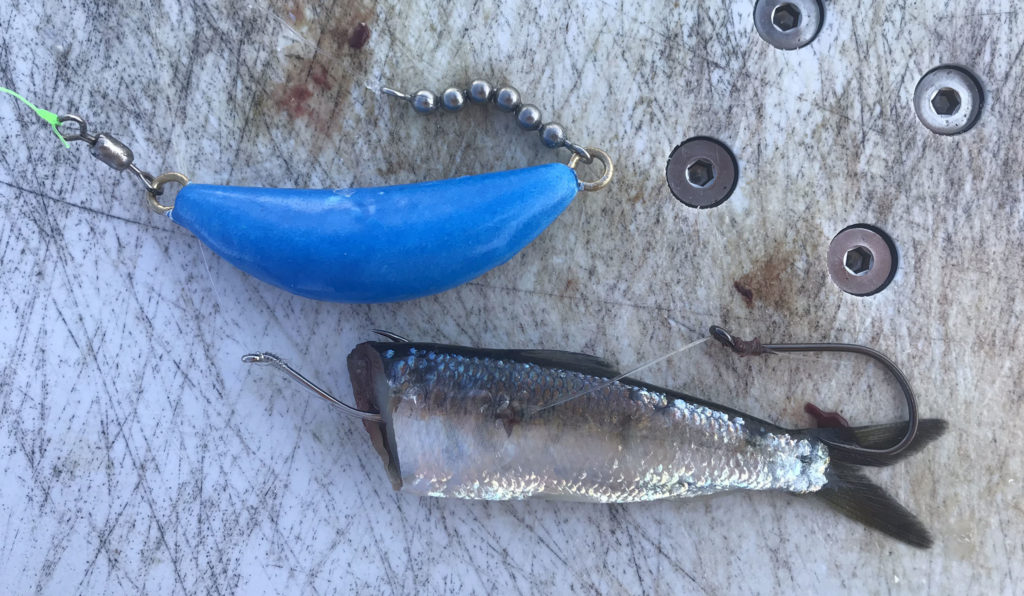
- Hooks: Two hooks tied in tandem, usually 2/0 to 4/0 size, for rigging the bait.
- Weights: Sliding sinkers (2 to 6 ounces) are used to control depth.
- Swivels: Help prevent line twist.
Bait
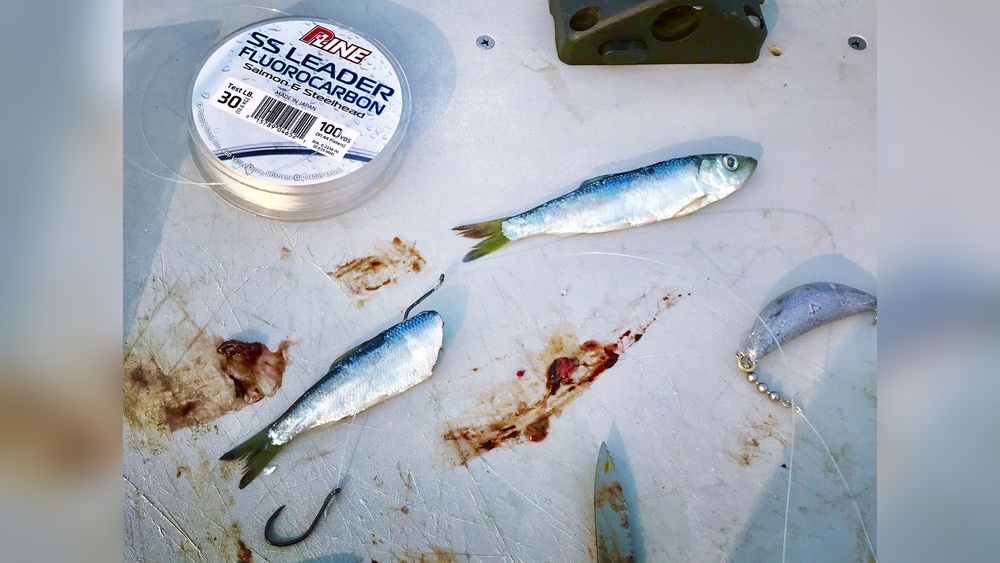
Fresh or brined herring is the most popular bait, cut into a “plug” to spin naturally in the water. Anchovy, sardine, or even artificial baits can be used where allowed.
Essential Accessories
- Bait cutting board and sharp knife
- Bait brine
- Rod holder (for resting)
- Landing net
Example Gear Setup
| Component | Recommended Specs |
|---|---|
| Rod | 9.5 ft, moderate action |
| Reel | Centerpin or levelwind, smooth drag |
| Main Line | 20 lb monofilament |
| Leader | 15 lb fluorocarbon, 6 ft |
| Hooks | 2/0 – 3/0, tandem rig |
| Weight | 3 oz sliding sinker |

Credit: www.steelheader.net
How To Mooch: Step-by-step Technique
Learning to mooch well takes practice, but the steps are straightforward once you understand the basics.
1. Prepare The Bait
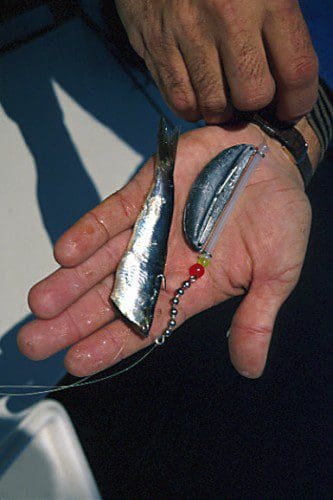
Start with a fresh or well-brined herring. Cut the head at a 45-degree angle behind the gills. Thread the leader through the mouth and out the gill, then set one hook in the head and the other in the body.
The bait should spin slowly and naturally when dropped in the water.
Practical Tip
Check your bait’s spin before sending it down. A slow, tight spin is best. If it’s not spinning, adjust the hooks or cut.
2. Drop The Line
Let your line out until the bait reaches the desired depth. Depth depends on the fish you’re targeting, but salmon often feed 30 to 100 feet down. Use your reel’s drag or thumb to control the descent.
3. Control The Drift
Allow your bait to drift with the boat, following the current. The rod should be held at a 30-45 degree angle. Slowly lift and lower the rod tip (about two feet up and down), making the bait rise and fall in the water.
Non-obvious Insight
Resist the urge to overwork the bait. Subtle movements are more effective. Many beginners move the rod too much, making the bait look unnatural.
4. Detect The Strike
Mooching is all about touch. You may feel a light tap or see a slight bend in your rod tip. Do not set the hook immediately. Lower the rod tip, give the fish a few seconds, then gently sweep the rod up to set the hook.
Salmon often mouth the bait before committing.
5. Fight And Land The Fish
Keep steady pressure and let the rod’s soft tip absorb the fish’s runs. Use your reel’s drag properly—don’t “horse” the fish in or you might lose it. A landing net is essential for safely bringing the fish aboard.
6. Check And Change Bait
After each drift or missed strike, check your bait. Replace if it’s damaged or not spinning. Fresh bait is key to success.
When And Where To Mooch
Mooching works best in areas with strong salmon runs, but it can be adapted for other species like rockfish or lingcod. Timing and location are critical.
Best Seasons
- Summer to early fall: When Chinook and Coho salmon return to spawn.
- Early morning and late afternoon: Fish feed more actively during low light.
Productive Locations
- Pacific Northwest (Puget Sound, Vancouver Island, Southeast Alaska)
- Tidal rips and eddies: Salmon often feed along current breaks.
- Near baitfish schools: Use a fish finder to locate herring or anchovy.
Tidal Influence
Tides strongly affect mooching. Slack tide or the hour before and after a tide change is often best. Salmon feed aggressively during these periods.
Pro Tip
Many beginners ignore their depth finder. Watching for bait balls (dense schools of herring) can double your catch rate.
Advanced Mooching Techniques
Once you’re comfortable with the basics, try these advanced strategies to boost your results.
Depth Staggering
Fish at different depths by having each angler in the boat set their bait at a unique depth. This covers more water and finds where fish are feeding.
Brining Bait
Brined bait stays firm, shiny, and attractive longer than fresh, soft bait. Commercial brines are available, or you can make your own with salt, water, and a touch of sugar.
Scent Additives
Some anglers add natural scents to their bait, like anise oil or commercial fish attractants. This can increase strikes, especially in murky water.
Mooching In Rough Water
In choppy conditions, let the boat’s motion work the bait for you. Lift the rod less, allowing the natural bounce to provide movement.
Using Downriggers
In deep water, a downrigger can help present bait at exact depths, especially when targeting large Chinook salmon.
Common Mistakes In Mooching (and How To Avoid Them)
Success in mooching relies on details. Here are mistakes even experienced anglers sometimes make:
- Overworking the Rod: Too much action scares fish. Use slow, gentle movements.
- Not Checking Bait: Damaged or poorly spinning bait rarely gets bites. Check often.
- Setting the Hook Too Soon: Wait for a solid pull, not just a tap.
- Using Old Bait: Fresh or properly brined bait is essential.
- Ignoring the Current: Position your boat to drift with the tide, not against it.
- Heavy Tackle: Too stiff a rod or heavy line kills sensitivity.
Why Mooching Is Special: The Angler’s Perspective
Mooching has a loyal following for several reasons:
- Skill-Based: Success depends on touch and timing, not just luck or technology.
- Direct Connection: You feel every bite, run, and head shake.
- Relaxing and Social: It’s slower paced, making it perfect for friends or families.
- Tradition: Mooching is a classic method, passed down for generations.
Many anglers say their most memorable catches came while mooching—not because the fish were biggest, but because the process was so rewarding.
Mooching For Other Species
While salmon are the main target, mooching can be adapted for:
- Rockfish: Use smaller hooks and bait, fish near rocky reefs.
- Lingcod: Fish close to the bottom, use larger bait.
- Halibut: Mooching with big herring or squid can produce halibut, though heavier tackle is needed.
Always check regulations for species, size, and gear restrictions.
Conservation And Ethical Mooching
Caring for the resource is part of the mooching tradition.
- Barbless Hooks: Many areas require them; they make releasing fish easier and reduce harm.
- Catch and Release: Handle fish gently, use a rubber net, and avoid touching the gills.
- Limit Your Catch: Only keep what you’ll eat.
Conservation ensures mooching will be enjoyed for generations.
Notable Mooching Destinations
Some regions are famous for mooching, drawing anglers from around the world.
- Puget Sound, Washington: The birthplace of mooching.
- Nootka Sound, British Columbia: Huge Chinook and coho runs.
- Sitka, Alaska: Legendary salmon fishing, often with wild scenery.
Local guides are often available and can help newcomers get started quickly.
Credit: riptidefish.com
Mooching And Modern Technology
While mooching is a classic technique, modern electronics have made it even more effective.
- Fish Finders: Help you locate bait schools and fish.
- GPS: Marks productive drifts.
- Electric Downriggers: For deep presentations.
However, the heart of mooching remains the same—a sensitive rod, a spinning bait, and an angler’s touch.
Mooching Success Stories
Many record salmon have been caught mooching. For example, the world record coho salmon (33 lbs) was taken near the Pacific Northwest, where mooching is king. Veteran guides often tell stories of clients catching their first big salmon using this method, thanks to the personal connection and excitement mooching offers.
Mooching For Beginners: Getting Started
If you’re new, consider these steps:
- Hire a Guide: Local experts can teach you quickly.
- Practice at Home: Rig bait and practice spinning it in a bucket.
- Start Simple: Use basic gear and focus on your presentation.
- Join a Club: Many local clubs offer mooching workshops and group trips.
- Study Regulations: Know the rules for your area.
Mooching has a gentle learning curve, but attention to detail pays off.
The Mooching Community
Mooching is more than a technique—it’s a community. Many anglers are happy to share tips and stories. Online forums, fishing clubs, and local tackle shops are good places to learn, swap stories, and improve your skills.
For a deeper dive into the history and cultural impact of mooching, you can visit the Wikipedia page on Mooching Fishing.
Frequently Asked Questions
What Is The Main Difference Between Mooching And Trolling?
The main difference is the speed and presentation. In mooching, the bait drifts naturally with the current, and the angler actively controls the rod. In trolling, the bait or lure is pulled behind a faster-moving boat, usually with less direct contact.
Can I Mooch From Shore?
Mooching is designed for boat fishing, where you can control drift and depth. It’s not practical from shore, but some techniques (like float fishing) use similar concepts.
What Is The Best Bait For Mooching?
Herring is the top choice, especially when brined for durability and shine. Anchovy, sardine, or artificial baits work in some areas. Always match your bait to the local fish’s natural diet.
Do I Need Special Gear To Start Mooching?
A dedicated mooching rod and reel improves your results, but you can start with a long, soft-tipped rod and a smooth reel. Focus on sensitive gear and proper bait presentation.
Is Mooching Fishing Good For Beginners?
Yes. Mooching is beginner-friendly if you pay attention to detail. Many new anglers catch their first salmon mooching because the method is forgiving, social, and offers a direct connection to the fish.
Final Thoughts
Mooching fishing remains one of the most rewarding ways to catch salmon and other species. It blends tradition, skill, and a close connection with nature. Whether you’re after a trophy Chinook or a quiet day on the water, mooching offers both challenge and satisfaction.
With patience, practice, and the right approach, anyone can enjoy the subtle art of mooching—and perhaps discover why so many anglers consider it the heart of Pacific Northwest fishing.