
Fishing has been a part of human life for thousands of years. Today, fishing is not just a way to get food. It’s a hobby, a sport, and even a way to relax. One of the most important tools for fishing is the fishing reel. Reels let you control your fishing line, cast your bait, and bring in your catch. But with so many kinds of fishing reels available, it can be confusing to choose the right one. Understanding the main types, how they work, and their best uses is key to enjoying fishing and catching more fish.
Whether you are a beginner holding a rod for the first time or someone looking to upgrade your gear, learning about the different kinds of fishing reels will help you make better choices. Each reel type has its own strengths, weaknesses, and best uses.
Some are perfect for fresh beginners, while others are made for experienced anglers who need special features. Let’s explore the world of fishing reels, see how they compare, and learn how to choose the right one for your next fishing trip.
The Main Types Of Fishing Reels
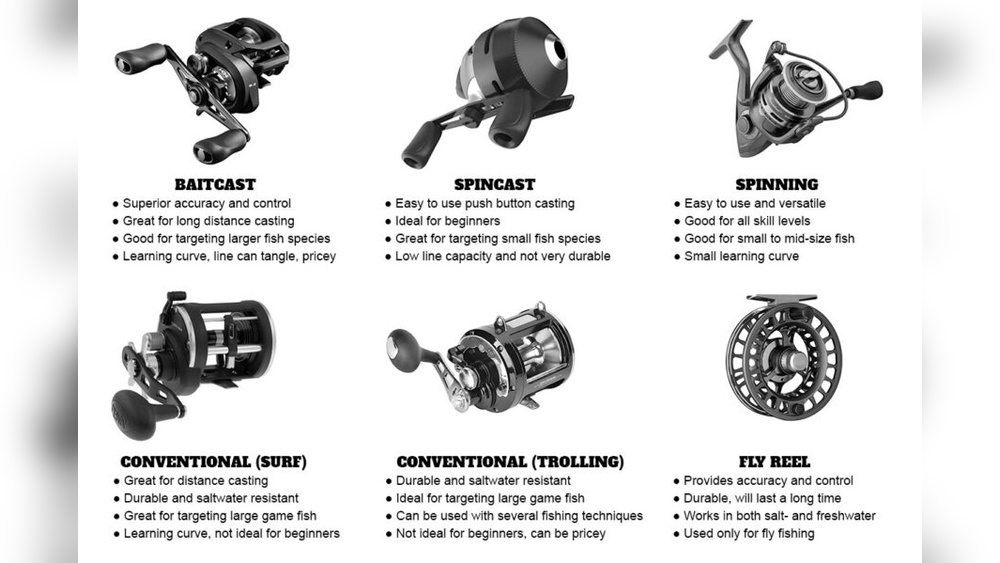
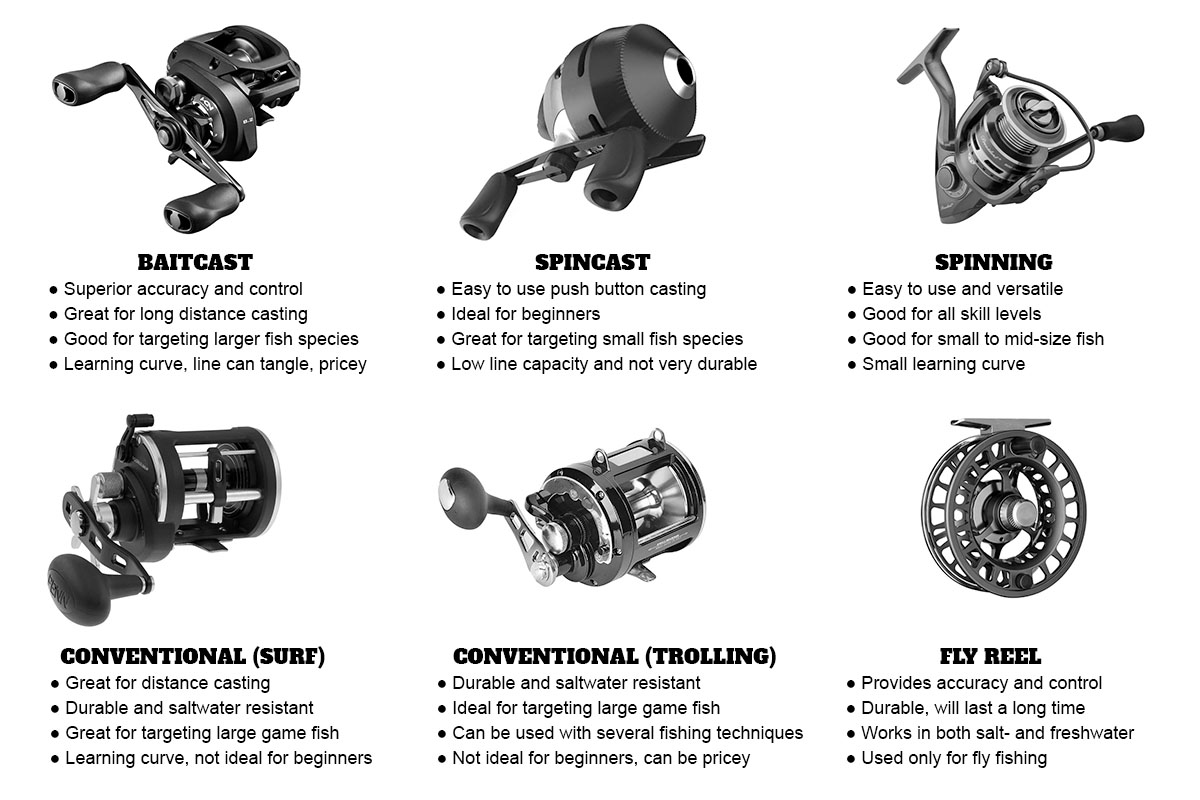
Fishing reels come in several main types. Each is designed for specific situations, skill levels, and fish. The most common types are:
- Spinning Reels
- Baitcasting Reels
- Spincast Reels
- Fly Reels
- Centerpin Reels
- Trolling Reels
- Surf Reels
- Underspin Reels
- Mooching Reels
- Electric Reels
Let’s look at each type in detail, including how they work and when to use them.
Spinning Reels
Spinning reels are the most popular type for both beginners and experienced anglers. You will often see them in shops and used by people at lakes, rivers, and even in the ocean.
A spinning reel is mounted below the fishing rod. The line comes off the spool in loops, which makes it easy to cast light lures or baits over long distances. You open the bail arm, hold the line with your finger, and flick the rod forward to cast. Once the lure lands, you close the bail and start reeling.
Key advantages of spinning reels:
- Easy to use: No special skill needed. Good for beginners.
- Less tangling: Fewer backlashes (sudden knots).
- Versatile: Can handle many types of fishing, from small panfish to big saltwater species.
Drawbacks:
- Line twist: Over time, the line may twist and tangle.
- Limited heavy lure use: Not as good with very heavy lures or lines.
Best for: Beginners, casual anglers, people fishing with light to medium lures, fishing in lakes, rivers, or the sea.
Baitcasting Reels
Baitcasting reels are often seen in the hands of skilled anglers. This reel sits on top of the rod and has a revolving spool. Unlike spinning reels, the spool moves with the cast, letting out line in a straight path.
To use a baitcasting reel, you press a button or lever to release the spool, cast your bait, and then control the speed of the spool with your thumb. This type of reel gives you more control and power but requires practice to master.
Key advantages:
- Accurate casting: Allows for precise placement of bait.
- Strong and powerful: Can handle heavy lines and big fish.
- Good for heavy lures: Best for bass fishing, pike, and other big species.
Drawbacks:
- Learning curve: Takes time to avoid backlashes (when the spool spins too fast and tangles the line).
- Not beginner-friendly: Requires skill, especially with lighter baits.
Best for: Experienced anglers, bass fishing, heavy cover, targeting large fish.
Spincast Reels
Spincast reels are known for their simplicity and are often the first reels used by children or complete beginners. The reel has a closed face with a hole for the line. You press a button to release the line and cast, then turn the handle to retrieve.
Key advantages:
- Very easy to use: Almost no skill needed.
- Tangle-free: Closed design protects the line.
- Affordable: Usually less expensive.
Drawbacks:
- Limited casting distance: Not as far as spinning or baitcasting reels.
- Less durable: Parts can wear out quickly.
- Limited power: Not good for big fish or heavy lures.
Best for: Kids, beginners, light fishing in ponds or small lakes.
Fly Reels
Fly reels are made for fly fishing, a style where you use a lightweight fly to catch fish. The reel is simple, usually just a spool and a handle. The main job is to hold the special fly line and help you bring in the fish.
In fly fishing, casting is done by moving the rod and line, not the reel. The reel is used for storing line, keeping tension, and fighting big fish.
Key advantages:
- Simple design: Few moving parts, easy to maintain.
- Specialized for fly fishing: Works best with fly rods and lines.
- Smooth drag: Important for fighting strong fish.
Drawbacks:
- Limited use: Only for fly fishing.
- Manual operation: Slower to reel in compared to spinning reels.
Best for: Fly fishing in rivers, streams, and lakes, targeting trout, salmon, and similar species.
Centerpin Reels
Centerpin reels are traditional reels often used for river fishing. They have a large, free-spinning spool that sits in line with the rod (like a fly reel). The line comes off smoothly, allowing for long, natural drifts with the current.
To use a centerpin, you control the spool with your fingers or palm. This allows for precise control of the bait or float.
Key advantages:
- Long, smooth drifts: Great for river fishing and float fishing.
- Direct control: You feel every movement.
- No drag system: All control is manual.
Drawbacks:
- Steep learning curve: Needs practice.
- Not good for casting long distances.
- Limited to certain styles: Best for specific river fishing techniques.
Best for: Drift fishing in rivers, targeting trout, steelhead, and salmon.
Trolling Reels
Trolling reels are heavy-duty reels made for pulling bait or lures behind a moving boat. These reels are usually strong, with large line capacity and powerful drag systems.
Trolling reels often have level-wind mechanisms that spread the line evenly across the spool as you reel in. Many also have line counters to help you know exactly how much line is out.
Key advantages:
- High strength: Handles big fish like tuna, marlin, or salmon.
- Line capacity: Holds lots of heavy line.
- Special features: Line counters, clickers, and more.
Drawbacks:
- Large and heavy: Not easy to carry or use for casting.
- Specialized: Only for trolling, not versatile.
Best for: Deep sea fishing, trolling for big fish, use on boats.
Surf Reels
Surf reels are designed for fishing from beaches, rocks, or piers. They can be either large spinning reels or special conventional reels. Their main job is to cast baits a long way into the surf and handle big, hard-fighting fish.
Surf reels have strong, saltwater-resistant parts. They also hold a lot of heavy line, which is important for fighting fish in rough waves.
Key advantages:
- Long casting: Designed for maximum distance.
- Saltwater ready: Resists corrosion.
- Handles big fish: Strong drags and gears.
Drawbacks:
- Heavy: Can be tiring to use for long periods.
- Expensive: Good surf reels cost more.
Best for: Beach fishing, pier fishing, targeting large saltwater fish.

Credit: www.ohero.com
Underspin Reels
Underspin reels, sometimes called triggerspin reels, combine features from spincast and spinning reels. They are mounted under the rod like spinning reels but have a trigger you pull to cast.
These reels offer more control than spincast reels but are still simple to use.
Key advantages:
- Easy casting: Trigger makes casting simple.
- Good control: More precise than basic spincast reels.
- Beginner-friendly: Great for people moving from spincast to spinning reels.
Drawbacks:
- Limited line strength: Not for heavy fishing.
- Not as common: Fewer models available.
Best for: Beginners, light freshwater fishing, people who want something easier than a spinning reel.
Mooching Reels
Mooching reels are used for a special fishing style called mooching, popular in the Pacific Northwest of North America. These reels look like big fly reels and are used to let bait drift naturally in the water.
They allow for smooth letting out and reeling in of line, which is important for this fishing style. The drag system is smooth and strong for salmon and similar fish.
Key advantages:
- Smooth drag: Great for fighting strong fish.
- Control: Lets you let line out smoothly.
Drawbacks:
- Specialized: Only for mooching.
- Not for casting: Not good for long-distance casting.
Best for: Salmon fishing in the Pacific Northwest, mooching technique.

Credit: fishingbooker.com
Electric Reels
Electric reels are high-tech reels with a built-in motor. They are mostly used for deep-sea fishing, where you need to drop your bait hundreds of meters down. The motor helps bring up heavy weights or big fish without tiring you out.
Many electric reels have digital displays, programmable settings, and strong drag systems.
Key advantages:
- Less effort: The motor does the hard work.
- Great for deep drops: Perfect for deep-sea fishing.
- High tech: Advanced features for serious anglers.
Drawbacks:
- Expensive: Cost much more than regular reels.
- Heavy and bulky: Not easy to carry.
- Needs power: You need batteries or a power source.
Best for: Deep-sea fishing, people who fish at great depths, anglers with limited strength.
Comparing The Main Types Of Fishing Reels
To help you understand the differences, here’s a comparison of the key features of the most common reels.
| Reel Type | Ease of Use | Best For | Main Drawback |
|---|---|---|---|
| Spinning | Easy | Versatility | Line Twist |
| Baitcasting | Difficult | Accuracy, Power | Backlash |
| Spincast | Very Easy | Beginners | Limited Power |
| Fly | Medium | Fly Fishing | Single Use |
| Centerpin | Hard | River Drift Fishing | Learning Curve |
| Trolling | Medium | Big Fish/Boats | Heavy, Specialized |
| Surf | Medium | Long Casts, Saltwater | Weight, Cost |
| Underspin | Easy | Transitional Anglers | Limited Strength |
| Mooching | Medium | Salmon/Mooching | Specialized |
| Electric | Easy | Deep Sea/Heavy Fish | Cost, Weight |
How To Choose The Right Fishing Reel
Picking the right fishing reel is not just about price. Think about:
- Type of fishing: Are you fishing in freshwater or saltwater? From the shore or a boat? For small or big fish?
- Your skill level: Beginners do better with spinning or spincast reels. Experienced anglers may prefer baitcasting or fly reels.
- Target fish: Some reels are made for tiny panfish, others for giant tuna.
- Budget: Reels range from cheap to very expensive. Buy the best you can afford, but match it to your needs.
- Maintenance: Some reels need regular cleaning, especially after saltwater fishing.
Non-obvious insight: Many beginners buy the most expensive reel they can find, thinking it will help them catch more fish. In reality, a simple, easy-to-use spinning reel is often better for learning. Also, always match your reel to your rod; a heavy reel on a light rod will feel unbalanced and be hard to use.
Key Features To Look For
When shopping for a fishing reel, watch for these features:
- Drag system: Controls how much resistance the fish feels. A smooth drag is important for fighting big fish.
- Gear ratio: Tells you how fast the reel picks up line. Higher numbers mean faster reeling, but less power.
- Ball bearings: More bearings often mean smoother performance, but quality is more important than quantity.
- Line capacity: Make sure your reel can hold enough line for the fish you want to catch.
- Material: Good reels are made from aluminum, graphite, or stainless steel. Saltwater reels should resist corrosion.
Common Mistakes When Choosing Reels
- Ignoring rod-reel balance: A mismatch makes fishing hard and uncomfortable.
- Choosing by price alone: Expensive reels are not always better for your needs.
- Overlooking line compatibility: Use the right line type and strength for your reel.
- Not considering maintenance: Saltwater reels need more care.
Practical tip: Try holding the reel in your hand before buying. It should feel comfortable and balanced. If possible, mount it on your rod and see how it feels.
Special Purpose Reels
Some reels are made for very specific fishing styles or conditions. Here are a few examples:
Ice Fishing Reels
Ice fishing reels are small and simple, made for fishing through holes in the ice. They can be spinning, inline, or small baitcasters. Their main job is to hold line and let you drop bait straight down.
Big Game Reels
These are extra-strong trolling or conventional reels for catching sharks, marlin, or giant tuna. They have powerful drags, huge line capacity, and are made from top-quality materials.
Travel Reels
Travel reels are designed to be lightweight and compact, perfect for anglers who travel often. Some can fold or collapse for easy packing.
Credit: norrik.com
Data Table: Reel Types And Target Fish
Here’s a quick look at which reel types are best for different fish.
| Reel Type | Target Fish | Water Type |
|---|---|---|
| Spinning | Panfish, Trout, Bass, Walleye, Redfish | Fresh/Salt |
| Baitcasting | Bass, Pike, Musky, Salmon | Fresh/Salt |
| Spincast | Bluegill, Crappie, Small Trout | Fresh |
| Fly | Trout, Salmon, Grayling | Fresh |
| Centerpin | Steelhead, Salmon, Trout | Fresh |
| Trolling | Salmon, Tuna, Marlin | Salt |
| Surf | Striped Bass, Bluefish, Drum | Salt |
| Underspin | Perch, Small Bass | Fresh |
| Mooching | Salmon | Salt |
| Electric | Deep Sea Species | Salt |
Notable Brands And Quality
Some brands are known for making high-quality reels. For spinning and baitcasting, Shimano, Daiwa, Abu Garcia, and Penn are favorites. For fly reels, look for Orvis, Sage, and Hardy. Brands like Okuma and Quantum also make good entry-level reels.
Buying from a trusted brand often means better customer service and easier access to spare parts.
Reel Maintenance Tips
A well-maintained reel lasts longer and works better. Here are some basic tips:
- Rinse after use: Always rinse your reel with fresh water after fishing, especially in saltwater.
- Dry properly: Let it air dry before storing.
- Oil and grease: Use reel oil on moving parts and grease on gears, but don’t overdo it.
- Check for damage: Regularly inspect for line grooves, bent handles, or loose screws.
- Store dry: Keep reels in a dry place to avoid rust.
Non-obvious tip: Take the spool off your spinning reel before storing for a long time. This reduces pressure on the drag system and extends its life.
The Future Of Fishing Reels
Technology is changing fishing reels. Electric reels are becoming more common in deep-sea fishing. Smart reels with digital displays, Bluetooth, and even automatic settings are appearing. Materials are getting lighter and stronger, making reels easier to use and more durable. According to industry reports, the global fishing reel market is expected to grow by over 4% annually through 2028, driven by new technology and a growing interest in recreational fishing (Grand View Research).
Frequently Asked Questions
What Is The Easiest Fishing Reel For Beginners?
The spincast reel is usually the easiest for beginners. It has a simple push-button design, is tangle-free, and needs little skill. However, spinning reels are also easy to use and more versatile as you learn.
Can I Use A Spinning Reel For Saltwater Fishing?
Yes, but it must be a saltwater-rated spinning reel. These have special materials to resist corrosion from salt. Always rinse your reel with fresh water after saltwater fishing.
Why Does My Baitcasting Reel Keep Tangling?
This is called a backlash. It happens when the spool spins faster than the line goes out, causing a tangle. It takes practice to control the spool with your thumb. Try adjusting the spool tension and brake system to reduce backlashes.
What Reel Is Best For Catching Big Fish?
For big fish, baitcasting, trolling, and electric reels are best. They have strong drags and can handle heavy lines. For deep-sea fishing, use trolling or electric reels with large line capacity.
How Often Should I Clean My Fishing Reel?
Clean your reel after every trip, especially if you fished in saltwater. At least once a season, do a deep clean by taking the reel apart and oiling the moving parts. Proper maintenance keeps your reel smooth and lasting longer.
Fishing reels might seem complicated at first, but understanding the different types helps you pick the right tool for your fishing style. Whether you love relaxing by a quiet pond or chasing big game in the ocean, there’s a reel that fits your needs and makes fishing more enjoyable.
With the right reel, you’ll spend less time fixing problems and more time catching fish.