Fishing is a world full of small choices. Some seem simple at first, but make a big difference on the water. One of these is picking the right fishing line color. Walk down the aisle at any tackle shop and you’ll see spools in green, blue, yellow, red, clear, and more. It’s easy to wonder: does color really matter, or is it just marketing? The truth is, the color of your fishing line can affect your catch rate, how well you see bites, and even how much fun you have. But the best color is not the same for every place or every style of fishing. It depends on water conditions, the fish you want, and even your own eyesight.
Many anglers—especially beginners—miss the importance of line color. They often grab whatever is cheapest or comes with their new reel. But line color is about more than looks. It’s about science: how light moves underwater, how fish see, and how you can spot your line. Getting this detail right can mean the difference between a good day and a great one. If you want to understand what color fishing line is best, and why, you’re in the right place. Let’s break it down in simple, clear steps that help you make better choices every time you fish.
Why Fishing Line Color Matters
Picking the right line color is not just for looks. It has a direct effect on how many fish you catch and how easily you fish. Here’s why it matters:
- Visibility to fish: Some fish are smart and get scared if they see your line.
- Visibility to you: It’s important to see your line to check for bites and avoid tangles.
- Water conditions: Clear, muddy, deep, or shallow water can change what color works best.
- Fishing style: The way you fish—like using a bobber, lure, or live bait—can change the best choice.
Many anglers focus only on strength or thickness, but line color often decides if a fish bites or swims away.
How Fish See Color Underwater
Before picking a color, it helps to know how fish see. Fish eyes are not like human eyes. They see colors differently, and water changes how light travels.
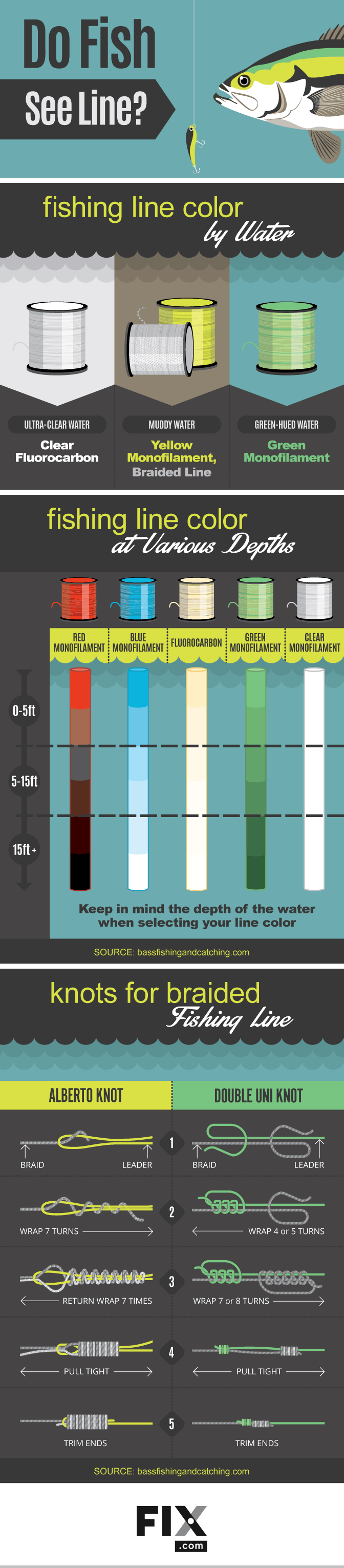
- Red disappears first: In water, red fades quickly. It can look gray or black just a few feet down.
- Blue and green go deeper: Blue and green light travels deeper, so these colors stay visible longer.
- Clear water vs. dirty water: In clear water, fish can spot lines more easily. In dirty water, lines are harder to see, so color matters less.
For example, largemouth bass see color well, especially in clear water. Trout have sharp eyes too. But catfish use smell more than sight, so color matters less.
A study from the University of Florida found that fish like bass and bluegill can see up to five colors, but their vision is strongest in the blue-green part of the spectrum. Knowing this helps you choose a color fish are less likely to notice.
Credit: www.liveoutdoors.com
Main Types Of Fishing Line Colors
There are many line colors, but most fall into a few main groups. Each has strong and weak points.
Clear
Clear line is the most common and often the safest choice. It tries to blend with the water, making it hard for fish to see.
- Best for: Clear lakes, rivers, and streams
- Pros: Hard for fish to spot, works in most places
- Cons: Can be hard for you to see, especially on cloudy days
Clear line is popular with bass and trout anglers who fish in clear water. It’s also a good all-around pick for beginners.
Green
Green line copies the color of plants and algae in many lakes and rivers. This helps it blend into the background.
- Best for: Waters with plants, moss, or green tint
- Pros: Blends well, easy to find in stores
- Cons: Can be seen in very clear water, not great in blue water
Green is a favorite for freshwater fishing, especially when casting near weeds or grass.
Blue
Blue line is made for ocean or deep lake fishing. It matches the color of open water, making it less visible to fish below the surface.
- Best for: Saltwater, offshore, or deep lakes
- Pros: Hard to see in blue water, easy to spot above water
- Cons: May stand out in green or muddy water
If you fish the ocean from piers or boats, blue line is a common choice.
Yellow/high-visibility (hi-vis)
Yellow or hi-vis line is easy for you to see, even from far away. It does not try to hide from fish; instead, it helps you track your line.
- Best for: Watching your line for bites, night fishing, trolling
- Pros: Easy to see above water, great for detecting bites
- Cons: Fish can see it, so it’s not ideal for clear water
Many anglers pair hi-vis line with a clear leader to get the best of both worlds.
Red
Red line is often sold as “invisible underwater.” This is only partly true. Red disappears first in the water, but in shallow spots, fish may still see it.
- Best for: Shallow water, bottom fishing
- Pros: Fades at depth, easy to see above water
- Cons: May show up as dark or black in deeper water, not truly invisible
Red line is common for bottom fishing or when using heavy gear.
Orange
Orange line is like hi-vis yellow. It’s made for you to see, not to hide from fish.
- Best for: Drifting, float fishing, or when line control is key
- Pros: Stands out above water, good for tracking
- Cons: Fish can see it, so not for clear water
Some float fishermen love orange line for controlling their drifts.
Camouflage
Camouflage line mixes colors—green, brown, and black—so it breaks up in water and becomes hard to spot.
- Best for: Mixed-bottom lakes, rivers with weeds or rocks
- Pros: Blends with many backgrounds, good for shy fish
- Cons: Can be hard for you to see, may not help in very clear water
Camouflage lines are popular with carp and walleye anglers.
Fluorocarbon
While not a color, fluorocarbon line is known for being nearly invisible underwater. It bends light similar to water.
- Best for: Clear water, leader material
- Pros: Hard for fish to see, sinks faster than mono
- Cons: Can be stiff and hard to tie, more costly
Many anglers use fluorocarbon as a leader with colored main line.
Factors That Affect The Best Line Color
Choosing the best fishing line color is not one-size-fits-all. Here are the main things to think about:
1. Water Clarity
Water clarity is often the most important factor.
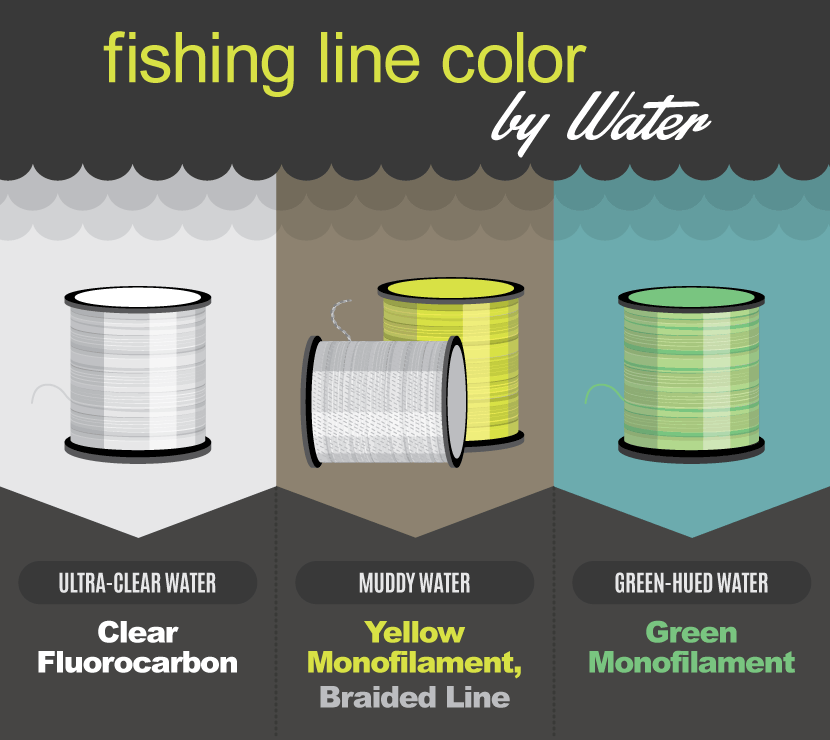
- Clear water: Fish see well. Use clear, light green, or fluorocarbon.
- Stained or green water: Green or camouflage lines blend in best.
- Muddy water: Color matters less. Hi-vis lines can help you see your line.
If you’re not sure, look at the water from above. If you see the bottom easily, use clear or natural colors. If the water is dark, you can use brighter lines.
2. Depth
Light changes as it goes deeper.
- Shallow water: Most colors are visible. Fish may see your line if it stands out.
- Deep water: Red and orange fade first, then yellow, then green, then blue. Blue and green work best at depth.
A blue line can be nearly invisible at 30 feet deep, while red might look black.
3. Type Of Fish
Some fish are more cautious than others.
- Trout, bass, walleye: Have sharp eyes. Use clear, green, or fluorocarbon.
- Catfish, carp: Rely more on smell and feel. Line color is less important.
- Saltwater game fish: Can see colors well in clear water, so match to conditions.
4. Sunlight And Weather
Bright sun makes lines shine more. On sunny days, use lines that blend with the water. On cloudy days, hi-vis lines are easier for you to see.
5. Type Of Fishing
- Casting lures: Use low-vis lines.
- Trolling or float fishing: Hi-vis lines help you see where your line is.
- Bottom fishing: Red or camo lines can be hard for fish to spot.
6. Your Vision
If you have trouble seeing your line, a hi-vis color can help. Many older anglers choose yellow or orange for this reason.
Credit: www.northlandtackle.com
Common Situations And The Best Line Colors
It helps to see which colors work best in real fishing situations. Here’s a quick look:
| Fishing Situation | Best Line Color | Why |
|---|---|---|
| Clear lake, trout | Clear or fluorocarbon | Hard for fish to see |
| Weedy pond, bass | Green | Blends with plants |
| Muddy river, catfish | Yellow or orange | Easy for you to see, fish use smell |
| Saltwater, offshore | Blue | Disappears in deep water |
| Night fishing | Hi-vis yellow with clear leader | Easy to see bites, leader hides from fish |
The Science Behind Underwater Light
Not all anglers realize how fast colors change underwater. Here’s a simple guide:
- Red: Gone by 15 feet deep
- Orange: Fades by 25 feet
- Yellow: Fades by 35 feet
- Green: Visible to 70 feet
- Blue: Visible to more than 100 feet
This means a red line might be invisible at depth, but clear or green lines stay hidden in most conditions. However, some fish can still see shades (not true colors) even when the color fades.

Credit: www.youtube.com
Pros And Cons Of Popular Line Colors
To help you compare, here’s a simple breakdown:
| Color | Pros | Cons | Best Use |
|---|---|---|---|
| Clear | Invisible to fish, versatile | Hard to see for angler | Clear water, shy fish |
| Green | Blends with plants, common | Visible in blue water | Weedy lakes, rivers |
| Blue | Disappears offshore | Visible in green/muddy water | Saltwater, deep lakes |
| Yellow/Hi-Vis | Easy to see, good for bite detection | Fish can see it | Trolling, float fishing, night |
| Red | Fades at depth, easy above water | Dark at depth, not invisible | Bottom fishing, shallow |
| Orange | Easy to track line | Fish can see it | Drifting, float fishing |
| Camouflage | Blends with mixed backgrounds | Hard for angler to see | Carp, walleye, shy fish |
| Fluorocarbon | Nearly invisible, strong | Stiff, expensive | Leader, clear water |
Non-obvious Insights Most Anglers Miss
- Fish see line more from the side than from below. Many people think line color only matters for fish looking up. But fish often see your line from the side, especially with lures. Pick a color that matches the background, not just the sky.
- Using a colored main line with a clear leader is often best. Many top anglers use a bright line they can see, tied to a clear or fluorocarbon leader. This gives you the visibility you want, but hides the line from fish.
- Water color changes with season and weather. After rain, lakes and rivers get muddy, and a hi-vis line is easier to see. In summer, algae blooms turn water green, so green line blends better.
- Older eyes need brighter lines. As we age, it gets harder to see clear or dark lines. If you struggle to tie knots, a yellow or orange main line can help a lot.
- UV light fades line color over time. Lines left in the sun lose their color and strength. Change your line often if you fish a lot.
Mistakes To Avoid When Choosing Line Color
- Always using the same color. Don’t just buy one color for all fishing. Match to where and how you fish.
- Ignoring water clarity. What works in your home lake may not work on vacation.
- Trusting marketing claims too much. Not all “invisible” lines are truly invisible.
- Not using a leader. Mixing line colors with a leader often gives the best results.
Examples: Real Angler Choices
- Sarah fishes for trout in mountain streams: She uses clear monofilament with a fluorocarbon leader, because the water is clear and trout are smart.
- Carlos targets catfish in muddy rivers: He uses hi-vis yellow braid. Catfish don’t care about color, and Carlos needs to see his line at night.
- Mike casts for bass in weedy lakes: He chooses green line to blend with plants, sometimes adding a short clear leader if the water is extra clear.
- Jenny goes deep sea fishing: She picks blue monofilament, because it disappears in the blue water offshore.
How To Test Line Color For Your Water
If you’re not sure, do a quick test. Dip different colored lines in your local water and look from above and from the side. See which color disappears the best. You can also ask local tackle shops or check forums for advice on your area.
Matching Line Color With Lure And Bait
Some anglers try to match line color with their lure or bait, but this only helps a little. Fish focus on the lure, not the line, but a bright line may spook them if they see it. When in doubt, use a clear leader.
What The Pros Say
Many professional anglers switch line color often:
- Use clear or fluorocarbon in tournaments with picky fish.
- Use hi-vis lines when fishing deep or at night, but always add a clear leader.
- Change colors with the season—green for spring, blue for summer offshore, and yellow for muddy water.
Environmental Concerns
Some lines, especially bright colors, can be easier for birds and other animals to see and may get caught. Always pick up old line and recycle if possible. For more about environmental safety, see the U.S. Fish and Wildlife Service.
Frequently Asked Questions
What Is The Best Color Fishing Line For Clear Water?
The best line for clear water is usually clear monofilament or fluorocarbon. These lines are nearly invisible to fish. If you want to see your line, use a hi-vis main line with a clear leader.
Can Fish Really See Colored Fishing Lines?
Yes, most game fish can see line colors, especially in clear water and good light. Some colors, like green or blue, are harder to spot, but no line is truly invisible except for fluorocarbon.
Does The Color Of Braided Line Matter?
Braided line is thinner and stronger, but it’s also more visible. Color still matters—use green or blue in water that matches, or a hi-vis color with a fluorocarbon leader.
Should I Always Use A Leader With Colored Line?
It’s a good idea. A leader (usually clear or fluorocarbon) hides the last few feet of your line from fish. This is especially helpful with hi-vis main lines.
How Often Should I Change My Fishing Line?
Change your line at least once a season, or more if you fish often. Sun and water break down line color and strength. Check for nicks or fading and replace when needed.
Choosing the best fishing line color is both science and art. The right color helps you catch more fish, avoid spooking shy species, and enjoy your time on the water. Test different colors, pay attention to the water, and don’t be afraid to mix lines and leaders for the best results.
A little extra thought about line color can make your next fishing trip your best yet.