
Putting fly line on a reel may look simple, but doing it right makes a big difference in your fishing experience. Many anglers, especially those new to fly fishing, find the process confusing. If you’re struggling or worried about making mistakes, you’re not alone.
Setting up your fly fishing reel the correct way helps you cast farther, protects your gear, and saves you time on the water. This guide explains every step in clear, easy English, so you can spool your fly line like a pro—even if you’ve never done it before.
Why Proper Fly Line Setup Matters
It’s easy to overlook the importance of correct fly line setup. However, doing it wrong can cause problems like line tangles, uneven casts, or even damage to your reel. When your line is loaded the right way, you’ll notice:
- Smooth casting: The line moves easily off the reel.
- Better control: Your fly lands where you want it.
- Less tangling: Avoids knots and line memory issues.
- Longer line life: Reduces wear and tear.
Many beginners miss that the way you load the line can even affect how fish feel your presence. A poorly set up line can slap the water loudly, scaring away fish before you start.
Understanding Fly Line, Backing, And Reel Types
Before you start, it helps to know the basic parts involved:
- Fly line: The thick, colorful line you cast.
- Backing: Thin, strong line attached first, giving extra length and strength.
- Fly reel: The spool that holds your lines and helps manage them.
There are three main types of fly reels:
| Reel Type | Main Feature | Best For |
|---|---|---|
| Single Action | Simple, direct retrieve | Most freshwater fishing |
| Multiplying | Faster line pickup | Larger fish, saltwater |
| Automatic | Push-button retrieve | Quick line collection |
Most people use a single action reel for its simplicity. If you have a different type, the steps are similar, but read your reel’s manual for details.
Credit: www.flyfisherman.com
What You Need To Put Fly Line On A Reel
Getting ready saves headaches. Here’s what you need before you start:
- Fly reel (make sure it’s the right size for your line)
- Fly line backing (usually 20 or 30-pound test, Dacron or gel-spun)
- Fly line (matched to your rod and reel)
- Arbor knot and albright knot knowledge (or a knot-tying guide)
- Scissors or line cutters
- Pen or pencil (for holding the line spool)
- Damp cloth (for cleaning line, optional)
- Buddy or book (to help hold the line spool—makes things easier)
A common beginner mistake is forgetting the backing. Don’t skip it! Without backing, you risk running out of line if a big fish takes off, and your reel may not work smoothly.
Step-by-step Guide: How To Put Fly Line On Reel
Let’s break down the process into clear, easy steps. Each step matters, so take your time.
1. Connect The Backing To The Reel
Start by attaching the backing to your reel. This gives you enough line if a fish runs far and fills up the reel’s spool for better performance.
- Open your reel and find the arbor (the center part).
- Thread the backing through the reel’s line guard.
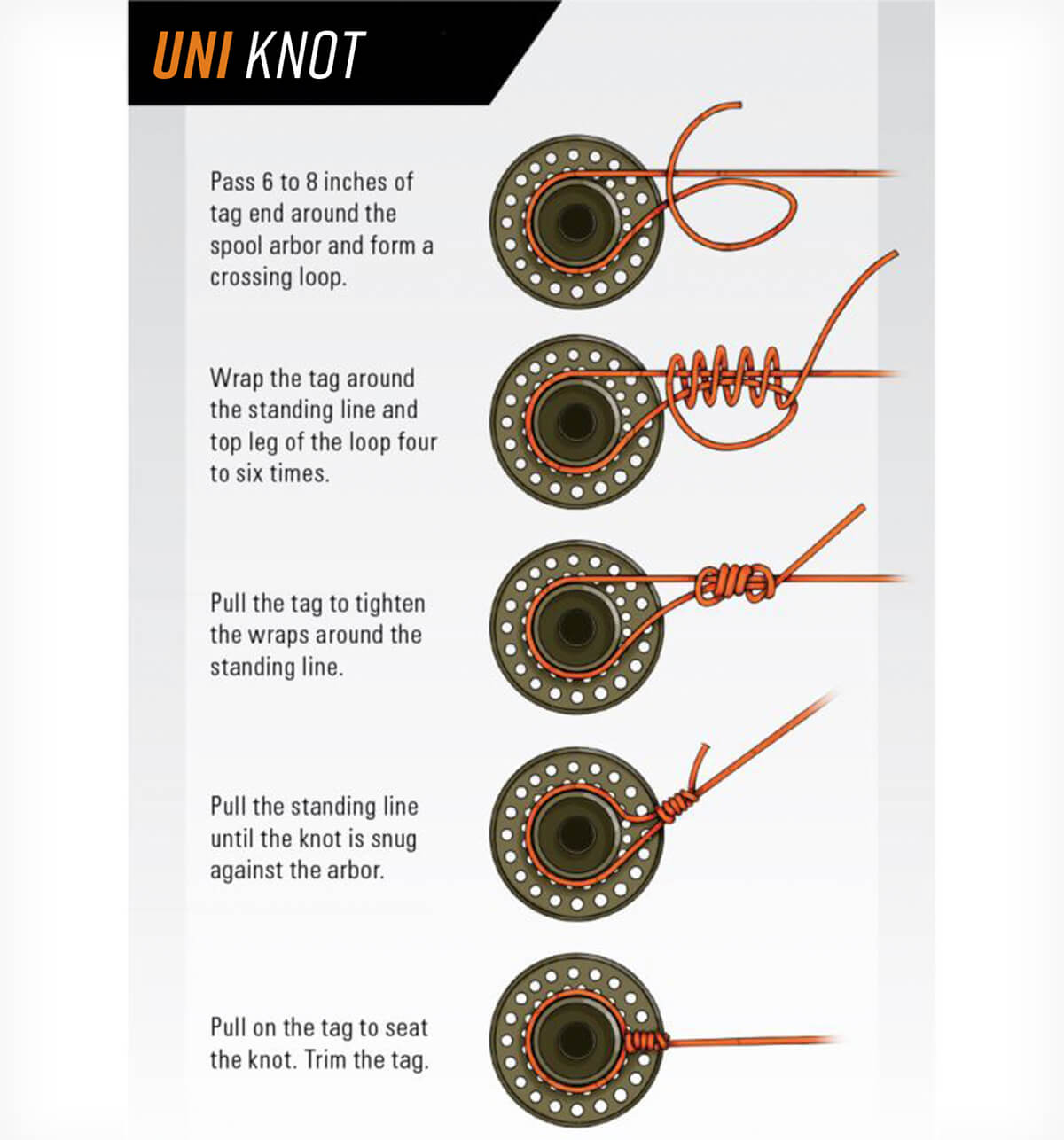
- Tie an arbor knot around the arbor. Tighten it firmly.
- Trim any extra backing.
Pro tip: Wind the backing onto the reel in the same direction the reel turns when you retrieve line. This prevents tangles.
2. Add The Right Amount Of Backing
How much backing you need depends on your reel and the type of fish you target. Too little and you risk running out; too much and your reel gets jammed.
| Line Weight | Backing (yards) | Backing (lb test) |
|---|---|---|
| 2-4 | 50-75 | 20 |
| 5-7 | 75-100 | 20-30 |
| 8+ | 150-250 | 30+ |
Check your reel’s manual for exact capacity. If unsure, put the fly line on first, fill the reel, then strip it off and measure how much backing fits with the fly line.
3. Attach Backing To Fly Line
Now join the backing to your fly line. Most people use an albright knot or a nail knot for this. Some fly lines come with a pre-made loop; if so, use a loop-to-loop connection.
- Double-check both knots are tight.
- Test the connection with a light pull.
Weak knots are a common cause of lost fish. If you’re unsure, retie until you’re confident.
4. Spool The Fly Line Onto The Reel
This step is where many people go wrong. The fly line must go on with the correct side facing out, and with even tension.
- Ask a friend to hold the fly line spool with a pencil through the center.
- Make sure the line comes off the spool the same way it will go onto the reel.
- Keep a bit of tension as you wind, so the line lays tight and flat.
- Use a slow, steady pace. Don’t rush.
If you’re alone, wedge the spool between books or use your feet to hold it steady.
Practical Insight: If your line is spooled backwards, your casts will be awkward and your line may tangle. Always check the manufacturer’s instructions on which end attaches to the backing.
5. Check For Overfilling Or Underfilling
When all the fly line is on, look at the reel. The line should fill the spool, but not touch the reel’s outer edges. Leave about an eighth of an inch (about 3 mm) from the edge.
- If there’s too much line, remove some backing.
- If there’s too little, add more backing.
A full reel helps you retrieve line quickly and prevents tangles.
6. Attach The Leader
Most fly fishing lines have a welded loop at the tip. Use this to connect your leader (the clear section that goes to your fly) with a loop-to-loop connection or a nail knot.
- Make sure the connection is smooth, so it passes through the guides easily.
- Test by pulling gently.
Many beginners forget this last connection. A poor leader knot can spook fish or cause break-offs.
Common Mistakes And How To Avoid Them
Setting up your fly line isn’t hard, but mistakes happen. Here are the most frequent problems and how to fix them:
Putting Fly Line On Backwards
If your line has a front taper (thicker at one end), make sure the correct end attaches to the backing. Look for markings or check the packaging.
Not Enough Tension
Loose line causes tangles and “line memory” (curves and loops that ruin your cast). Always keep even pressure as you wind the line onto the reel.
Overfilling Or Underfilling
If your reel is overfilled, the line can jam. If underfilled, your retrieve is slow and you may run out of line. Adjust by adding or removing backing as needed.
Weak Or Wrong Knots
Knots are the weakest point in your setup. Practice tying the arbor knot, albright knot, and loop-to-loop connection until you’re confident.
Skipping The Backing
A common beginner error is spooling fly line directly onto the reel without backing. This leaves you unprepared for strong or fast fish and can damage your expensive fly line.
Using Wrong Backing Or Line
Match the backing strength and type to your reel and fishing style. Some saltwater fishing requires gel-spun backing for extra strength.
Choosing The Right Fly Line And Backing
Not all fly lines and backings are the same. Picking the right ones helps your setup perform better.
Fly Line Weight And Type
Match your fly line weight to your rod and reel. For example, a 5-weight line fits most trout rods, while heavier lines are for bigger fish or windy conditions.
- Floating lines are most common for beginners.
- Sinking lines are used for deep water or fast currents.
Backing Material
Most anglers use Dacron backing. It’s affordable, strong, and easy to tie. For saltwater or very large fish, gel-spun backing is thinner and stronger, letting you fit more line on the reel.
Leader And Tippet
The leader connects your fly line to the fly. Tippet is the thin end section. Choose a leader length that matches your fishing style—usually 7 to 9 feet for trout.
| Fishing Style | Leader Length (feet) | Tippet Size |
|---|---|---|
| Small Streams | 7-8 | 4X-6X |
| Larger Rivers | 9 | 3X-5X |
| Saltwater | 9-12 | 1X-3X |

Credit: www.youtube.com
Tips For A Smoother Spooling Experience
Even experienced anglers run into trouble when spooling fly line. These tips will help you avoid problems and get better results.
Keep The Line Clean
Wipe your fly line with a damp cloth as you spool it. This removes dust and oils from the factory and helps it slide smoothly.
Use A Line Winder
A line winder tool holds the spool and keeps tension even. It’s not required, but makes solo spooling much easier.
Watch For Twists
If your line starts to twist as you reel it on, stop and let it untwist before continuing. Twisted line creates tangles and makes casting harder.
Enlist A Friend
Having someone hold the spool, or even just hand you the leader and tippet, makes everything easier—especially for your first time.
Double-check All Connections
Before you finish, check every knot and connection. Pull firmly to test each one. A weak knot can ruin your day on the water.
Store Your Reel Properly
When you’re done, store your reel in a cool, dry place. Sunlight and heat can damage fly line over time. Always loosen the drag before storing to protect the reel’s springs.
How To Switch Fly Line Between Reels
Sometimes you want to use the same fly line on a different reel or change lines for different fishing conditions. Here’s how to do it without tangling everything.
- Strip the fly line and backing off the reel, laying it out in smooth coils.
- Attach the backing to the new reel using an arbor knot.
- Wind the backing onto the new reel, then attach and wind the fly line.
- Test all knots and connections before fishing.
Pro insight: Some anglers use an empty line spool or a large plastic tub to keep coils organized and prevent tangling.
Caring For Your Fly Line After Spooling
Once your line is on the reel, maintenance keeps it performing well.
- Rinse after saltwater trips: Salt can damage both line and reel.
- Clean line regularly: Use a gentle soap and water every few trips.
- Check for cracks: Replace line if it shows wear or cracking.
Caring for your fly line extends its life and saves money over time.
Advanced Tips: Customizing Your Setup
Once you’ve mastered the basics, there are ways to fine-tune your setup for better results.
Use A Colored Backing
Brightly colored backing (like orange or yellow) helps you see how much line a fish has taken during a fight. This is especially useful in low light or fast-moving water.
Add A Backing-to-line Loop
Some anglers add a braided loop between backing and fly line for quicker, easier changes. Practice tying secure loops so they don’t slip under pressure.
Try A Shooting Head System
For long-distance casting or special situations (like big lakes or surf fishing), a shooting head setup lets you switch line heads quickly. This is more advanced, but worth learning as you gain experience.
Real-world Example: Spooling A Trout Reel
Let’s walk through a common setup for trout fishing:
- Reel: 5/6 weight single action
- Backing: 75 yards of 20 lb Dacron
- Fly Line: 5-weight, weight-forward floating
- Leader: 9 ft, 5X
Steps:
- Tie the backing to the reel with an arbor knot, wind on 75 yards.
- Attach the backing to the fly line with an albright knot.
- Wind on the fly line with steady tension.
- Attach the leader with a loop-to-loop connection.
- Test every knot with a gentle tug.
- Go fishing!
This setup works for most freshwater trout situations and is a good starting point for beginners.
Frequently Asked Questions
How Much Backing Do I Really Need For Fly Fishing?
The amount of backing depends on your reel, line weight, and the fish you target. For most trout fishing, 50-100 yards is enough. For saltwater or large freshwater fish, use 150-250 yards. Always check your reel’s specs and adjust if needed.
Can I Put Fly Line On A Reel By Myself?
Yes, you can, but it’s easier with help. If you’re alone, use books or your feet to hold the line spool. Make sure to keep the line tight and even as you wind it on.
What Happens If I Put The Fly Line On Backwards?
If the tapered end (meant for casting) is attached to the backing, your line won’t cast properly. Always check the manufacturer’s markings or instructions to make sure the right end is attached to the backing.
How Often Should I Replace My Fly Line?
Most fly lines last 2-4 years with good care. Replace your line if you see cracks, stiffness, or it doesn’t float well anymore. Cleaning your line regularly can help it last longer.
Are There Special Knots For Fly Line Connections?
Yes, the most common knots are the arbor knot (for backing to reel), albright knot or nail knot (for backing to fly line), and a loop-to-loop connection (for leader to fly line). Practice these knots before your trip to avoid problems.
Putting fly line on your reel is a key skill for every angler. With the right steps, good knots, and careful attention, you’ll have a setup that casts smoothly and stands up to fighting fish. Each time you spool a new line, you’ll get faster and more confident. If you want to see these knots or steps in action, many trusted fishing websites and videos are available—like this clear guide from the Orvis Fly Fishing School. Now, with your reel ready, you’re set to enjoy time on the water—casting farther, fighting fish better, and fishing with confidence.

Credit: www.youtube.com