
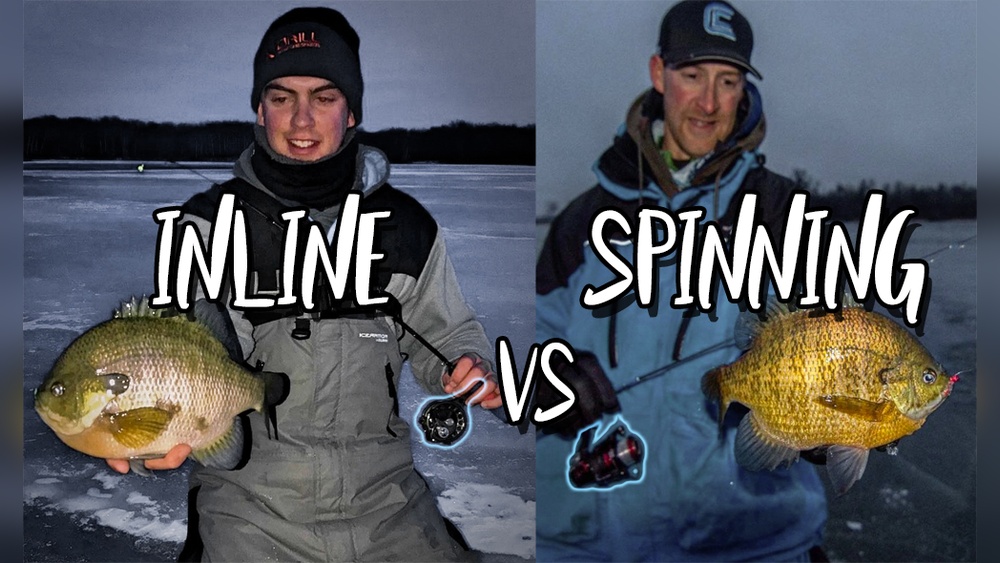
Ice fishing is more than just a winter hobby—it’s a challenge that tests both skill and patience. If you’re new to the sport or looking to improve your setup, you’ll quickly find that choosing the right reel makes a big difference. Two main options dominate the ice: inline ice fishing reels and spinning reels. Each has its supporters, each has its critics, and both can be the “right” choice depending on how and where you fish.
But what really sets them apart? Which one helps you catch more fish—or more specifically, miss fewer bites? To help you make a confident decision, this article dives deep into the pros, cons, myths, and realities of inline ice fishing reels versus spinning reels.
You’ll discover where each reel shines, where it struggles, and which situations favor one over the other. Along the way, you’ll learn about line twist, lure presentation, drag systems, and the subtle details that often separate a good day on the ice from a frustrating one.
Understanding Inline Ice Fishing Reels
Inline ice fishing reels are designed specifically for ice fishing. Their appearance is similar to small baitcasting reels, but their function is unique. The line comes off the spool in a straight line, reducing line twist—a problem that plagues many ice anglers using spinning reels.
Most inline reels mount underneath the rod, keeping the setup balanced and comfortable for vertical jigging.
How Inline Reels Work
With inline reels, the spool sits in line with the rod. When you release the line, it drops freely through the guides without spinning or coiling. This results in a natural lure movement, which is especially important when fish are being picky.
Key Features
- No line twist: The design means the line doesn’t spin as it comes off, reducing tangles and memory.
- Direct drop: Lures fall straight down, making jigging easier and more precise.
- Lightweight: Many models are built for ultralight rods and finesse presentations.
- Simple mechanics: Fewer moving parts make them easy to maintain.
When To Use Inline Reels
Inline reels are best for light lures and finesse presentations. They excel when fishing for panfish like bluegill, crappie, and perch. Because of their control and sensitivity, they’re also great for detecting light bites in cold weather.
Inline Reel Limitations
Inline reels are not perfect for every situation. They struggle with heavier lures and aggressive fish. Drag systems are often less advanced, and the line retrieval speed is usually slower than spinning reels. Beginners sometimes find the free-spool feature tricky, leading to overruns or “bird’s nests.
”
Understanding Spinning Reels For Ice Fishing
Spinning reels are the classic choice for many anglers, both on open water and on the ice. They’re versatile, reliable, and widely available in ultralight sizes perfect for ice fishing. Spinning reels sit under the rod and use a bail to control line release and retrieval.
How Spinning Reels Work
The line is wound onto a fixed spool. When you open the bail, the line uncoils off the spool as you drop your lure or bait. Retrieval is fast—just close the bail and turn the handle.
Key Features
- Versatility: Can handle a wide range of line weights and lure sizes.
- User-friendly: Simple to cast and retrieve, making them great for beginners.
- Strong drag systems: Many spinning reels feature smooth, adjustable drags.
- Faster line pick-up: Great for quickly reeling in fish or resetting your lure.
When To Use Spinning Reels
Spinning reels are perfect for larger fish or when you need to use heavier jigs and lures. They’re also a good choice if you plan to use your reel for both ice and open water fishing, as they transition easily between the two.
Spinning Reel Limitations
The biggest drawback is line twist. As the line comes off the spool, it coils, especially with lighter lines. This can cause “line memory,” tangles, and spinning lures, which can sometimes turn off finicky fish. While higher-quality reels reduce these problems, they never fully go away.
Inline Reels Vs Spinning Reels: Side-by-side Comparison
To see how these reels compare, it helps to look at the most important factors for ice fishing.
| Feature | Inline Ice Fishing Reel | Spinning Reel |
|---|---|---|
| Line Twist | Minimal | Common, especially with light line |
| Lure Presentation | Natural, straight drop | Can twist or spin, less natural |
| Drag System | Basic, sometimes jerky | Smoother, more adjustable |
| Line Pickup Speed | Slower | Faster |
| Learning Curve | Moderate (can backlash) | Easy for beginners |
| Best For | Panfish, finesse, small jigs | Larger fish, all-around use |
The Science Behind Line Twist
One of the most debated topics in ice fishing is line twist. Many anglers do not realize how much line twist can affect their success. Spinning reels, by design, cause the line to coil as it comes off the spool. This is especially a problem with monofilament and fluorocarbon lines under 4lb test, which are commonly used for panfish. Over time, line twist leads to kinks, loops, and poor lure action. Inline reels solve this by letting the line fall off the spool in a straight line, almost eliminating twist and memory.
But there’s a hidden insight here: even with an inline reel, using lures that spin or jig aggressively can still add twist. If you notice your line looping or your lure spinning, check your presentation and slow down your jigging motion. Switching to a quality swivel can also help, regardless of reel type.
Lure Presentation: Subtle Differences Matter
The way your lure moves through the water can make or break your day. Inline reels allow for a perfect vertical drop, which is critical when fish are watching your bait from below. With a spinning reel, the line often uncoils with a slight spiral, causing your jig to spin unnaturally. Sometimes, this makes fish wary or uninterested.
However, not every situation requires a perfectly natural presentation. Aggressive fish, like early ice crappie or walleye, may not care if your jig spins. In these cases, the speed and convenience of a spinning reel can outweigh the presentation benefits of an inline.
Drag Systems: Smoothness Under Pressure
A reel’s drag system controls how much resistance a fish feels when it pulls on your line. Spinning reels have advanced drag stacks with felt or carbon washers, making them smoother and more adjustable. Inline reels often use simpler star drags or even a basic friction system.
When fishing with 2-3 lb test line for finicky bluegill, a sticky or jerky drag can cause break-offs. If you target larger fish or fish in deep water, a spinning reel’s smoother drag will give you a big advantage. For small panfish in shallow water, the difference is less noticeable—but still matters when you hook a surprise bass or pike.
Line Pickup Speed: Getting Back In The Game
Ice fishing is often about efficiency. The quicker you can drop your bait and get it back to a feeding school, the more fish you’ll catch. Spinning reels have a clear advantage here. They retrieve line with each turn of the handle, sometimes picking up over 20 inches per turn.
Inline reels are slower, and some budget models require several turns to get even a short drop of line back in. This can be frustrating if you need to check your bait often or fish in deep water. If you fish in less than 10 feet, the speed difference is less important, but for deeper lakes, spinning reels save time and energy.
Sensitivity And Bite Detection
Detecting subtle bites is crucial, especially when ice fishing for finicky species. Inline reels offer a direct connection to the bait, with less hardware between your hand and the lure. The straight line path means you feel more vibrations and soft nibbles.
Spinning reels add a little “give” due to the line’s spiral path and extra guides. For most anglers, the difference is small, but in tough conditions, inline reels can help detect bites you’d otherwise miss.
A non-obvious tip: wearing a thin glove or keeping your finger on the line increases sensitivity with both types of reels. Many experienced ice anglers use this trick, but beginners often overlook it.
Cold Weather Performance
Ice fishing means exposure to cold, wind, and snow. Not all reels handle these elements equally well. Inline reels, with their simple designs and fewer metal parts, tend to freeze up less. The free-spool function is less affected by ice buildup.
Spinning reels, especially cheaper models, can suffer from stiff grease in the gears or frozen bails. If you fish in extreme cold, look for reels with low-temperature lubricants and avoid dunking them in slush.
A detail many overlook: reel size matters. Smaller spinning reels (500 or 1000 size) have tighter tolerances and can freeze more easily than larger reels. Inline reels are usually built for winter, but always check for anti-ice features.
Price And Value
Cost is always a factor. Inline reels were once a specialty item, but now you can find basic models for under $30 and high-end versions for over $100. Spinning reels have a similar range, but entry-level models are often more affordable.
Here’s a quick comparison of price ranges:
| Reel Type | Entry Level | Mid Range | High End |
|---|---|---|---|
| Inline Reel | $25 – $40 | $50 – $80 | $100+ |
| Spinning Reel | $15 – $35 | $40 – $90 | $120+ |
Remember, price does not always equal quality. A $30 spinning reel can outperform a $60 inline reel if it’s built well and matches your needs. Look for smooth operation, quality drag, and good reviews before buying.
Which Reel Is Best For You?
Choosing between an inline and a spinning reel depends on several factors. Here’s what to consider:
Target Species
- Panfish (bluegill, perch, crappie): Inline reels are ideal due to their finesse and natural presentation.
- Walleye, bass, pike: Spinning reels handle heavier lines and tougher fights better.
Fishing Depth
- Shallow water (<10 feet):Either reel works well. Inline reels have a slight edge for sensitivity.
- Deep water (>10 feet): Spinning reels make it easier to drop and retrieve your line quickly.
Experience Level
- Beginners: Spinning reels have a gentle learning curve, fewer tangles, and easier operation.
- Experienced anglers: Inline reels offer more control, but require practice to avoid backlashes.
Lure Weight
- Small jigs (1/32 – 1/16 oz): Inline reels excel at controlling these tiny lures.
- Heavier baits (1/8 oz and up): Spinning reels provide better casting distance and control.
Versatility
If you only ice fish a few times a year, a spinning reel works for both ice and open water. If you’re dedicated to ice fishing and want every possible advantage, an inline reel is worth considering.
Common Myths And Misconceptions
Some anglers believe you can only catch big fish with spinning reels or that inline reels are just a gimmick. The truth is more nuanced:
- Myth: Inline reels can’t handle big fish. While most are designed for panfish, some heavy-duty models can land walleye and even pike.
- Myth: Spinning reels always twist line. Proper spooling, using quality line, and checking your lure can reduce twist.
- Myth: Inline reels are hard to use. With a few hours of practice, most anglers master the free-spool and drag systems.
Understanding these realities helps you avoid mistakes and choose the best reel for your style.
Credit: targetwalleye.com
Real-world Examples
Case 1: Finesse Panfish Jigging
John, an experienced ice angler, switched to an inline reel for targeting crappie in shallow, clear water. He noticed fewer missed bites and almost no line twist. His catch rate increased by about 15% compared to spinning reels, especially on slow days when fish were cautious.
Case 2: Multi-species Run-and-gun
Sara enjoys chasing pike, perch, and walleye on a single trip. She uses a quality spinning reel with 6 lb test line and never worries about changing rods. She finds the versatility, speed, and strong drag perfect for her style, and she catches everything from 8-inch perch to 30-inch pike.
Case 3: Deep Water Walleye
Alex fishes deep lakes where he often drops his jig 30-40 feet. He prefers a spinning reel for the fast line pickup and smooth drag. He tried an inline reel but found it too slow for deep water and big fish.
These examples show that the “best” reel is the one that fits your specific conditions and habits.
Maintenance And Longevity
Both reel types require care to keep working smoothly. Here’s what matters:
- Keep reels dry: After each trip, wipe away moisture and ice. This prevents rust and freezing.
- Lubricate moving parts: Use reel oil or grease designed for cold weather. Pay special attention to the drag and handle.
- Check for ice buildup: Remove ice from the guides and reel seats, especially after drilling new holes.
- Store reels properly: In a dry, warm place during the off-season. Loosen the drag to avoid compressing drag washers.
Inline reels have fewer moving parts and are easier to clean, but both types last for years with proper care.

Credit: www.rapala.ca
Environmental And Ethical Considerations
Responsible anglers protect the environment and the fish they catch. Using the right reel helps reduce fish injury—inline reels are great for catch-and-release panfish because they allow gentle hooksets and less line twist, which means less time handling fish.
Avoid leaving line on the ice, and switch to biodegradable line if possible. If you use live bait, check local regulations to prevent spreading invasive species.
Inline Reels And Spinning Reels: Popular Models
A few well-known reels stand out for ice fishing:
- 13 Fishing Black Betty FreeFall (Inline): Known for its smooth free-spool and durable build.
- Piscifun ICX (Inline): Budget-friendly, reliable, and easy to use.
- Shimano Sienna 500 (Spinning): Affordable and smooth, great for ultralight setups.
- Pflueger President 20 (Spinning): A favorite for years, with a buttery drag and solid build.
Always read recent user reviews and consult local tackle shops for specific advice.
Advanced Tips For Getting The Most From Your Reel
- Pair your reel with the right rod. A light, sensitive rod maximizes the benefits of inline reels, while medium action rods balance spinning reels.
- Use high-quality line. Cheap line causes more problems than any reel can fix. Invest in good fluorocarbon or braid for fewer tangles.
- Check your knots. Weak knots break easily in cold weather. Practice tying reliable knots like the improved clinch or Palomar.
- Don’t overfill your spool. Leave 1/8 inch of space at the rim to avoid tangles.
- Test your drag. Pull line by hand before fishing to ensure smooth release.
Many anglers overlook these details, but they can improve your success more than upgrading your reel.
Frequently Asked Questions
What Is The Main Advantage Of Inline Ice Fishing Reels?
Inline reels almost eliminate line twist, making them ideal for finesse presentations and light jigs. They provide a more natural lure movement and increase bite detection, especially when fishing for panfish.
Can I Use A Spinning Reel For All Types Of Ice Fishing?
Yes, spinning reels are versatile and handle a wide range of species and lure sizes. They are a good choice if you want one reel for both ice and open water fishing.
Are Inline Reels Harder To Use Than Spinning Reels?
Inline reels have a moderate learning curve, especially when it comes to controlling the free-spool feature. With practice, most anglers find them easy to use, but spinning reels are generally simpler for beginners.
How Do I Reduce Line Twist With A Spinning Reel?
To reduce line twist: use quality line, avoid overfilling the spool, and check your lures for spinning during jigging. Adding a small swivel between your main line and leader also helps.
Where Can I Learn More About Ice Fishing Gear?
For more details and expert reviews, visit the In-Fisherman Ice Fishing Gear Guide.
The right reel makes ice fishing more enjoyable and successful. Whether you choose an inline or spinning reel, focus on matching your gear to your target species, fishing style, and local conditions. With the tips and comparisons above, you’re ready to make a smart choice and have more productive days on the ice.

Credit: www.youtube.com