Casting your fishing rod far can change your entire experience on the water. Many new anglers imagine that reaching distant fish is about strength, but it’s much more about technique, timing, and using the right gear. Long-distance casting helps you cover more water, reach undisturbed fish, and sometimes even find those trophy catches that stay away from the shore.
This is a skill that can be learned by anyone—with practice and the right approach.
In this guide, you’ll learn every key factor that affects casting distance. We’ll look at gear choices, body mechanics, line management, wind, and even the small tweaks that can make a surprising difference. Whether you’re a total beginner or have some experience, you’ll find practical advice to add real distance to your casts.
Let’s dive into the details and help you get your lure or bait where the big fish are waiting.
Understanding What Affects Casting Distance
Most anglers focus only on arm power. In reality, casting distance depends on a mix of equipment, technique, and environmental conditions. Recognizing these variables will help you improve faster.
First, the rod length and action play a big role. A longer rod can act like a lever, giving you more speed at the tip, which sends the lure further. The action (how much and where the rod bends) affects how energy is transferred during the cast.
The reel type and how well it matches your rod also matter. Spinning reels are easier for most people to cast far, while baitcasting reels offer control but require more skill.
Your fishing line—its type, thickness, and how it’s loaded—will either help or hurt your distance. The lure or bait weight should also match your rod’s rating. The heavier the lure (up to a point), the further it will travel.
Finally, wind, casting technique, and even small mistakes like line twists can add or subtract several meters from your cast. Let’s look at how to optimize each factor.
Choosing The Right Rod For Distance
Your rod is your main tool for casting. Picking the right one is key if you want to cast farther.
Rod Length
Longer rods (generally 7–10 feet) give you more leverage. The rod acts like a spring—when you load it properly, it releases energy and sends your lure flying. Shorter rods are better for accuracy and close-range work, but they simply can’t match the distance of longer models.
Rod Power And Action
Power describes how much weight the rod can handle. Medium to medium-heavy power is a good balance for distance and control.
Action describes where and how much the rod bends. Fast action rods bend near the tip; moderate or moderate-fast actions bend more through the blank. For distance, moderate-fast action lets you load the rod deeper, storing more energy for a longer cast.
Materials
Graphite rods are lighter and usually cast farther than fiberglass. Look for high-quality graphite for the best mix of strength and sensitivity.
Beginner Insight: Many people think stiffer rods always cast farther, but too stiff a rod won’t load well with lighter lures. Always check your rod’s lure weight rating and stay within it.
Picking A Reel That Helps You Cast Further
The wrong reel can waste your effort no matter how good your rod is. Here’s what to consider.
Spinning Vs. Baitcasting Reels
Spinning reels are popular for distance casting, especially for beginners. The line comes off the spool freely, and you don’t need to worry much about backlashes.
Baitcasting reels can cast even farther with practice, but they require skill to avoid tangles (bird’s nests). They also handle heavier lines and lures well.
Reel Size And Line Capacity
A larger spool lets line come off with less friction, which means longer casts. For most long casts, a 3000–5000 size spinning reel (or equivalent) is ideal. Baitcasters with wider spools are also helpful.
Gear Ratio
A fast gear ratio (6.0:1 or higher) helps you retrieve quickly, but it doesn’t affect casting distance. Focus on smoothness and spool size instead.
Pro Tip: Before every trip, make sure your spool is at least 80–90% full. Low line levels reduce casting distance.
Fishing Line: Type, Diameter, And Loading
It’s easy to overlook your fishing line, but it’s one of the most important factors for casting distance.
Line Type
- Monofilament is affordable and floats well, but it’s thicker and stretches, which can waste energy.
- Fluorocarbon is nearly invisible and sinks, but it’s stiffer, which can sometimes reduce distance.
- Braided line is the best for distance. It’s much thinner for the same strength and has no stretch, allowing for more efficient energy transfer.
Line Diameter
Thinner line travels through guides with less friction and catches less wind. For most distance casting, a 10–20 lb test braided line is best, depending on your target fish.
Proper Spooling
Fill your reel almost to the rim—leave about 1/8 inch from the edge. If you under-fill, the line will rub more on the lip and slow down. Over-filling can cause tangles.
Non-obvious Insight: If you switch from heavy mono to braid, you might need to add a mono backing to prevent the braid from slipping on the spool.
Credit: www.in-fisherman.com
Lure Or Weight Selection For Maximum Distance
The weight at the end of your line is what pulls everything out. Choosing the right size and shape matters.
Match Rod Rating
Always use weights or lures within your rod’s recommended range. Too light and you won’t load the rod; too heavy and you risk breaking it.
Aerodynamic Design
Slim, dense lures or sinkers cut through the air better than bulky or flat ones. For bait fishing, use torpedo-shaped sinkers. For lures, go for metal spoons, lipless crankbaits, or casting jigs.
Weight Range
For a typical 7–9 ft rod, a 1–2 oz (28–56 g) weight or lure is usually the sweet spot for distance.
Beginner Mistake: Using large, wind-catching baits (like spinnerbaits with big skirts) can kill your distance, no matter how strong you cast.
Mastering Your Casting Technique
No matter how good your gear, technique is what delivers results. Here’s how to cast farther, step by step.
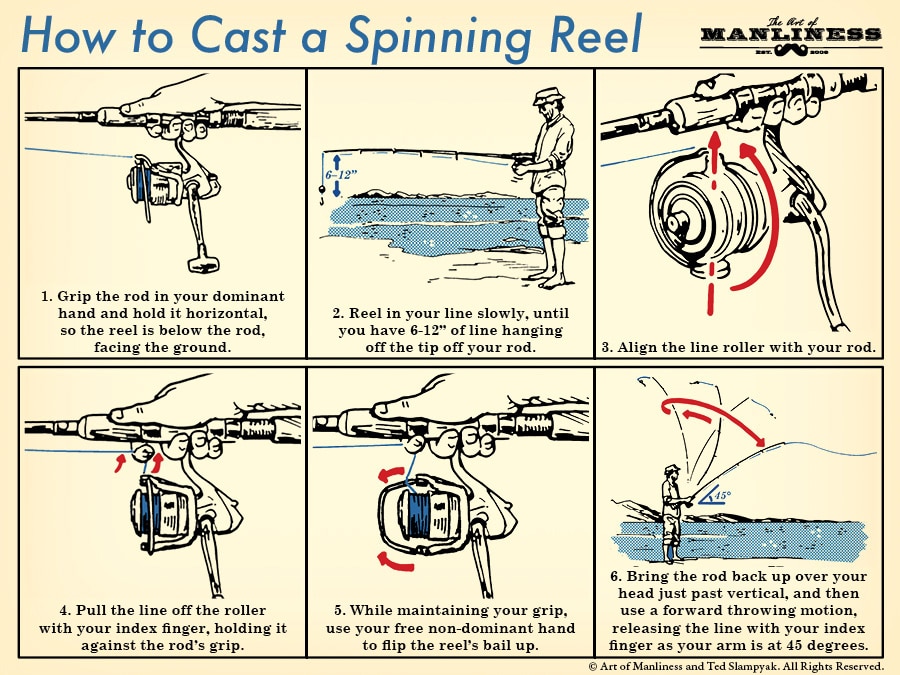
The Overhead Cast
- Grip the rod: Hold with your dominant hand above the reel. Place your other hand lower on the handle for more leverage.
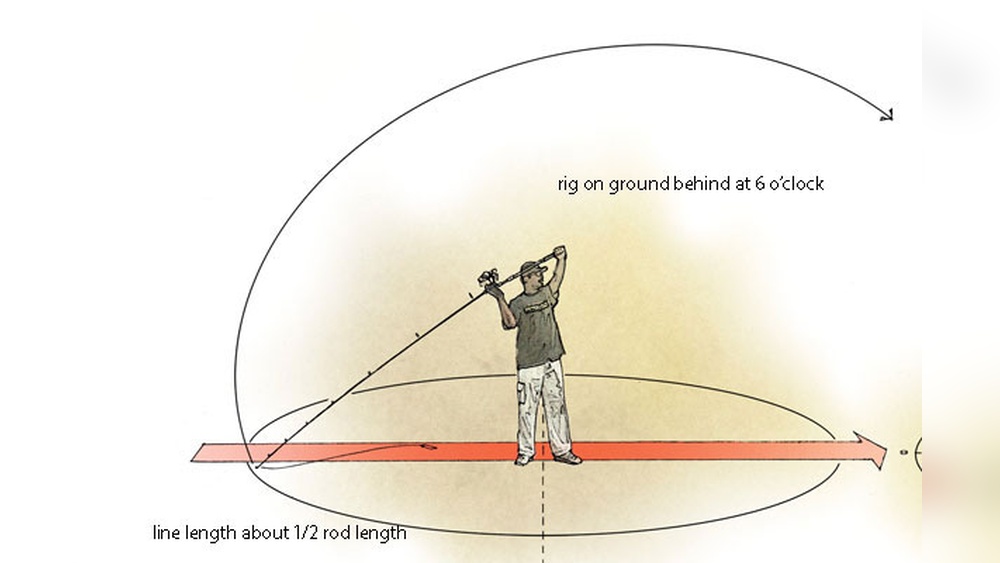
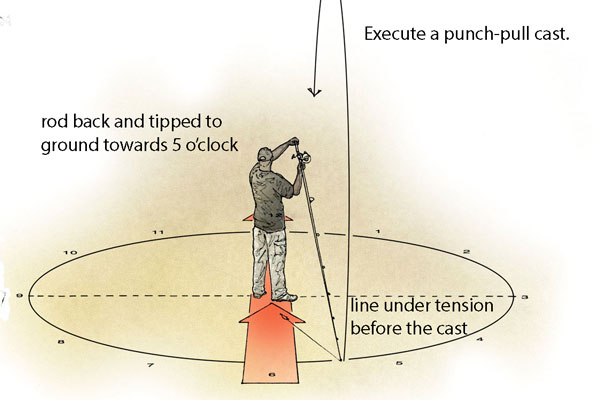
- Load the rod: Keep the rod tip high (about 11 o’clock). Pull back behind you smoothly.
- Smooth acceleration: Swing forward, increasing speed smoothly (not all at once).
- Release point: Let go (release the line or thumb bar) when the rod reaches about 1 o’clock.
- Follow-through: Let the rod tip finish pointing at your target.
Two-handed Power Cast
For even more distance, use both hands like a baseball bat. Your lower hand helps pull the butt of the rod, loading it deeper and adding power.
Avoiding Common Technique Mistakes
- Don’t snap your wrist: Power comes from your whole arm and body, not just the wrist.
- Don’t overpower: Trying too hard can actually reduce distance. Focus on smooth acceleration.
- Watch your timing: Early or late release sends the lure up or down, not out.
Non-obvious Insight: Practice casting in a field without hooks. This lets you focus on form without worrying about catching things.
Credit: www.artofmanliness.com
Line Management For Smoother, Longer Casts
Your line can help or hurt your distance. Here are key tips:
Remove Line Twist
Twisted line causes knots and friction, killing distance. If you use spinning reels, make sure your line is loaded in the correct direction. Occasionally, let your line hang in the water with nothing attached to remove twist.
Check For Wind Knots And Tangles
Inspect your line before casting. Small knots or tangles in the guides can steal meters from your cast.
Clean Your Line
Wipe your line with a damp cloth to remove dirt and salt. This reduces friction through the guides.
Use Quality Line Conditioner
Special sprays can make your line more supple and reduce friction.
Wind And Weather: How To Use Them
Wind is usually seen as a problem, but it can help or hurt your casting.
Casting With The Wind
If possible, cast with the wind at your back. The breeze will carry your lure further. Even a light wind can add 10–20% to your distance.
Crosswinds
Crosswinds can push your lure sideways, making accuracy difficult. In strong winds, use heavier, more aerodynamic lures and keep your casts lower to reduce wind effect.
Against The Wind
Casting into the wind can cut your distance in half. To fight it:
- Use heavier lures.
- Use thinner line.
- Lower your rod angle to keep the lure closer to the water.
Expert Tip: Pay attention to gusts. Wait for a lull in the wind before casting for best results.
Rod Guides And Maintenance
Rod guides (the rings your line passes through) have a bigger impact than most realize.
Guide Size And Material
Larger, high-quality guides reduce friction. Look for aluminum oxide, ceramic, or titanium inserts—these let line slide smoothly.
Guide Alignment
If guides are bent or misaligned, your line will rub and slow down. Check them regularly and fix any problems.
Cleaning
Salt, sand, and dirt on guides create drag. Wipe your guides clean after every trip.
Data Point: A rod with clean, modern guides can cast 10–15% farther than one with dirty or damaged guides.
Body Mechanics And Footwork
How you stand and move your body adds power and accuracy to your cast.
Stance
Stand with your feet shoulder-width apart, facing your target. For maximum power, step into your cast with your non-dominant foot.
Hip And Shoulder Rotation
Rotate your hips and shoulders as you cast, just like a baseball throw or golf swing. This transfers body weight and adds speed.
Balance
Stay balanced through the whole motion. Don’t lean so far back or forward that you lose control.
Practical Example: Watch surfcasters on the beach. They use full-body turns and step into their casts to reach incredible distances.
Practice Drills To Improve Your Casting Distance
Like any skill, practice is key. Here are drills that work:
- Field Casting: Go to an open field with no obstacles. Use a practice weight (no hooks) and mark your distances.
- Target Practice: Set up targets at different distances. Try to land your weight close to them, not just as far as possible.
- Smoothness Drill: Focus on smooth acceleration. Try casting with less force and see how much distance you get with good form.
- Video Feedback: Record yourself casting and compare your technique to instructional videos.
Beginner Tip: It’s better to practice short, controlled casts first. As your form improves, start adding power.
Comparing Gear And Distance Potential
Below is a quick comparison of how different gear setups affect casting distance.
| Rod Type | Average Distance | Notes |
|---|---|---|
| 6 ft Spinning Rod | 30–40 meters | Good for short-range, accuracy |
| 7–9 ft Spinning Rod | 50–70 meters | Balanced for distance and control |
| 10–12 ft Surf Rod | 80–120 meters | Best for extreme distance |
Note: Actual distance depends on skill, line, and lure.
Common Mistakes That Kill Casting Distance
Even experienced anglers make these errors:
- Incorrect rod-lure match: Using lures that are too light or heavy for the rod.
- Underfilled reels: Not enough line on the spool increases friction.
- Dirty guides or line: Dirt adds friction and slows the line.
- Bad timing: Releasing too early or late sends the lure up or down, not out.
- Muscling the cast: Too much force ruins smoothness and form.
- Ignoring wind: Not adjusting for wind can cut your distance in half.
- Using thick line: Unnecessarily heavy line reduces distance.
Fix: Review your gear and technique regularly, and don’t be afraid to adjust your setup.
Advanced Tips For Maximum Distance
If you’re looking for that extra edge, try these advanced ideas.
Use A Shock Leader
A shock leader is a short, heavier section of line (mono or fluoro) tied to the end of your braid. It absorbs the force of the cast, especially with heavy weights, and prevents breakage.
Tapered Leaders
Special tapered leaders are thicker at the reel and thinner at the lure. They move smoothly through the guides and reduce drag.
Lubricate Your Reel
A drop of oil on your reel’s bearings and spool shaft helps reduce friction, letting line fly off more easily.
Thumb Control On Baitcasters
If you use a baitcasting reel, learn to “feather” the spool with your thumb. This lets you control the speed and prevent overruns while still casting far.
Upgrade Rod Guides
If your rod has cheap guides, consider upgrading to high-quality inserts. It’s a small investment for a big distance gain.
Expert Insight: Many tournament casters use custom rods with extra-large stripping guides for maximum line flow.
Real-world Examples: How Much Further Can You Cast?
Let’s look at some realistic numbers for different setups. These are based on average anglers with good technique.
| Setup | Line Type | Lure Weight | Typical Distance |
|---|---|---|---|
| 7 ft Spinning Rod + 3000 Reel | 20 lb Braid | 1 oz (28 g) | 55–70 meters |
| 9 ft Surf Rod + 5000 Reel | 30 lb Braid | 2 oz (56 g) | 80–100 meters |
| 6 ft Medium Rod + Mono | 12 lb Mono | 3/4 oz (21 g) | 35–45 meters |
These numbers show how much gear and line choices matter.
Safety And Etiquette For Long Casting
Casting far is exciting, but safety comes first.
- Watch for people: Make sure nobody is behind or beside you when casting.
- Check surroundings: Avoid trees, power lines, and other obstacles.
- Mind your back-cast: The area behind you needs to be clear.
- Be polite: Don’t cast over other anglers’ lines or into crowded areas.

Credit: www.youtube.com
How To Measure Your Casting Distance
Knowing your real casting range helps you set goals and track improvement.
Simple Steps
- Mark a starting spot: Place a stick or marker where you stand.
- Cast as usual: Make your best effort.
- Measure the line: Walk to your lure or weight and use a tape measure or marked line to see the distance.
- Repeat: Try several times and average your results.
Why It Matters
Many people overestimate their casting distance. Measuring lets you see real progress and test how gear or technique changes affect your results.
Resource: For more about measuring, check this guide from Wikipedia.
Frequently Asked Questions
How Much Does Rod Length Affect Casting Distance?
Rod length is one of the biggest factors for distance. Longer rods (7–12 ft) can generate more tip speed and leverage, sending your lure farther. However, they can be harder to control in tight spaces. For most anglers, a 7–9 ft rod offers the best balance.
Is Braided Line Always Better For Casting Far?
Braided line is usually best for distance because it’s thinner and has no stretch. This means less wind resistance and better energy transfer. However, it can be more visible to fish and may require a leader for best results.
What’s The Easiest Way To Add 10 Meters To My Cast?
The simplest upgrades are to use thinner, high-quality braided line, check that your reel is properly filled, and practice smooth, full-body casting technique. Often, small changes in timing and form can give you extra distance without new gear.
Can I Cast Far With A Baitcasting Reel If I’m A Beginner?
Baitcasting reels can cast very far, but they have a learning curve. Beginners often struggle with backlashes. If you’re new, start with a spinning reel, master your technique, then try a baitcaster when you feel comfortable.
Does Wind Help Or Hurt My Cast?
Wind can help or hurt. Casting with the wind at your back adds distance, while casting into the wind reduces it. Adjust your lure weight and casting angle to match conditions. With practice, you can use wind to your advantage.
—
Building long-distance casting skill takes time, but it’s a rewarding journey. By choosing the right gear, refining your technique, and paying attention to details, you can consistently reach further water and more fish. Remember, smoothness and practice matter more than strength.
Try different setups, measure your progress, and enjoy each cast—every improvement brings new excitement to your fishing adventures.